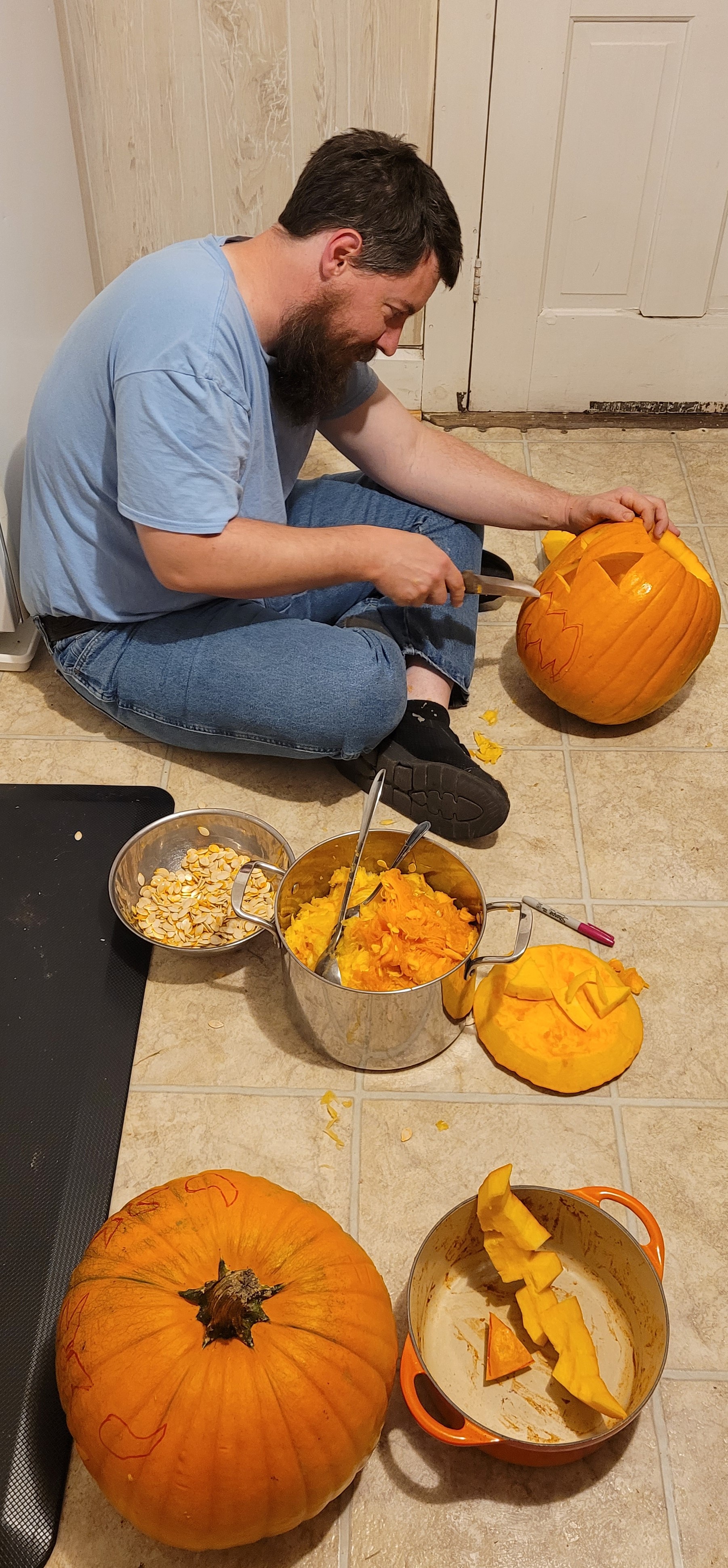
Late autumn, time to hunker down and store some vitamin A! Pumpkin and winter squash season is well underway, and I don’t know about you, but we are up to our elbows in fleshy orange goodness. It started with a Halloween carving session, tempered by a current lack of compost pile and desire to cut down on waste.
I went rogue and cut my pumpkin open from the bottom. It wasn’t the most resounding success and it was difficult to line up perfectly, but it was worth it for not having to stick my arm into the pumpkin to light the candle!
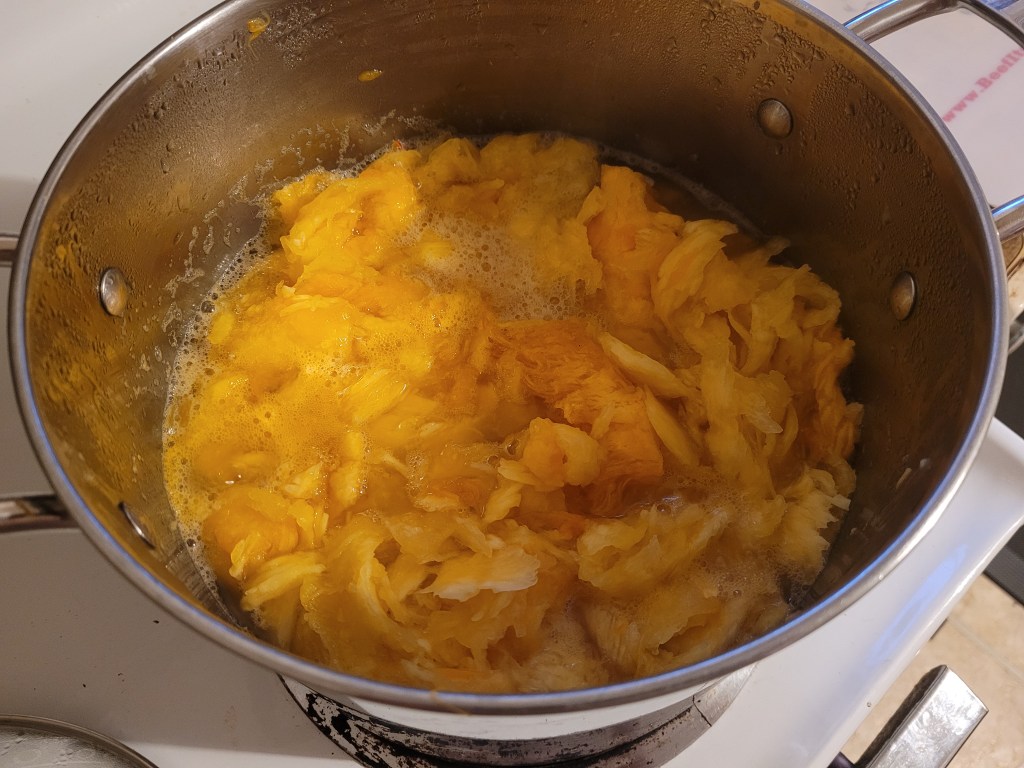
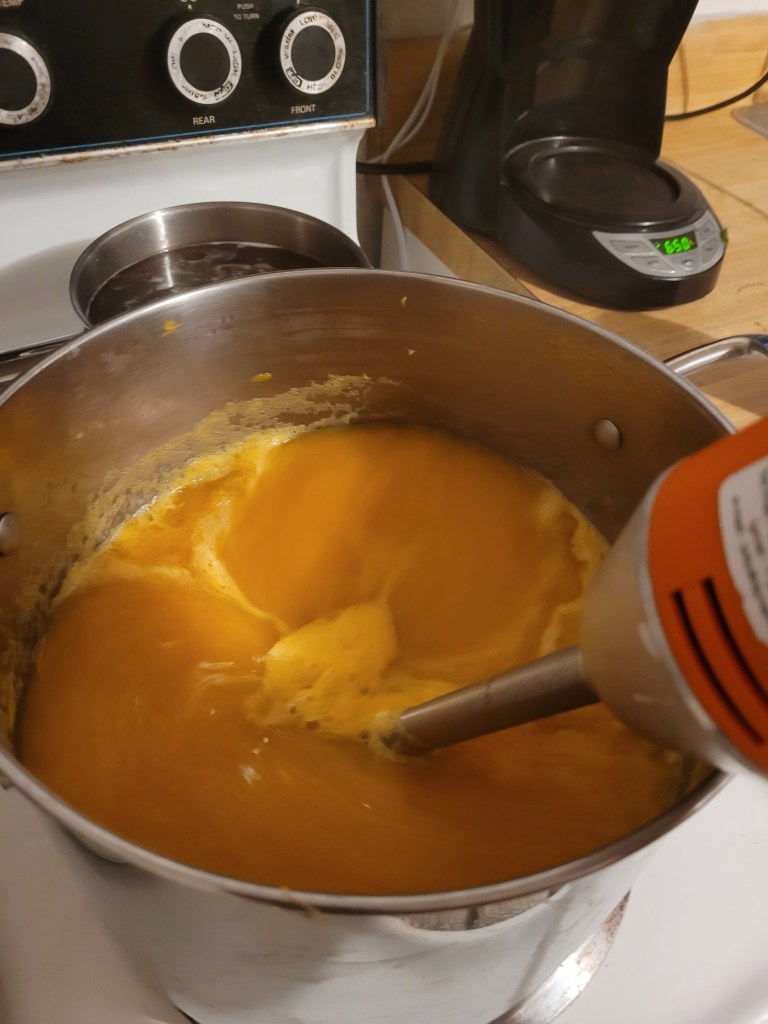
Seeds were roasted (rinsed, patted dry, 5 mins at 350 until dry and tacky, tossed with olive oil and salt, roasted ~20 minutes, stirred roughly every five minutes until lightly golden brown and smelling toasty) – the best we’ve ever made; and the innards were cooked down on low heat over many hours (at least eight) until darkened, thickened, and smoothed out with an immersion blender before cooking down some more. Carving pumpkins are notoriously watery, cooking them down takes more than twice as long as squash grown for comestibles.
This was all, of course, prior to cooking any of the cucurbits purchased for the purpose of consuming.
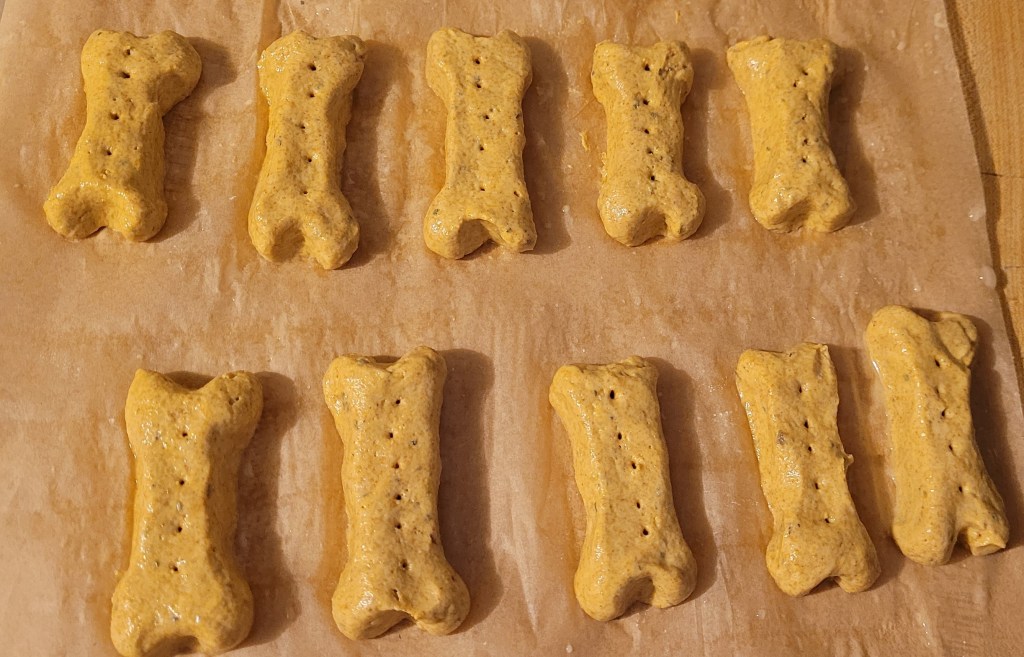
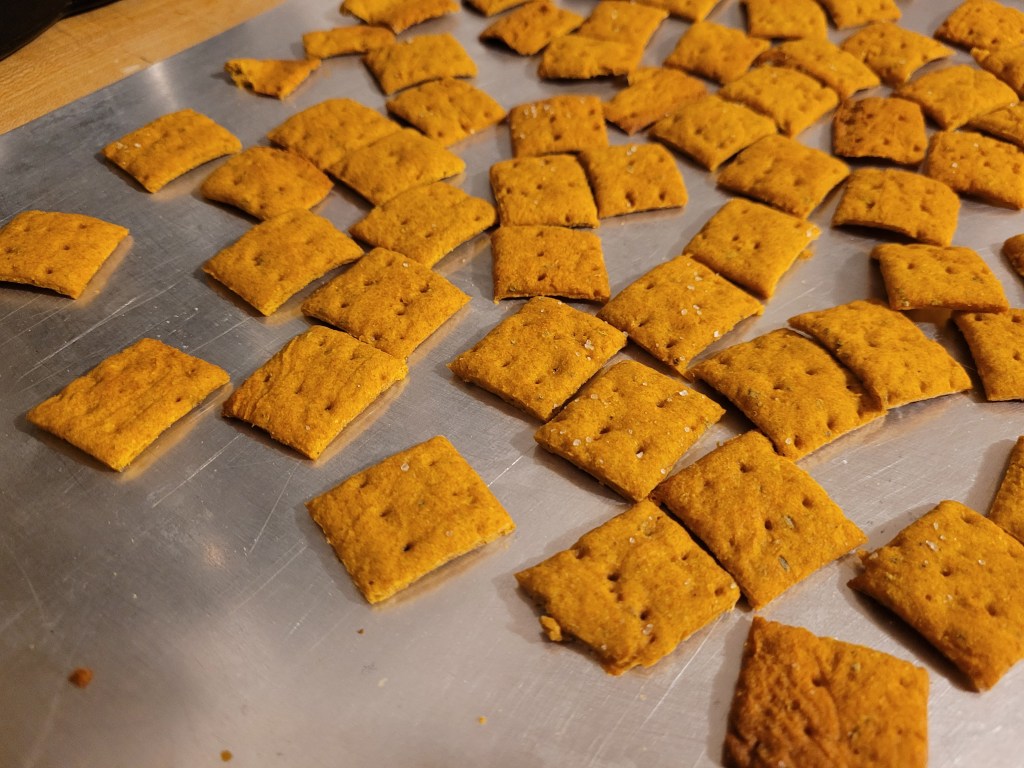
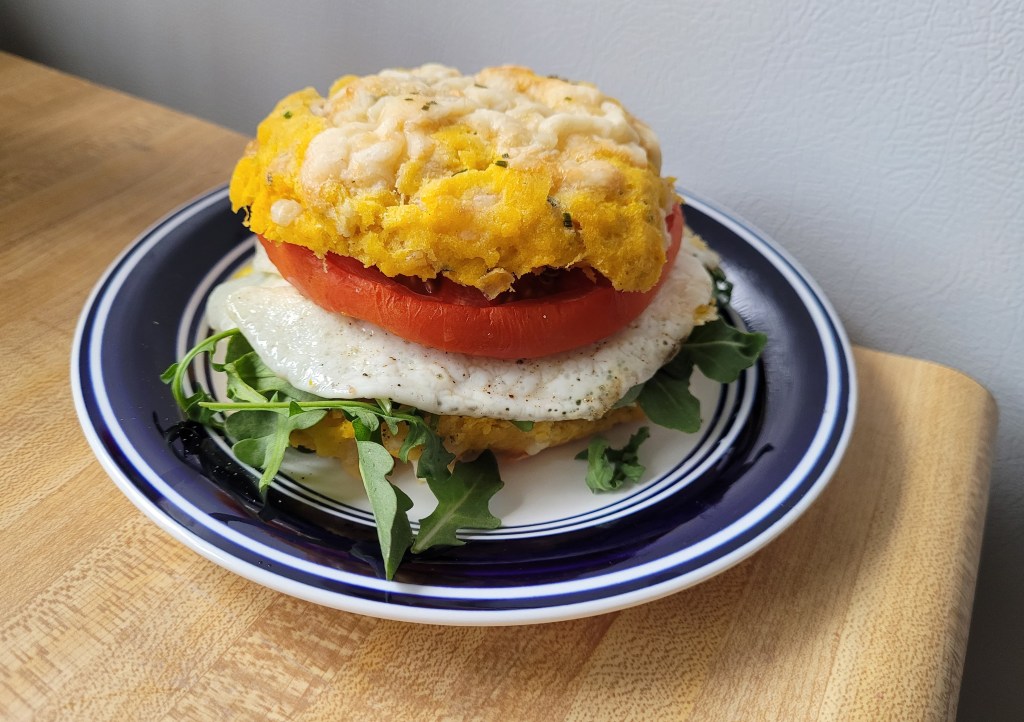
This puree has already taken many forms:
Dog treats and sea salt sage crackers
Savory cheesy scones (perfect for breakfast sandwiches)
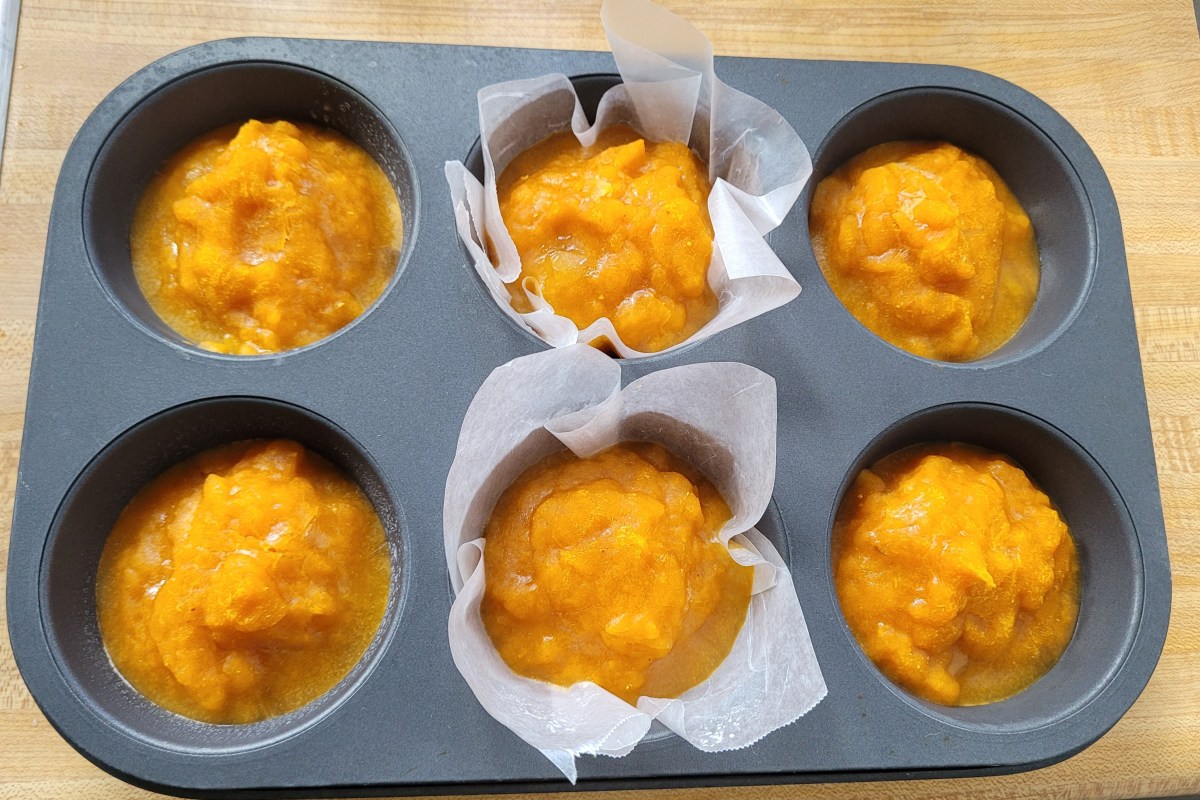
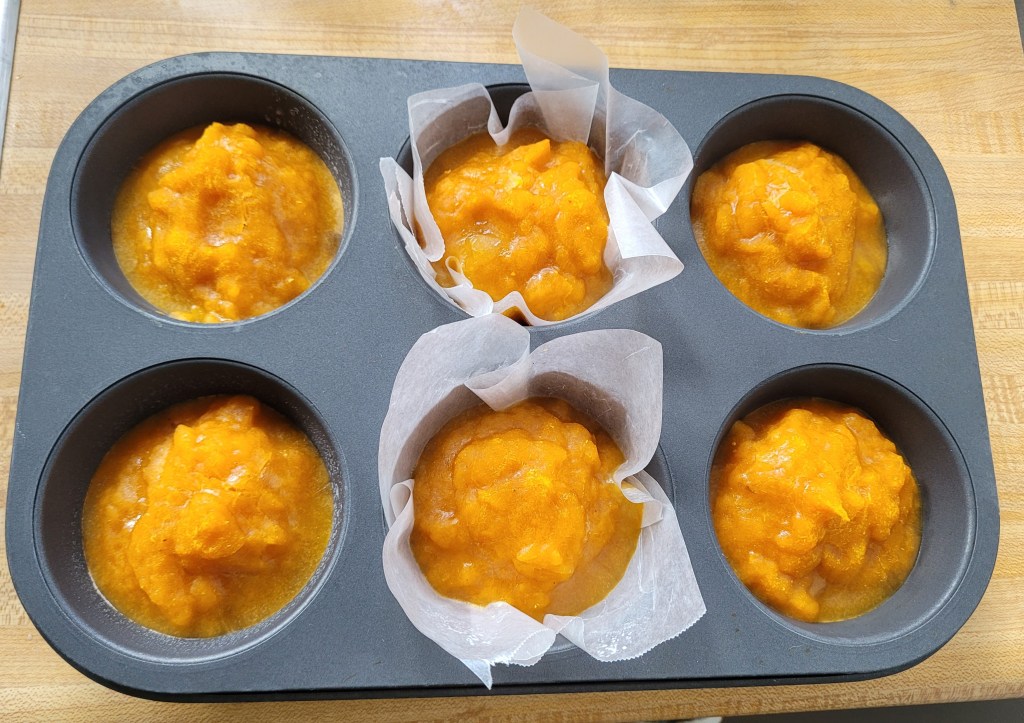
And I experimented with the best way to freeze pumpkin puree. Using a 1/2 cup measuring spoon and muffin pan, I tried three ways. Oiled, wax paper lined, and plain. The verdict?
If your muffin pan is nonstick, save yourself time and oil. Plopping the pumpkin in plain lets it pop out easier than ice in an ice cube tray. Store in a zip top bag in the freezer for sauces, soups, and baked goods throughout the winter.
PSA: do not use wax paper, it sticks and tears and you’ll have to thaw the pureed pumpkin and start all over again. Or you can thaw it, add some maple syrup, and experiment with dehydrator pumpkin leather. Will it work out? Or will we end up with chunks of sweet, crunchy pumpkin bark? Update pending… still a few more hours of dehydrating to go.
All this from the typically discarded innards of carving pumpkins! Not yet pictured, from the intentionally roasted galeux d’eysines squash: ricotta and pumpkin manicotti, pappardelle pie, and likely some sweet treats to come.
Let me know if you are interested in any of the above recipes, and I’m open to suggestions on what to do with the remaining 10 or so pounds of orange gold!
Spring is barely here in southeastern Michigan. The snow drops have just finished blooming, with a new flurry of narcissus and tulips taking their place. The grass is trying its best to eke out an existence and the trees are beginning to bud. But this bleak, brownish, massive temperature swing time of year doesn’t mean our food has to look the same. For dinner last night, we had a mostly local feast: chorizo tacos on corn tortillas with cilantro, microgreens, red onions, and feta cheese. A side of elote and red rice. The corn I froze this past summer, the rice was seasoned with salsa I canned in August from all local ingredients–save the cilantro, that’s local now. The non-local ingredients from last night were avocado, some spices, sour cream, and the rice. The sour cream could have been local, as could have been some of the spices. This is the food I want everyone to be able to access, afford, and enjoy.
An important thing to keep in mind is that not all local food is created equally. Ask about regenerative management techniques such as cover crops, compost, and grazing management. However, understand that (based on you location) some crops cannot flourish without intensive management. A hearty example is strawberries. This fruit is susceptible to many pests and fungi. It is possible to have an organically managed, regeneratively grown strawberry, but is unlikely to be affordable on any sort of local, large scale (at least here in MI). So either we eat something else, or we allow wiggle room in the standards we hold food to. Transparency in marketing and products is what will make a local food system thrive.
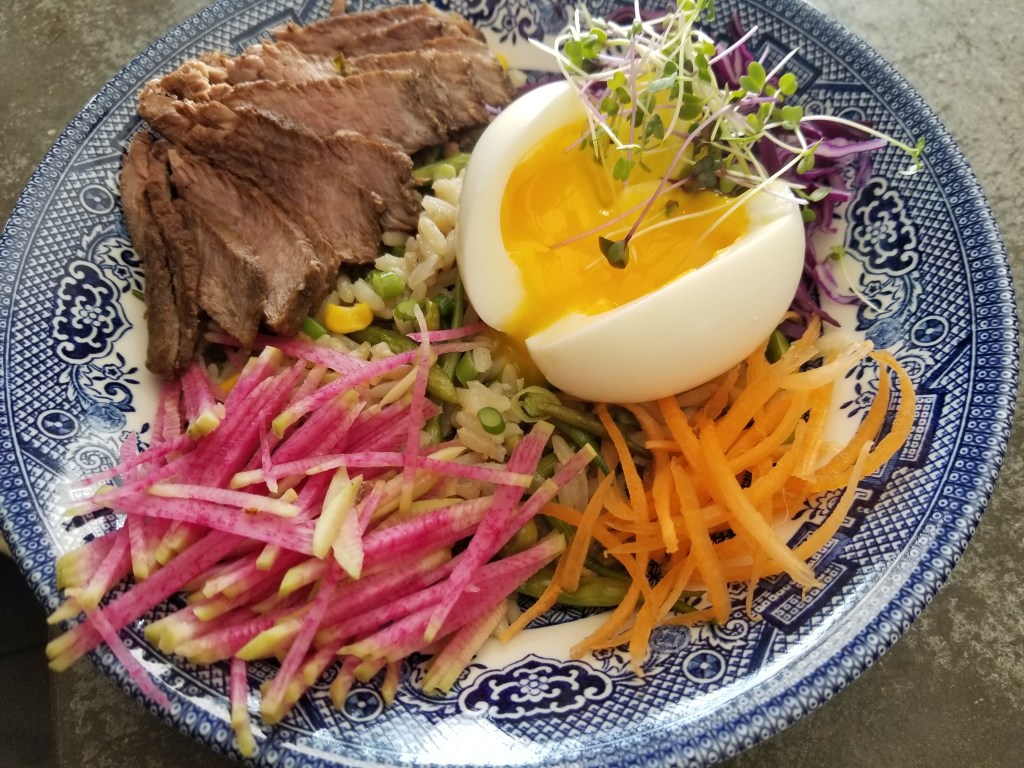
More examples of completely homemade, almost fully local meals (save seasonings and grains, though again they could be).
What is most important to me, not just as a dietitian, but as a person, a citizen of earth, is food access. This push for local, sustainable managed foods is meaningless if it is not accessible and affordable to all. Markets and food hubs in my area have done well to heed this rallying crying, but this is an exception to the norm. Many “farmer’s markets” still face the issue of one I left behind in Georgia: the food is mainly from resellers and/or most vendors are not selling food at all. There is so much work to be done to create an equitable and just food system, but creating demand is one thing those of us who can afford to can impact. Buy yourself the best food you can afford and commit to supporting markets and producers who are trying to foster access to all. This is not a bad place to start.
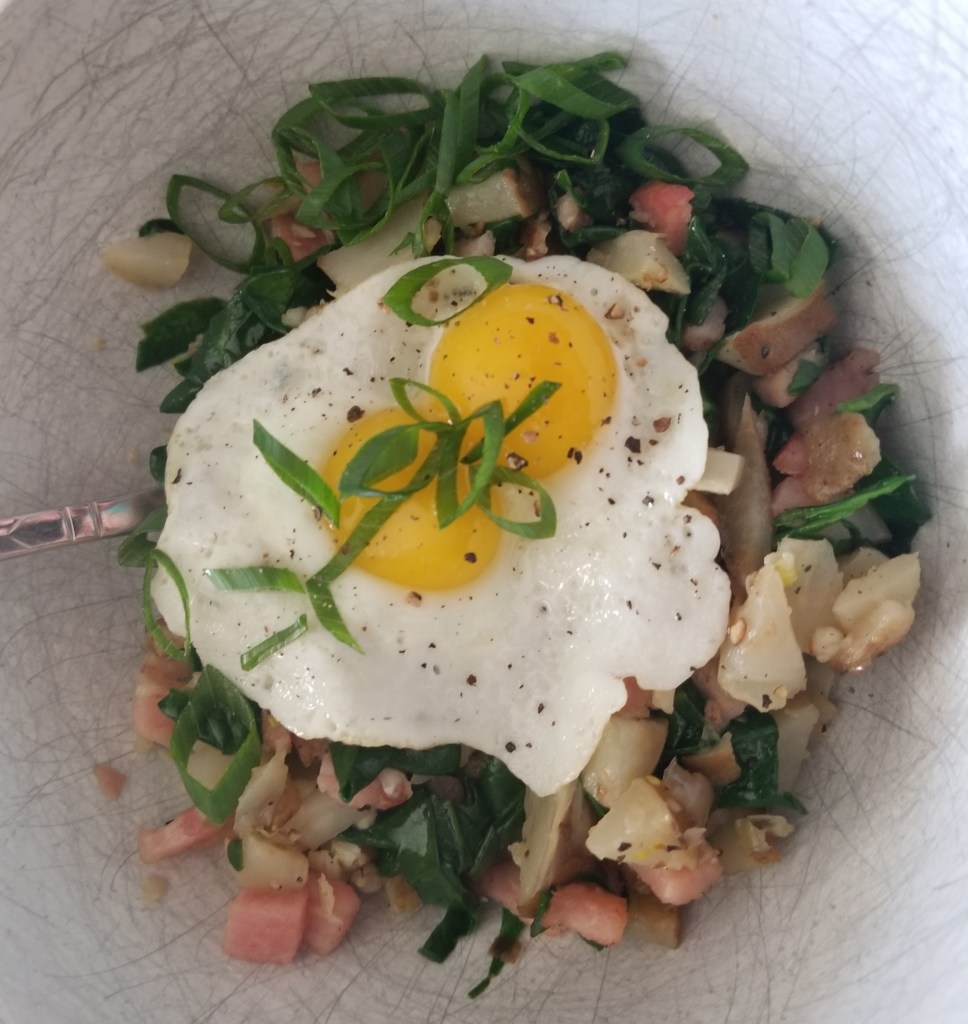
My most recent full-local concoction was this sunchoke hash with spinach, canadian bacon, shallots, and the first walking onions of the year. Leave me a comment if you are interested in the recipe. This was my first time trying sunchokes and I am absolutely smitten.
Enjoy this latest recipe creation lightly adapted from Moosewood Restaurant. Keep scrolling to find the bloggy bit where I talk about jasmine rice and oyster mushroom heartache.
Ingredients for 4-6 servings:
1 13.5 oz can of coconut milk, divided
4 tbsp lime juice, divided
1 tbsp minced fresh basil
1 tsp minced fresh cilantro
1 tsp sugar
2 tsp canola oil, divided
3 small chiles, seeded + minced, divided
1 1/3 c long grain white rice
1 1/4 c boiling water
2.5 tbsp kosher salt, divided
1 red bell pepper
1 orange bell pepper
1 pint green beans
1 tbsp unsalted butter (optional)
1 tsp grated fresh ginger
2 garlic cloves
10-14 oz chanterelles, sliced into bite size pieces (or white oyster mushrooms)
First, bring 1 1/4 c water to a boil. While waiting on the water to heat, make the dressing by combining 1/4 c coconut milk, 3 tbsp lime juice, minced basil + cilantro, and 1 tsp sugar. Whisk vigorously ~2 minutes until sugar is dissolved. Alternately, you could combine all ingredients in a lidded container and shake vigorously for ~2 minutes.
In a medium sized (roughly 1.5-2 qt) lidded sauce pan (probably the one you usually cook rice in if you don’t have a rice cooker), heat 1 tsp canola oil over medium heat. Add two thirds of you minced seeded chiles and 1 1/3 c long grain white rice (jasmine works too), stir in with the hot oil and continue stirring and cooking over medium heat for 1-2 minutes–the chiles should start to be fragrant. Add the 1 1/4 c boiling water, 1/2 tbsp kosher salt, and 3/4 c coconut milk. Stir and bring to a boil uncovered over high heat. Once boiling, cover and reduce heat to lowest setting. Cook for 15-20 minutes until the liquid is completely absorbed and rice is fully cooked. Fluff with a fork and set aside.
While the rice is cooking, bring a few cups of water to boil in a large lidded pot. Slice bell peppers into 1-2″ long batons and cut green beans into simliar sized pieces. Once the water is boiling, add 1 tbsp kosher salt and sliced bell peppers. Return cover and boil 1-2 minutes. Remove peppers with a slotted spoon and place in serving bowl. Once the water has returned to a boil, repeat the process with the green beans, starting with adding another tbsp of salt. [The dish can be served hot or cold, and I think this lazy blanching without an ice bath is so nice].
Add the remaining tsp of canola oil to a pan over medium heat. Add the remaining minced chiles, ginger, and garlic, cooking 1-2 minutes until fragrant. Add the optional 1 tbsp unsalted butter and mushrooms. Saute mushrooms over medium heat until softened and lightly browned. Add the remaining tbsp of lime juice and toss to coat. Freeze remaining leftover coconut milk for up to three months.
Two options to serve: combine all vegetables and serve alongside coconut rice drizzled with dressing. Equally as good, but slightly less visually pleasing: combine rice and vegetables, toss with dressing and enjoy. Optional (but you probably should) toppings include microgreens and crushed cashews.
The chiles I used are called lemondrops. I purchased them last year at a farmer’s market in Madison, WI. The vendor told me they were not heirloom, but I saved the seeds anyway to see what would happen. To my delight, they are such beautiful and productive plants! Hotter than a serrano, thin fleshed, bright yellow when ripe with a slightly citrus aroma.
Another decadent option would be to roast either one or both of the bell peppers for a subtle flavor, textural, and visual change. I roasted one of the peppers the first time I made this and would absolutely do it that way again.
This makes a very rice forward dish, which is great for cooking on a budget or feeding a large crowd. Personally, I prefer a higher vegetable:rice ratio, which is why I added sauteed zucchini to my leftovers. As always, feel free to experiment. Increase the amount of listed vegetables. Add more vegetables: leafy greens (spinach, chard, or kale), onions, broccoli, bamboo shoots, water chestnuts, or sprouts would be great here. Seasonal variations could include swapping in peas and asparagus in the spring time.
To increase protein content, but keep it vegan I would use either extra firm tofu or tempeh with this dish. If that is not a dietary concern, baked chicken, pork, or salmon would be my top choices.
Mushrooms are one of very few sources of dietary B-12 not derived from animal products. B-12 is an essential vitamin that is involved in metabolism and energy pathways. For more information, check out the NIH.
We ordered a CSA for the week, that upon pick up came with a free 12 oz of white oyster mushrooms! I was too excited about free food to remember where they came from, but they were definitely foraged, not commercially grown. Having this addition to our box is what led me to this recipe idea. My heartache with this dish began when my curbside grocery pick up order did not include the jasmine rice I bought just to make this. It probably would have enhanced the flavor a little bit, but we did not miss it. The second heartache came when the entire dish was prepared except for the mushrooms. When I went to cut into them, I realized they were full of holes. Burrowing holes. Having grown up with a father who loves mushroom hunting, I knew what this meant before I cut in. I thought, “Maybe it’s okay. Maybe it is just a little bit.”
It was not a little bit. It was a whole lot of large squiggly… fly larvae and I’m horrified for whoever else received this “gift” without knowing it could be a possibility. Luckily for me, my partner reminded me we had frozen mushrooms my dad had previously gifted us. A sandwich bag of chanterelles saved the day! This is especially pleasing as they are the only mushroom I would choose to eat. [Free is my favorite flavor, which is why I was willing to give the oyster mushrooms a spotlight].
Let me know if you try this out or what other changes you think would be good!








 Eat - Drink - Both