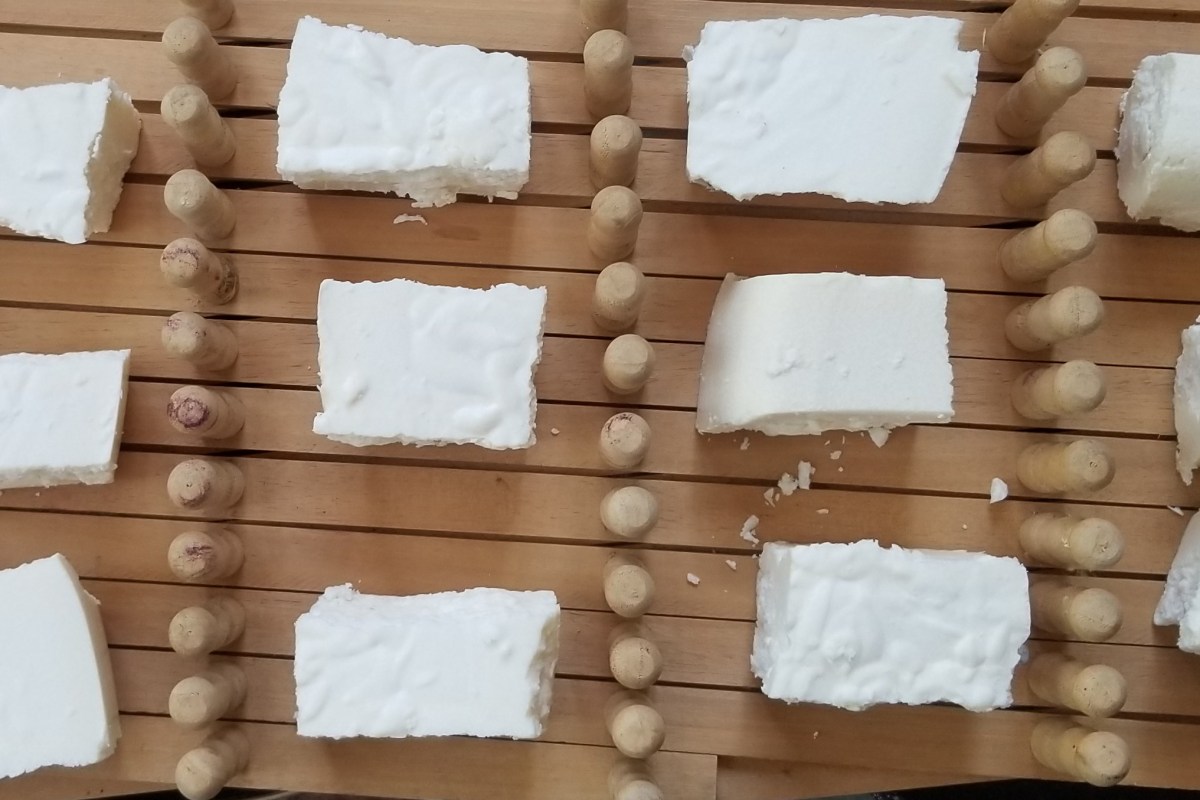
When I called the butcher to discuss what cuts of meat I wanted from my lamb, I asked for everything but the head.* I specified all bones and fat trimmings. Imagine my delight when I picked up my bounty, neatly labeled and vacuum sealed, save for the untied 20 gallon trash bag of frozen trimmings–the bag that occupied the bottom drawer of my stand up freezer for 4 years, with the odd bone pulled our here and there to make stock.
Between working the farmers market stall next to Marjie, the soap making class I took with the MI Folk School, and the power of the internet, I was sure I could make my own soap. While this meant rendering the tallow, I had participated hands on, once, and people have been making soap for thousands of years! And I had a recipe!

Y’all. I lost the recipe. I had it squirreled away somewhere, but four years is a long time for me to keep track of two pieces of paper. In retrospect, the class didn’t use tallow in it’s recipe and I would have had to change it anyway. It is unlikely I would have recognized this though and probably would have used the recipe as written. Instead, using a lye calculator and betting on average, I was ready to begin. I melted the tallow on the stove, got it too hot and had to wait an hour for it to cool enough, then I was ready. Caustic chemicals are super scary, so I fully dressed for the occasion.

This experiment was the perfect use for these massive stainless steel bowls I bought through an online auction of a defunct secondhand commercial kitchen mart.
Stir, stir, stir… the first warning that something was wrong with my calculations was that the soap took three times as long to get to the “trace” stage than it was supposed to.
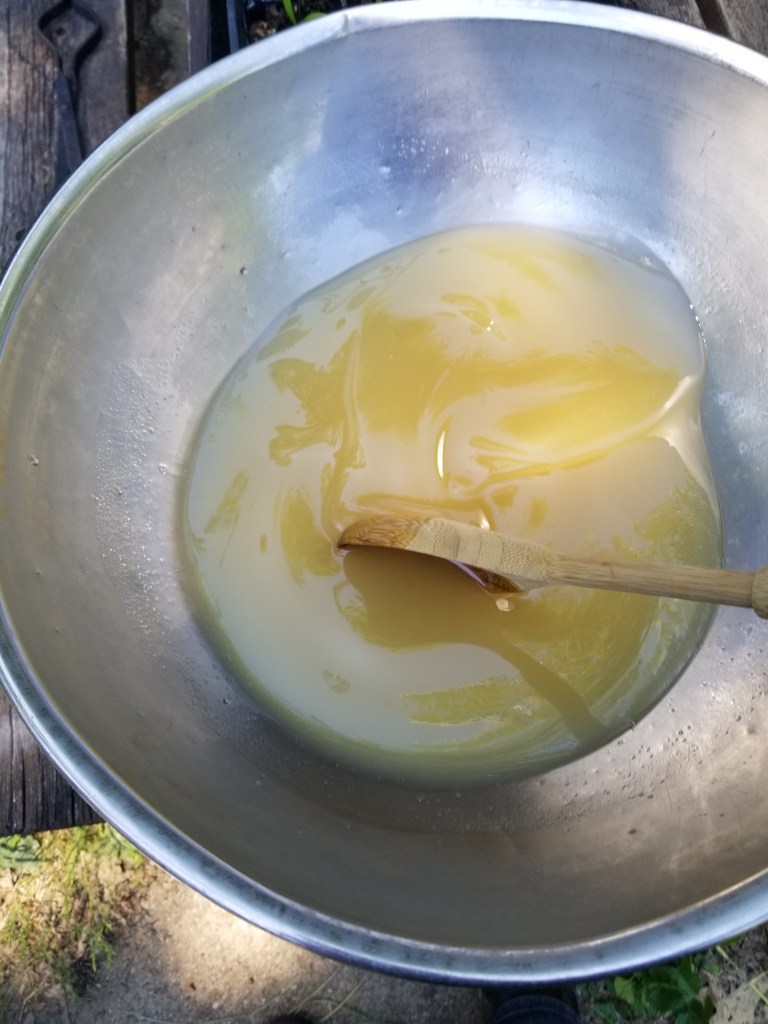

But it did. I was dancing around my backyard, literally jumping with joy. At this stage, I added lavender essential oil I bought from a company in Kalamazoo. Everything local! Using an old Tupperware that I generally use to mix potting soil in for a mold, the soap was covered, swaddled with a towel and let to rest over night. The directions I settled on said to unmold and cut after 24 hours and place on a wooden rack to cool. I choose the closest thing I had.
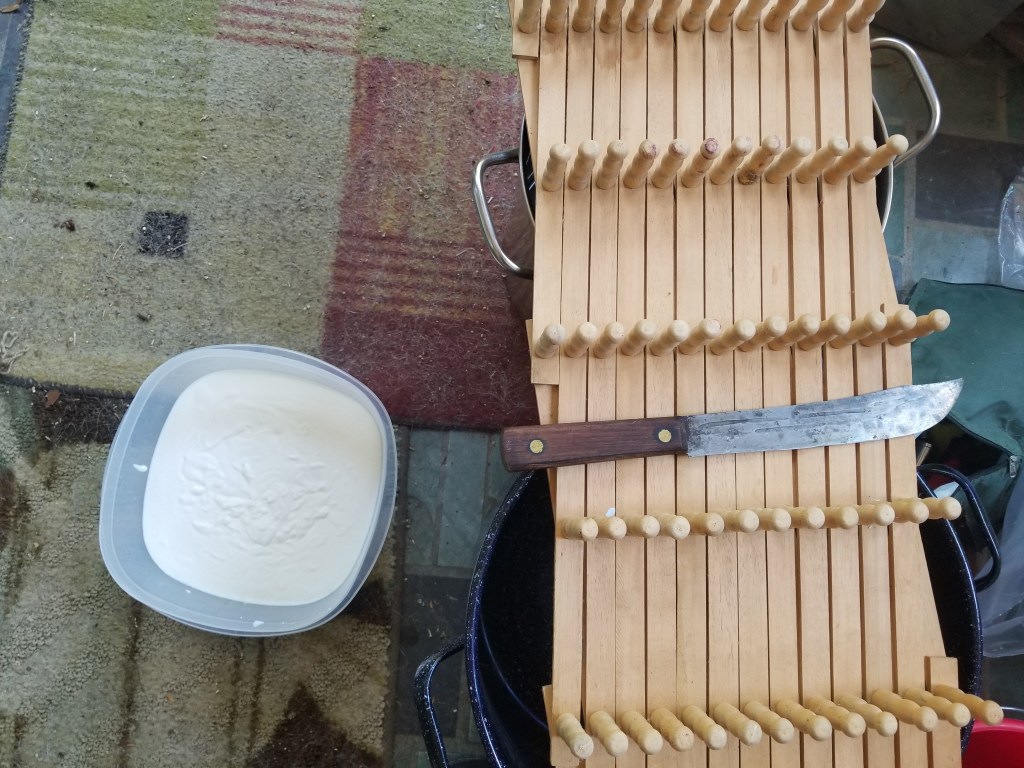
The second time I knew I had done something wrong was when I attempted to unmold and cut the soap. I chose not to “superfat” the soap and maybe this was my mistake. I imagined something much more pliable than my result, like a hard fudge. What I got instead was more like fudge that you forgot about and let sit out on the counter for a few weeks.


Here we are. The rack of soap is currently curing in a closet. In about three weeks I will report back on the efficacy. It’s so crumbly, I may end up using the majority for laundry soap. For now, at least, it is acting like a lovely air freshener for the first story of the house.
If you’ve any experience with soap making (or not) and have any troubleshooting tips to offer up, I’d be much obliged. I used roughly 1/3 of the tallow I rendered to leave room for improvement.
*It should be noted the butcher I chose took this to heart. I was concerned when I saw something black in the bag of trimmings. Had my freezer gone out and some point and it molded? Nope. Feet. Black, fuzzy feet.




 Eat - Drink - Both