Pakoras

Indian spiced vegetable fritters.

The perfect recipe for transitioning seasons. As we slowly roll from spring into summer, the kale and radishes are still coming in strong. I love these dipped in just about any sauce, but they go great with tamarind chutney, hummus, lemon tahini dressing, or the included recipe for mint yogurt sauce.

This recipe makes a bunch and they heat and crisp back up nicely in the oven or toaster oven. They also freeze really well, so this is a nice make ahead freezer meal. There’s a lot of room to play around with the recipe, do what feels right for you.

I prefer using a food processor to shred the vegetables, but if one is not available to you this can be accomplished with a sharp cheese grater.

Mint Yogurt Sauce Ingredients

  • 2 tbsp minced fresh mint
  • 1/2 cup plain yogurt
  • 1 tsp minced fresh garlic
  • 1/4 tsp salt

Pakora Ingredients

  • 1 bunch kale, rinsed, stems discarded, leaves diced
  • 1 bunch radishes, rinsed, greens removed*
  • 1 onion
  • 1 tsp ground turmeric
  • 1/2 tsp curry powder
  • 1/2 tsp ground cayenne
  • 1/2 tsp salt
  • flour**
  • canola oil, for frying

Combine sauce ingredients and allow to marinate in the fridge while you make the pakoras.

Place the diced kale in a large bowl and set aside.

Heat a large, heavy-bottomed skillet with enough oil to coat up to about 1 cm. Remember, the hotter your oil, the less the fritters will soak up. But this is a balance because you do not want your oil to smoke – watch for wavy lines to indicate heat or use a thermometer if you have it and try to keep the oil around 250-300 degrees.

Cut the onion in half, peel, and chop each half roughly into 1-2 inch chunks. Use the shredder blade for the food processor to grate the onion, followed by the radishes.

Add the shredded onion and radish to the diced kale. Add turmeric, curry powder, cayenne, and salt to the vegetable mixture and stir well to combine.

Add the flour, 1/4 cup at a time, stirring until it is no longer visible. Continue to add flour bit by bit until your mixture comes together and can be formed into balls between two spoons.

Another way to tell it is a good consistency is if you lift a spoonful in the air, the batter does not slide off.

If you find it is too dry, simply add a little bit of water.

Super chef secret tip: Once you are ready to start frying the pakoras, add only ONE small one to the hot oil. Once it’s nice and ready, let it drain and give it a taste. This will let you adjust the seasoning for the rest of the batch as needed. I almost always add more salt.

Using two dinner spoons, shape pakoras and add to the hot oil. When you can see the edges brown, they are ready to flip. The photo below is NOT ready to flip!

Remove fried pakoras from the pan and allow to drain on a paper towel lined plate.

Serve warm with the sauce of your choice and enjoy!

*radish greens are totally edible, I always dice them along with the kale. They have a very mild taste and the fuzzy/prickly feel of them is lost when they are cooked.

**If I have it on hand, I use chickpea flour (sometimes also call besan or gram flour), if not I like to use whole wheat. Using chickpea flour makes this recipe both vegan and gluten free. I have found that the biggest difference between the two flours is in the leftovers. If you use chickpea flour, I recommend only eating the leftovers reheated, otherwise the texture cold is quite unpleasant. However, if you use whole wheat flour, I think the cold leftovers are just dandy.

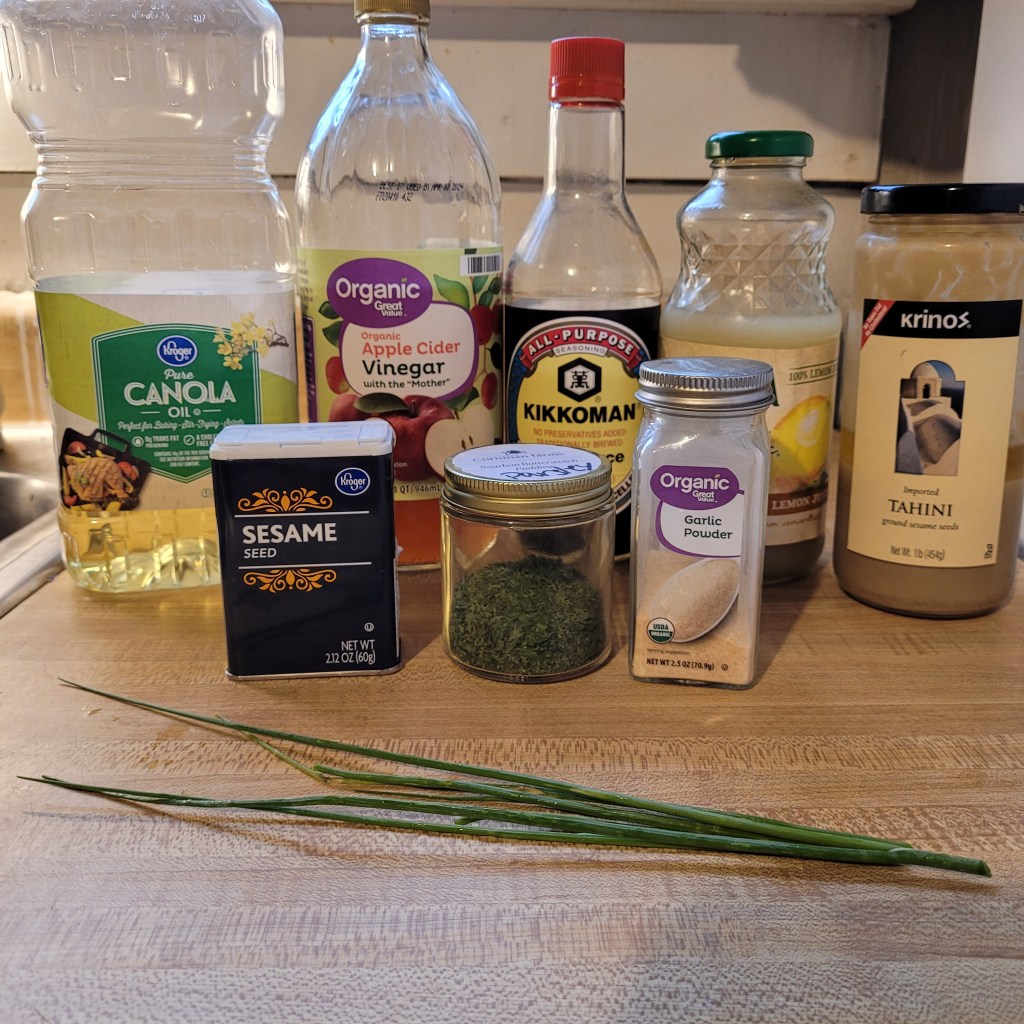
Tahini lemon goddess style dressing

This recipe features wild onions grown on our farm!

With rising grocery costs, sometimes it makes sense to produce your own version of pantry staples. There’s pretty much only one kind of dressing that I like, which around these parts is over $5 a bottle… and I’ve never met a dressing that I liked that much. Luckily, it is easy to throw together with other pantry staples I always have around.

This recipe is super easy to substitute what you may have on hand – I’ll put a reference list at the end!

Please note: the above photo is not a brand or product endorsement, these are simply the actual items I currently own.

Tahini Lemon Dressing – makes approximately two cups (about 16 servings of 2 TBSP)

Ingredients

  • 1/4 cup canola oil
  • 3-4 TBSP tahini (thick – see notes)
  • 2 TBSP apple cider vinegar
  • 2-3 TBSP lemon juice
  • 1 tbsp soy sauce
  • 1 tbsp minced wild onions
  • 1 tsp garlic powder
  • 1 tsp sesame seeds
  • 1 tsp dried parsley

Really, really, really finely mince your wild onion greens. Make the tiniest circles possible. I like to cut them on a bias to be “fancy”.

No specialized equipment necessary for this recipe. I put it all in a 4 cup measuring cup and whisk until combined. Give it a taste and adjust any ingredient you see fit. If the texture/thickness is to your liking, you’re done! I typically add a tablespoon or two of water to get it how I like it. Put it in a container of some kind and use immediately or refrigerate.

A few notes:

  1. This dressing is supposed to be thick. Tahini naturally separates into solid and oil. Knowing this, I recommend pouring off the oil on top (save it to add back in to the tahini jar) and using the nice, thick slugdey bits from the bottom of the jar. This is compensated for at the end when you add in water until the dressing is the consistency you prefer.
  2. This is meant to be customized to YOUR taste! I err on the side of more lemon and more tahini. If you think it is lacking in salt, add a dash more soy sauce until it tastes right to you.
  3. If you’re not a big garlic person, start with half, or leave it out! You need to make food you like so that you eat it.

Substitutions

  • use whatever oil you have and enjoy if canola isn’t your jam
  • tahini probably should stay tahini, but cashew or sunflower seed butter could definitely work here
  • white or sherry vinegar in place of apple cider vinegar (you could use a little less even)
  • if you have gluten concerns but aren’t vegan, worcestershire sauce could easily replace the soy sauce, but start with half as much
  • you could use chives or green onions in place of the wild onions, either fresh or dried
  • sesame seeds and parsley are the most optional ingredients, they won’t really make or break the dressing (but I like them in there, a lot!)

Also, if I haven’t shared this kitchen hack before: if you have a recipe that calls for fresh parsley and you have to buy a bunch from the store, dry the rest! Most recipes call for a few tablespoons, at most, and drying it is not only an easy way to save on wasting the rest, but it is so cost effective!

Seasoning Cast Iron Wedge Pan

Before getting into the nitty gritty, I’d like to take this moment for a small public service announcement to remind y’all that you can eat legumes, greens, and whole grains any day of the year, not just January 1st. Protein, fiber, calcium, iron, and a whole swathe of other vitamins and minerals are needed daily!

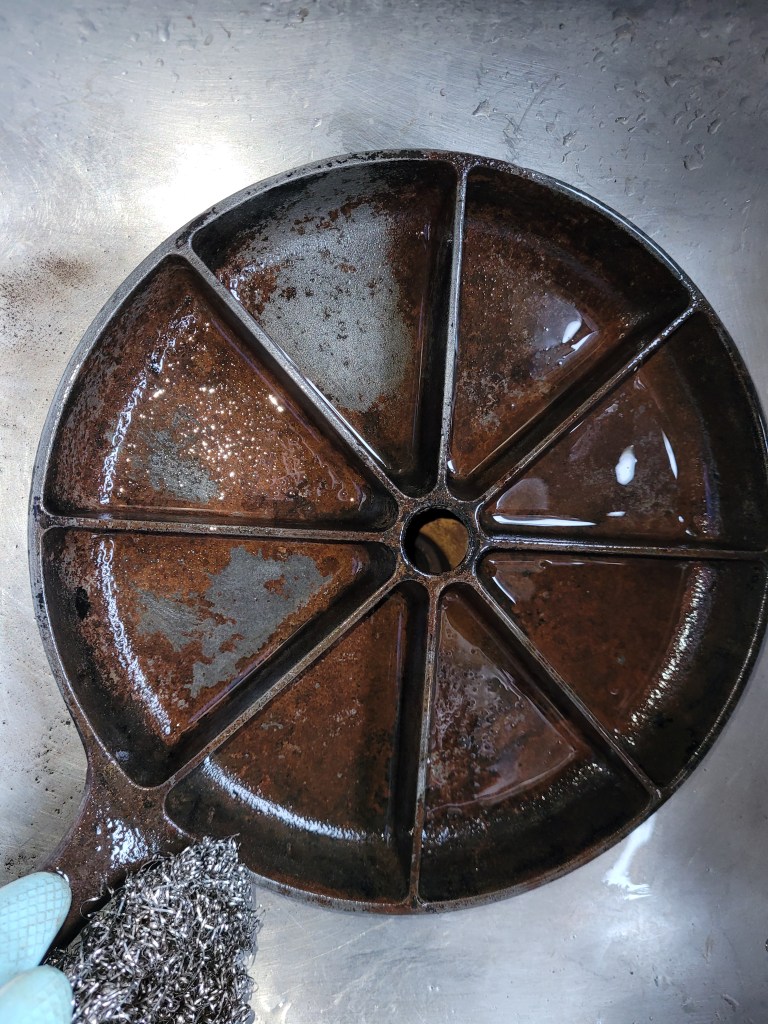
We found this cast iron pan (among many other “treasures”) in the garage on our property. A garage that had fallen way into disrepair during the 6+ years the home was vacant. After four months, we have finally gone through the majority of [mostly trash] that was left to us in the massive structure. However, a few useful things were spared by looters, such as this cast iron wedge pan! When we found it, not only had it grown a nice, thick layer of crunchy rust, but it was also full of all sorts of other garage-nature detritus. I don’t have a photo of the crusty, fuzzy mess that it started out as, but as you can see below after the first round of half an hour of steel wool scrubbing, there was a lot of work left to go.
There is a ton of information about the “best” way to restore and clean a cast iron pan. I lay no claim that proclamation, and only serve to illustrate what worked for me. This took a few days, and many hours, to get the pan back down to the original iron. The most useful thing I came across was to soak the cast iron pan in a 1:1 white vinegar and water solution.

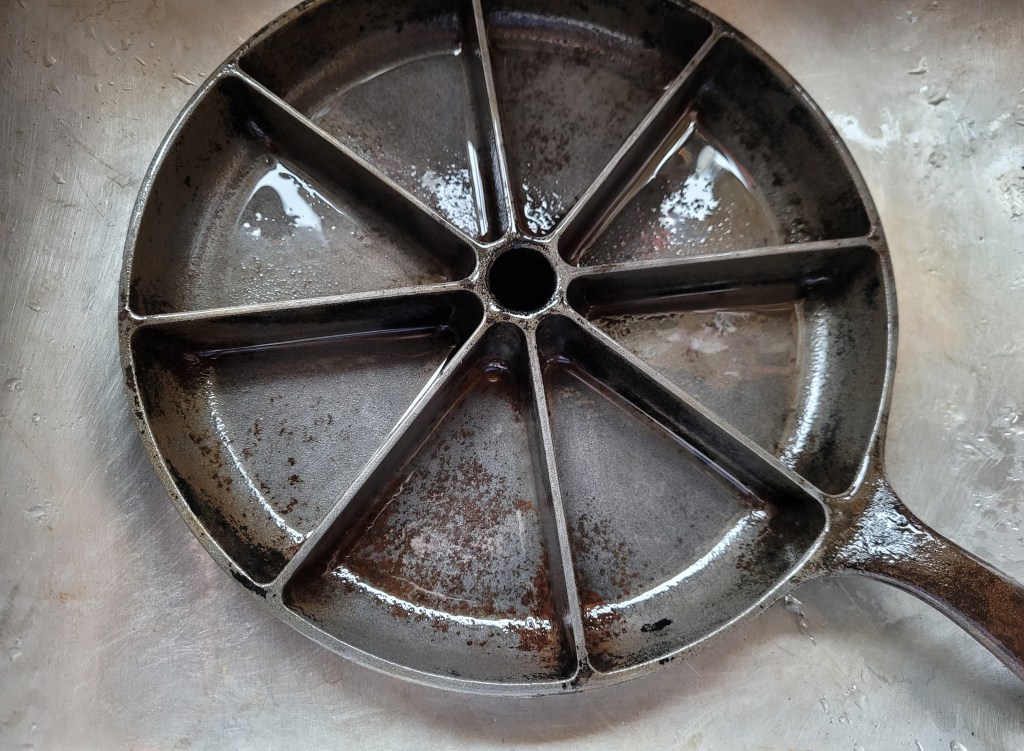
This was one of the coolest and most disgusting things I’ve ever done in our kitchen! I am not a fan of vinegar, so the smell is especially strong to me, then combine that with acrid, bubbling iron oxide… whew. But look at that chemical reaction GO. I alternated overnight soaking then scrubbing twice. Below is the result after the first night of soaking, followed by an hour of scrubbing.

Still a bunch of rust left, but enough clear areas to fuel my hope that this was a surmountable task that was probably worth the undertaking. Another night of soaking (in the same 1:1 vinegar and water solution) and another morning of scrubbing yielded:

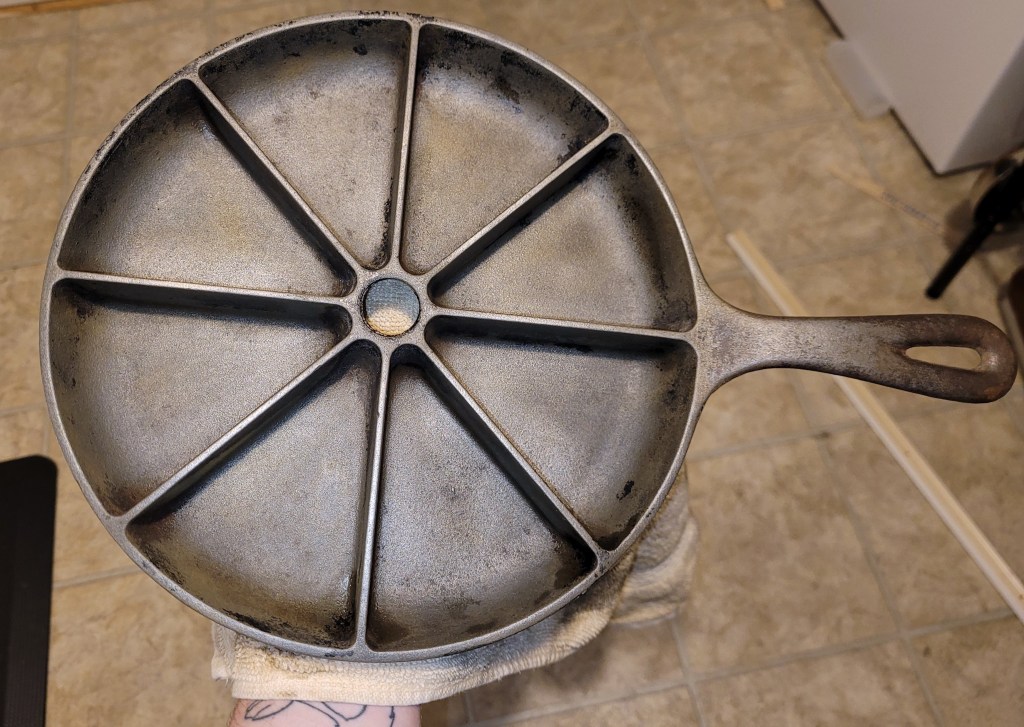
So nice! I scrubbed the last bit of rust off the handle before starting to season. A well seasoned cast iron skillet is one of the most versatile kitchen tools. My dad likes to brag that he can boil water and cook pasta in his with no ill effects to the nonstick surface. However, how to season a cast iron skillet is definitely a polarizing point of contention. I consulted a few different sources and decided to combine tactics. Oven to 400°F, one rack in the middle and one on the lowest setting with a sheet of tinfoil to catch any drips. The highest smoke point neutral oil I typically have on hand is canola, so canola I used.

Speaking from experience of poorly seasoning cast iron pans many times, I can say with certainty that the most important thing you can do is make sure your layer of oil is as thin as possible. If you touch the oiled skillet with your hands and it either feels greasy or leaves a shine on your skin there is too much oil. Even when you think you have wiped away every possible speck of oil, wipe a few more time using either a new towel or paper towel each time.

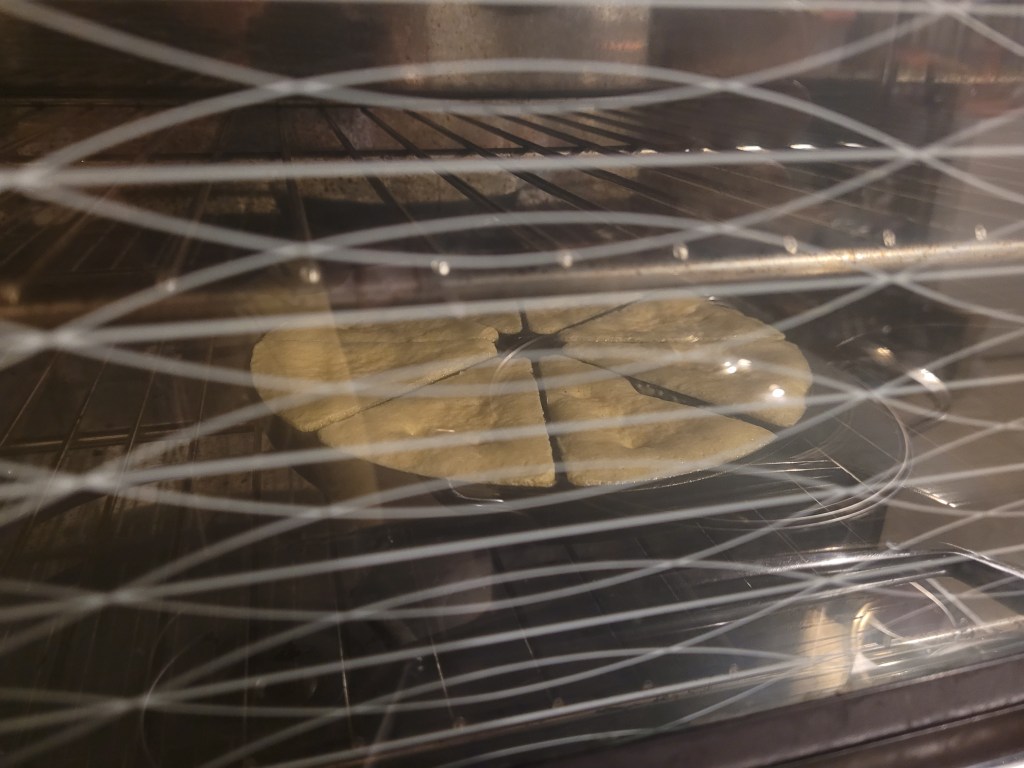
When you are satisfied you can’t get any more oil off, place the skillet directly on the middle rack upside down. Set a time for one hour and walk away. After the hour is up, turn off the oven and walk away again until the oven and pan have cooled down to room temperature (many hours). Then repeat this process at least twice (my recommendation) before using.

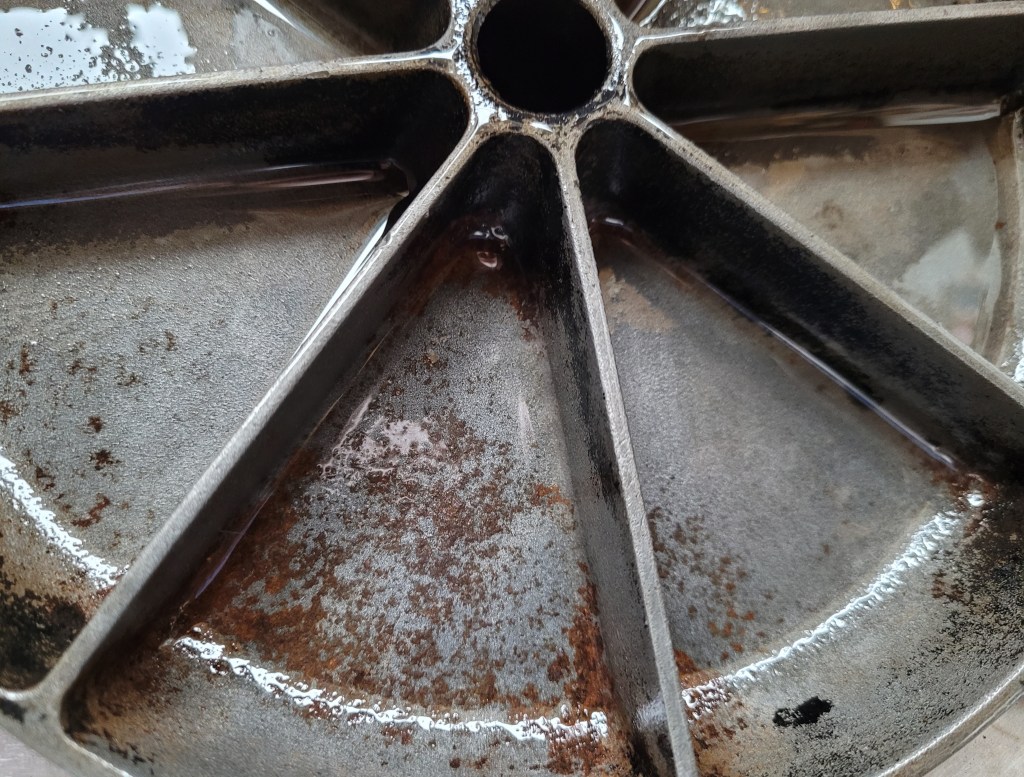
Pictured below is second oiling after first seasoning. See those pools of shiny oil in the corners? That shows that more oil needs to be wiped off.

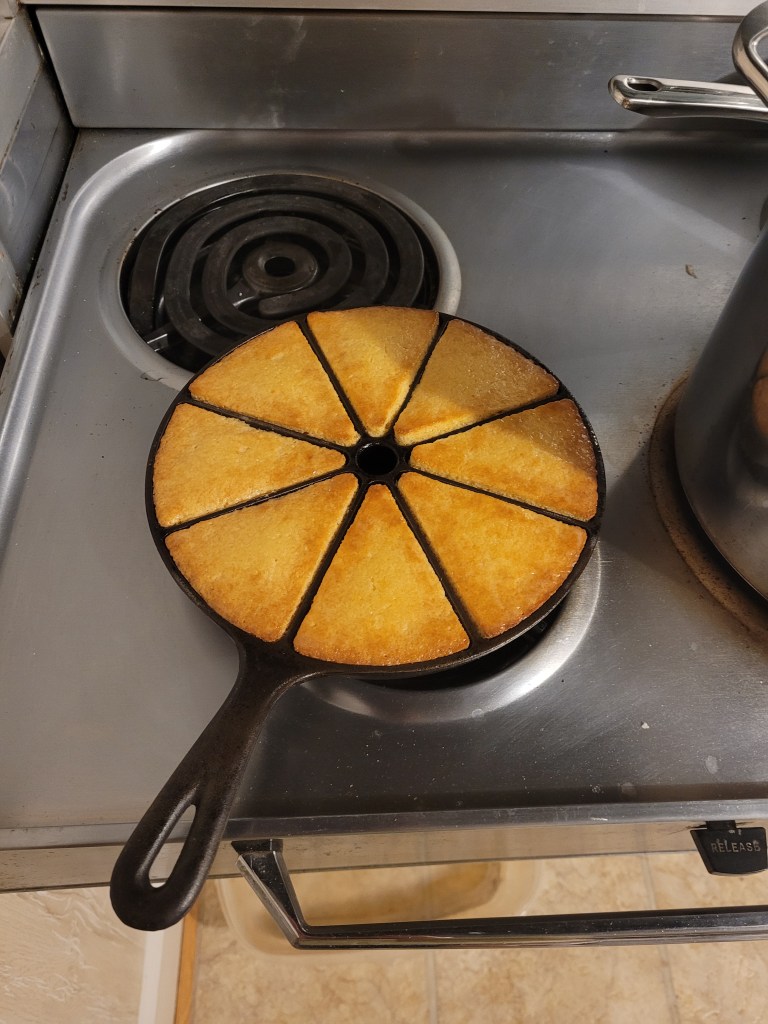
When you do use your newly seasoned pan for the first time, be sure to use copious amounts of grease–butter, oil, lard–and continue to do so when cooking for the first dozen or so uses. This will continue to add to the layers of seasoning. Some random site on the internet said cornbread was a good first food to cook in a newly seasoned pan which was perfect confirmation bias as that was exactly what I had planned to do.

And oh my stars it worked. It actually, really worked!

Hopefully I’ve inspired you to tackle your own sort of strange behemoth undertaking. If you do, I’d love to hear about it! The wedge pan seems a ridiculous invention, and next up I think I’m going to try scones or frittata slices. Any suggestions for other foods you think would be nice to eat in a triangle shape?

And If you’re wondering why this post doesn’t contain any sort of recipe to eat, drink, or both, that’s because we are a diehard Jiffy mix family. Mix, bake, butter the warm top, enjoy.

Duck Fried Rice

Tis the season to use up those leftovers. Lucky for me, I have this space as a personal, online recipe book.

Our Fall Feast was a bit toned down this year, what with fixing up a 90 year old house and planning how to plant two rolling, hilly acres (plus gully) – chickens and sweatpants, here I come! We cooked up a meager spread: roast local duck, green bean casserole, mashed taters, stuffing, and homemade local pumpkin pie. As usual, a 4 pound duck turned into many, many meals. I got the chance to look back to a few winters ago, and adapted my leftover goose pot pie recipe to this duck and what we had in the fridge. I’ve been working on my pie crimp game, can you tell?

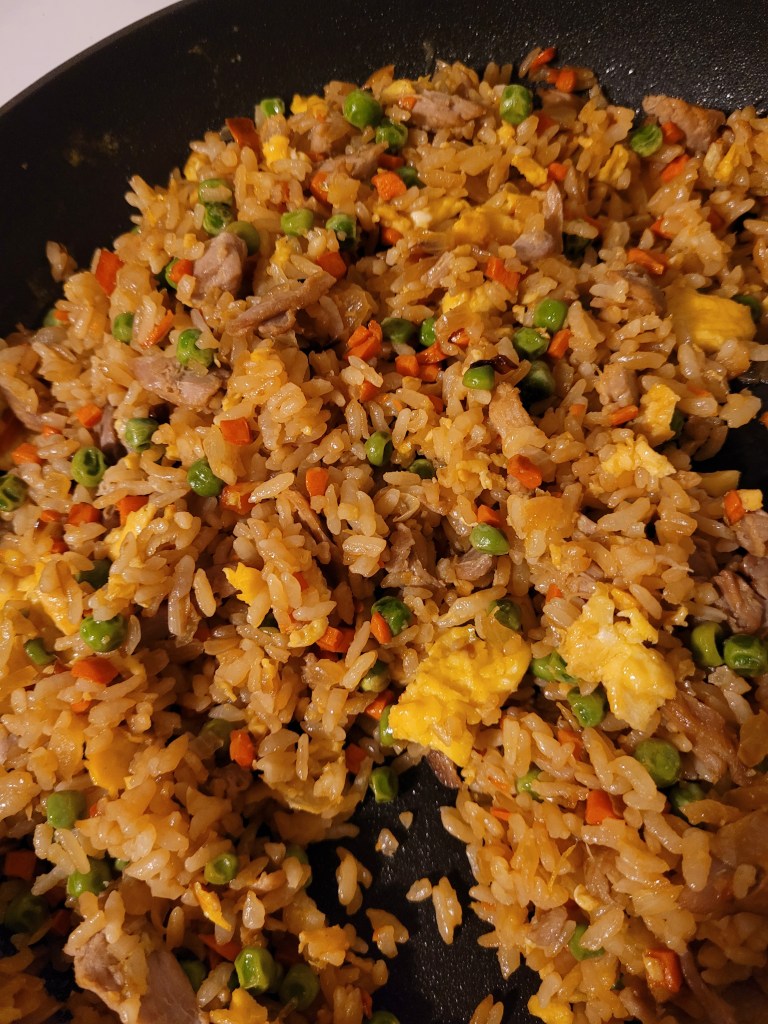
Also, for the first time in 5 years, I didn’t overcook the duck! Thanks, in part, to a new recipe site I discovered, which also served as the catalyst for throwing together what was, for sure, the best fried rice I have ever made at home. The trick, it turns out, is to not skimp on the oil. Surprise, surprise – look at that oil shimmer!

Quick and simple to throw together – the hardest part is needing cold (preferably at least day old) rice. Based off the recipe from Hank Shaw.

Ingredients – added in the order listed

  • 1 large carrot, peeled, small dice
  • 2 tsp olive oil
  • 1/2 large onion (I used yellow, any type will do)
  • 1 tbsp duck fat (substitute high smoke point oil of your choice)
  • 2/3 cup frozen peas (thawed)
  • 2/3 cup leftover duck, shredded/chopped
  • 1 inch ginger chunk, peeled and minced
  • 1 tsp garlic powder
  • 2 cups day old rice (I used Nashiki sushi rice)
  • 2 tbsp canola oil (divided)
  • 2 eggs, whisked
  • 2 tbsp soy sauce (divided) – check label for “wheat” if you are gluten intolerant

To a large fry pan or wok, add carrot and olive oil over medium heat. Stir and cook while you dice up the onion. After a minute or two, with the carrots fragrant, add the diced onion and duck fat. Cook 5-10 minutes until carrots are fork tender and onions are lightly browned. Add thawed (or fresh!) peas, cooking two minutes more. Add duck, but do not stir. Add ginger, garlic powder, and one tbsp of canola oil, then rice, stirring well to coat the rice in oil. You may need to decrease the heat at this point.

Crack two eggs into a bowl and (fork) whisk vigorously until creamy yellow. Move rice mixture to one side of the pan (if your stove is not level like mine, move to the higher side of the pan). Add the remaining 1 tbsp canola oil to the naked side of the pan. Once lightly shimmering, add whisked eggs to the oil. As the eggs start to firm and cook, gently fold them from the sides, creating fluffy sheets of scrambled eggs. Once they are done to your liking, stir all together with the rice mixture. Turn the heat back up to medium, leveling the fried rice in the pan and let cook, undisturbed for 1-2 minutes. Pour 1 tbsp of soy sauce around the edges of the pan and quickly stir to combine. Allow the mixture to sit for one minute and repeat with the remaining soy sauce.

Serve warm as is, or add your favorite additional toppings such as sesame seeds, chili garlic paste, and/or scallions. I bet this would also be great with a side of kimchi.

My personal complaint about restaurant fried rice is always the rice:everything else ratio, but following this ricepe (see what I did there?) flips the ratio and then some. Rejoice, for the egregious amount of oil(s), fiber form the vegetables, and protein in the duck make your body absorb the carbohydrates (glucose) from the rice much more gradually, keeping your energy level and your belly full.

Squash Season + the best way to freeze pumpkin puree

Late autumn, time to hunker down and store some vitamin A! Pumpkin and winter squash season is well underway, and I don’t know about you, but we are up to our elbows in fleshy orange goodness. It started with a Halloween carving session, tempered by a current lack of compost pile and desire to cut down on waste.

I went rogue and cut my pumpkin open from the bottom. It wasn’t the most resounding success and it was difficult to line up perfectly, but it was worth it for not having to stick my arm into the pumpkin to light the candle!

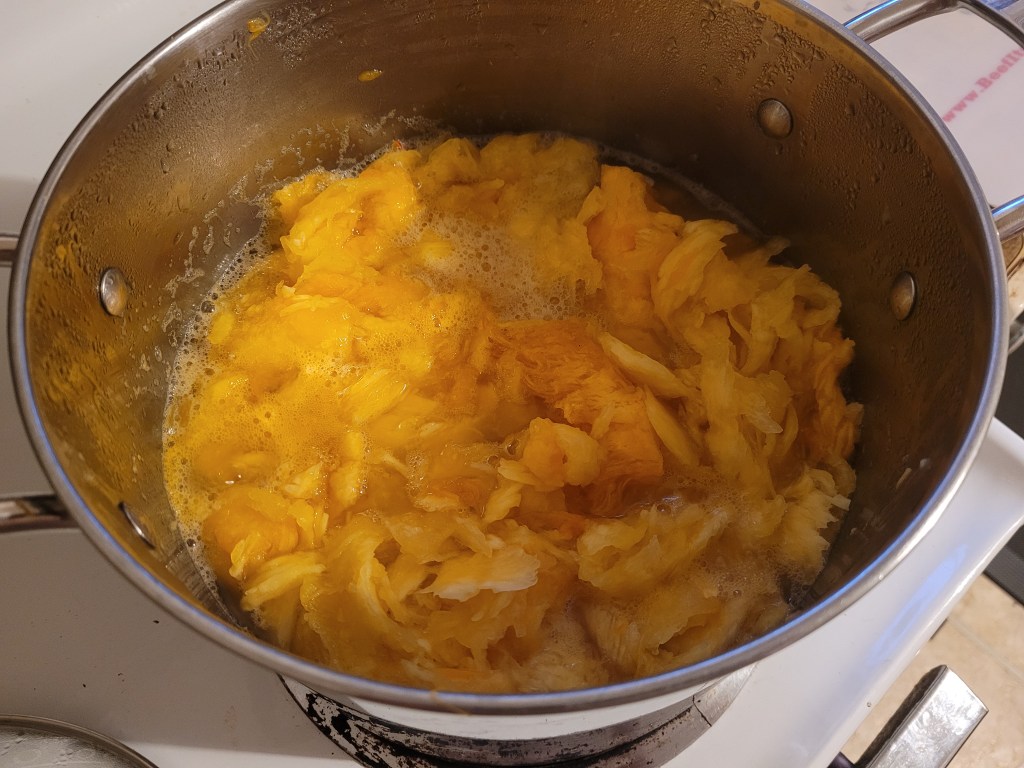
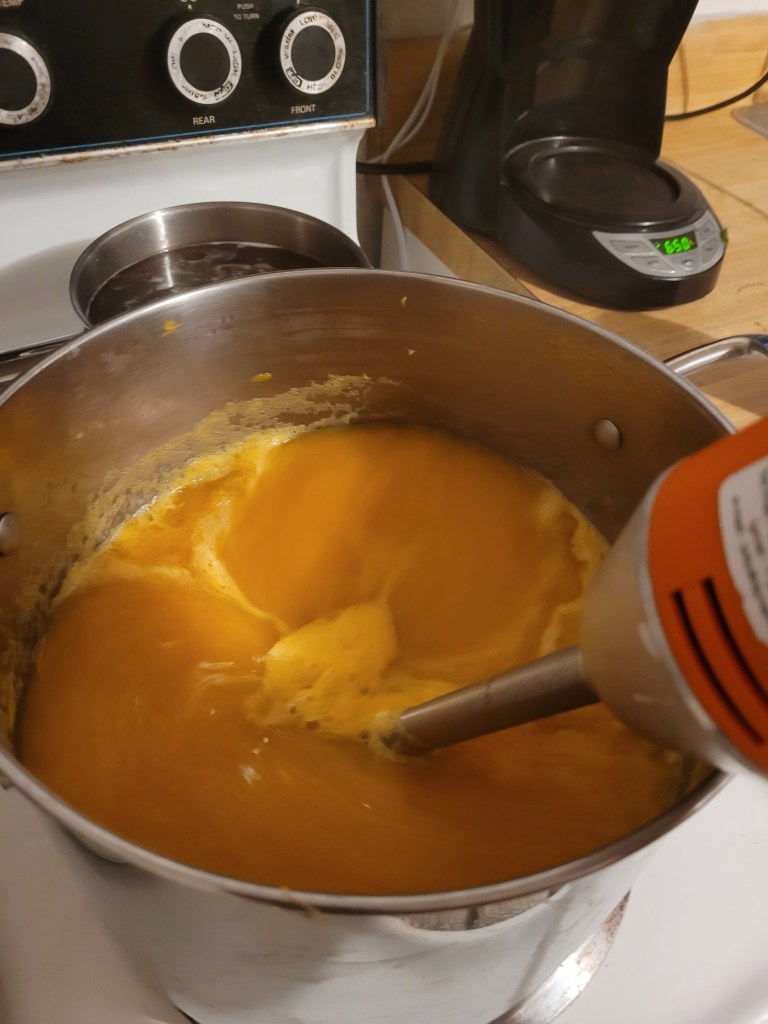
Seeds were roasted (rinsed, patted dry, 5 mins at 350 until dry and tacky, tossed with olive oil and salt, roasted ~20 minutes, stirred roughly every five minutes until lightly golden brown and smelling toasty) – the best we’ve ever made; and the innards were cooked down on low heat over many hours (at least eight) until darkened, thickened, and smoothed out with an immersion blender before cooking down some more. Carving pumpkins are notoriously watery, cooking them down takes more than twice as long as squash grown for comestibles.

This was all, of course, prior to cooking any of the cucurbits purchased for the purpose of consuming.

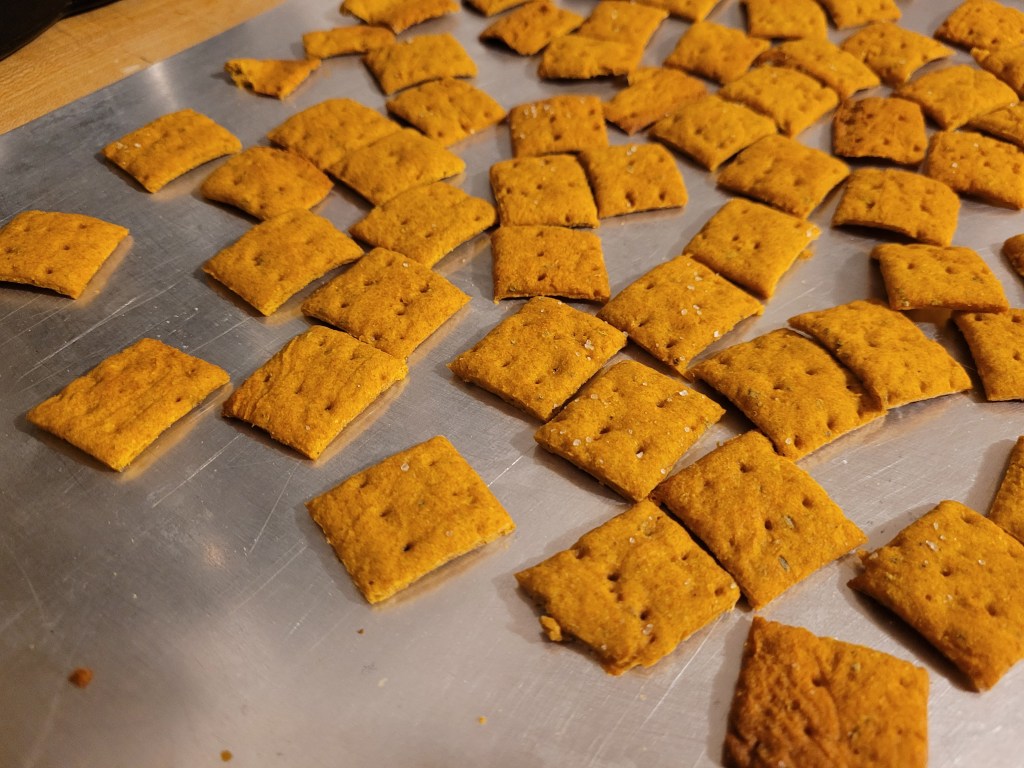
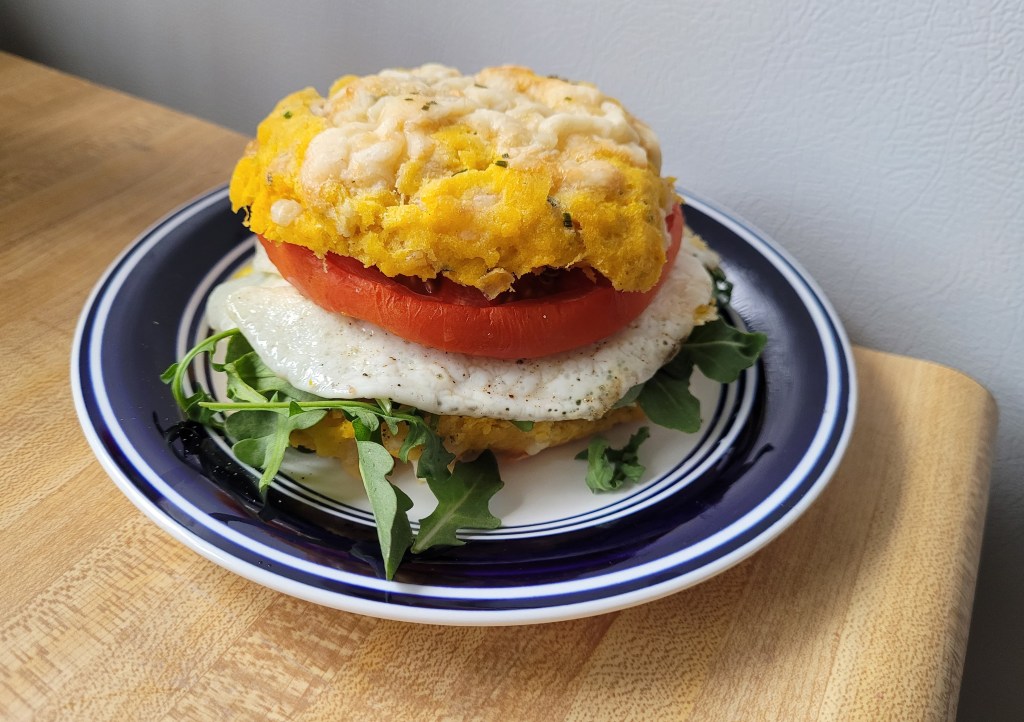
This puree has already taken many forms:

  • Dog treats and sea salt sage crackers

  • Savory cheesy scones (perfect for breakfast sandwiches)

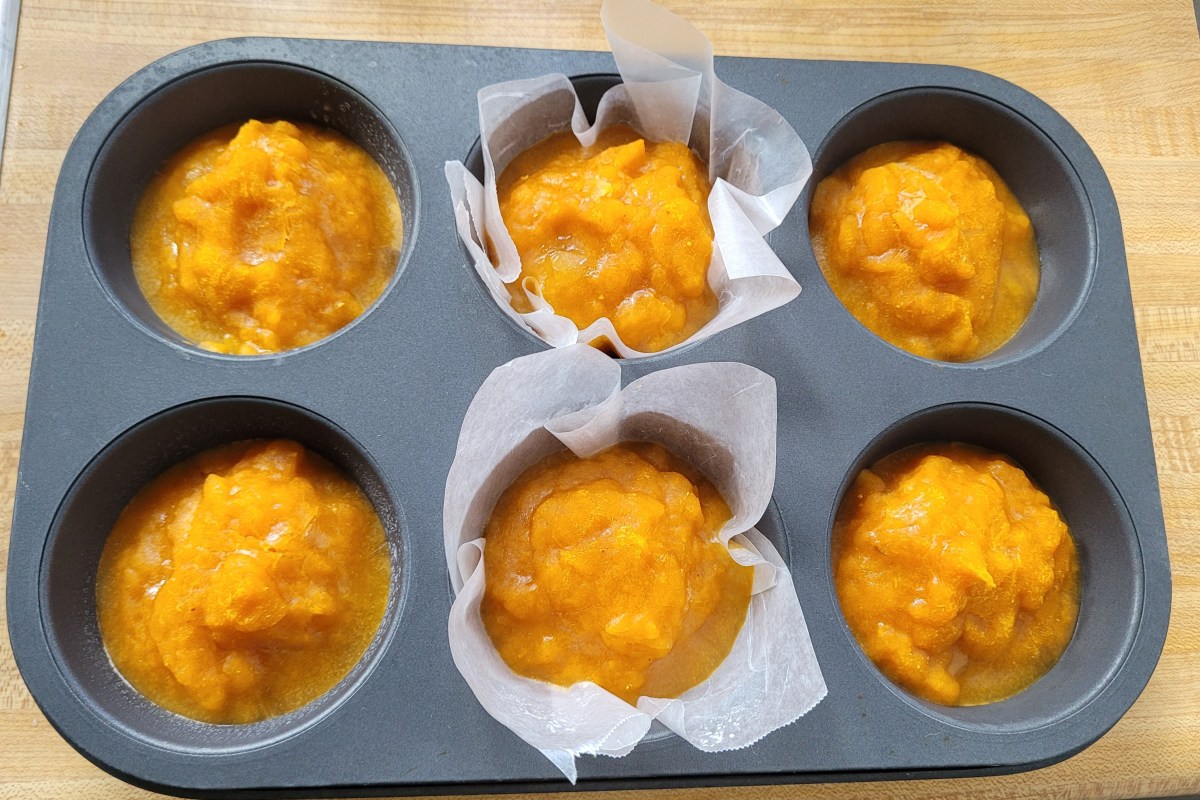
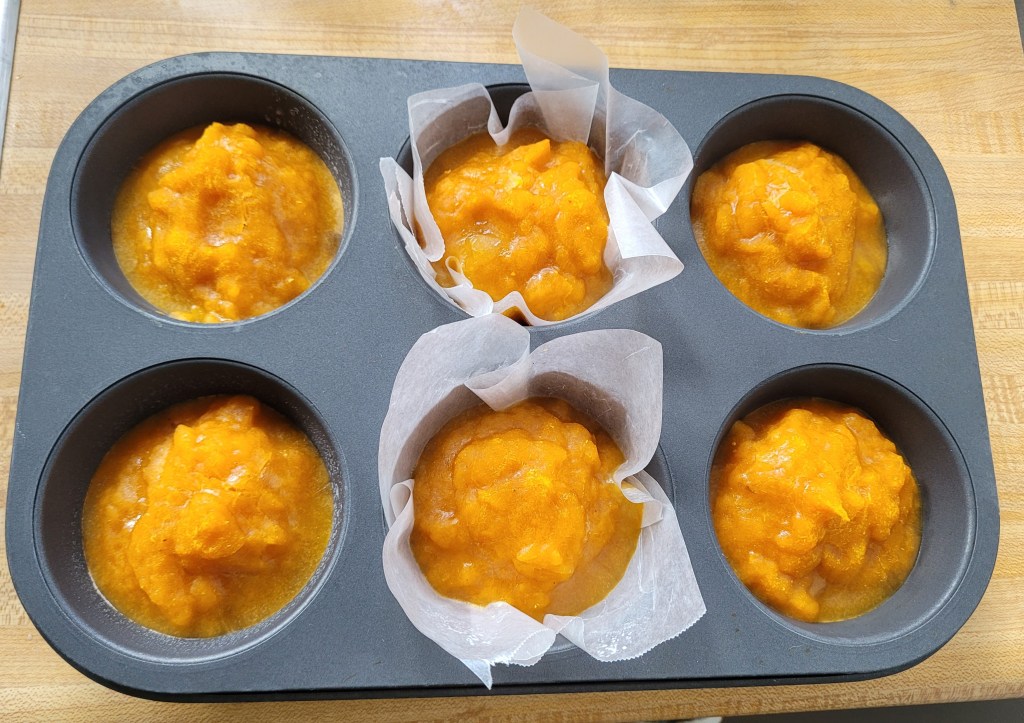
And I experimented with the best way to freeze pumpkin puree. Using a 1/2 cup measuring spoon and muffin pan, I tried three ways. Oiled, wax paper lined, and plain. The verdict?

If your muffin pan is nonstick, save yourself time and oil. Plopping the pumpkin in plain lets it pop out easier than ice in an ice cube tray. Store in a zip top bag in the freezer for sauces, soups, and baked goods throughout the winter.

PSA: do not use wax paper, it sticks and tears and you’ll have to thaw the pureed pumpkin and start all over again. Or you can thaw it, add some maple syrup, and experiment with dehydrator pumpkin leather. Will it work out? Or will we end up with chunks of sweet, crunchy pumpkin bark? Update pending… still a few more hours of dehydrating to go.

All this from the typically discarded innards of carving pumpkins! Not yet pictured, from the intentionally roasted galeux d’eysines squash: ricotta and pumpkin manicotti, pappardelle pie, and likely some sweet treats to come.

Let me know if you are interested in any of the above recipes, and I’m open to suggestions on what to do with the remaining 10 or so pounds of orange gold!

Curry Chicken Salad

A nice fridge and pantry clearing staple. Some people like eating warm things when it is cold and cold things when it is warm, but I believe the sweet, warming spices in this dish, though served cold, let it straddle the line for an any weather meal.

Ingredients (makes 6 servings):

  • 2 boneless, skinless chicken breast*
  • 1 cup diced red onion
  • 1 cup diced celery
  • 1/2 cup chopped cilantro
  • 1/2 c chopped cashews
  • 1 cup reduced sugar dried cranberries

Chicken Baste:

  • 1/2 c mayo
  • 1/2 tsp each turmeric, curry powder, garlic powder
  • pinch salt

Yogurt Dressing:

  • 1/4 cup natural sour cream (see note)
  • 3/4 c plain low-fat yogurt
  • 1/2 tsp each turmeric, curry powder, and garlic powder

Two methods of chicken preparation:

  1. Preheat oven to 375. While heating, combine basting ingredients. Pat chicken dry and evenly coat with mayo mixture. Place on foil-lined baking sheets and roast ~15-25 minutes until chicken reaches an internal temperature of 165 for 15 seconds. Set aside to rest.
  2. Alternately, for a lower fat version, simmer chicken in water or low-sodium stock until falling apart tender. This can be done stove top or in a slow cooker.

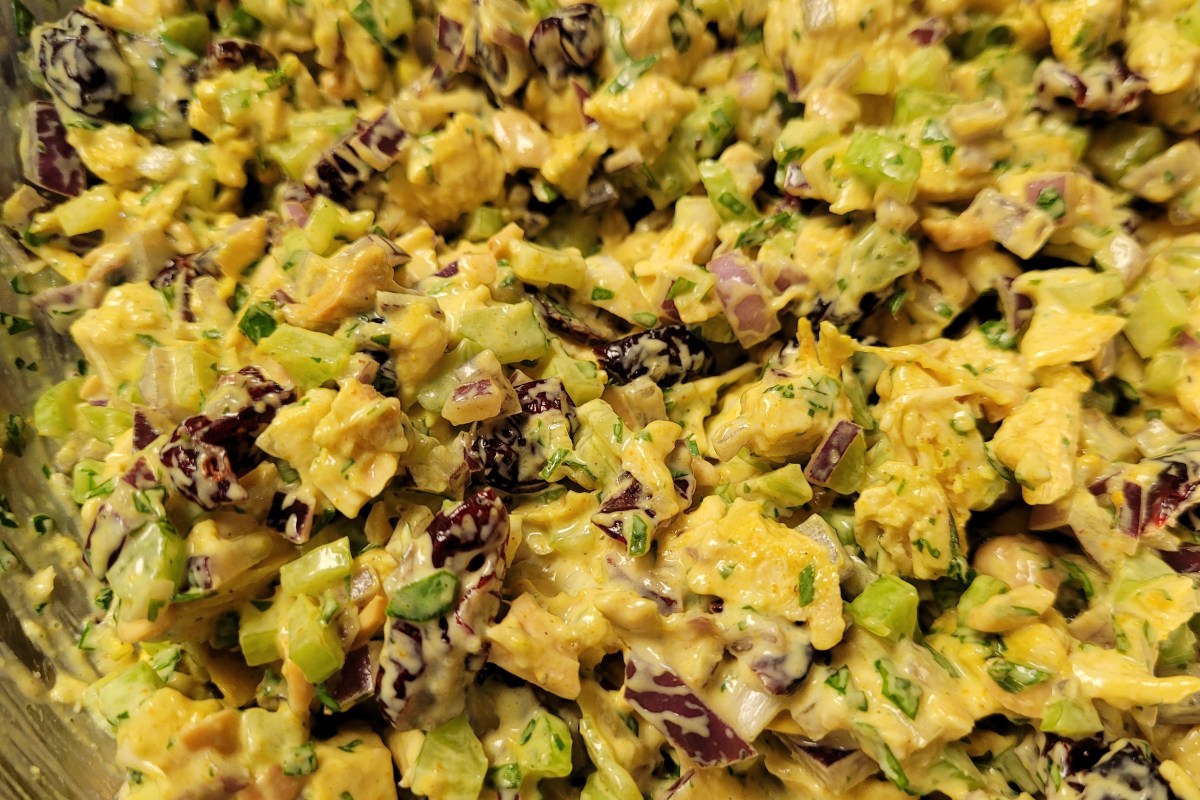
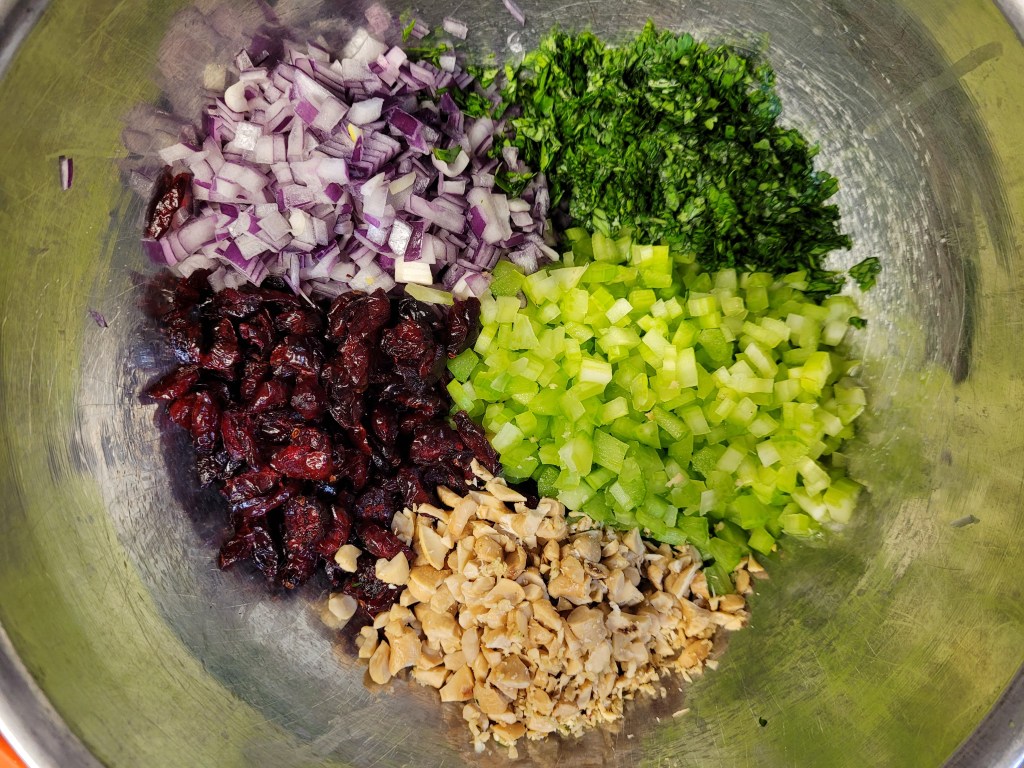
While chicken is cooking (or cooling) fine dice 1 whole red onion (yield ~1-1.5 cups), roughly 6 large celery stalks, and 1/2 cup cilantro. Cashews can be chopped with a chef knife or lightly smashed with a meat tenderizer–I recommend using a plastic zip top bag for this method to *mostly* contain the mess. Reduced sugar dried cranberries can be left as is or roughly chopped. Combine in a large bowl.

When chicken is cool enough to handle, shred or dice bite sized–however you prefer your chicken salad. I alternate between the two depending on if I am feeling like curry chicken salad salads (diced) or curry chicken dip and wraps (shredded).

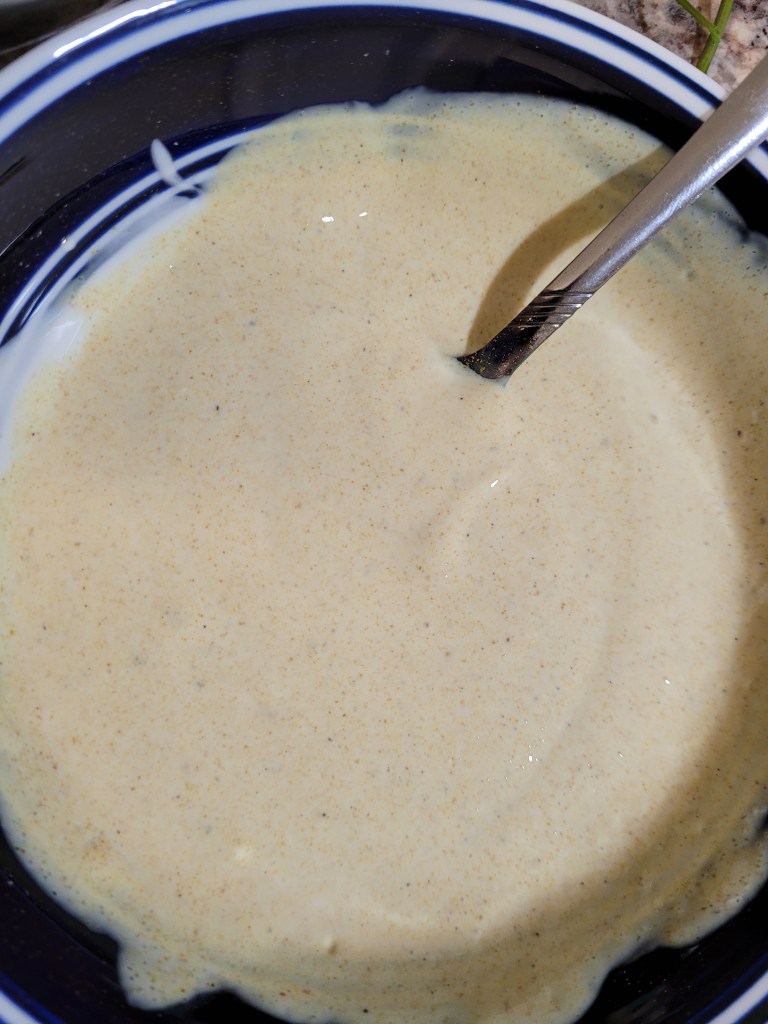
In a separate bowl, combine sour cream, yogurt, and spices. Taste and adjust seasoning to you preferences–start with less if you are hesitant and add slowly, fully incorporating before tasking again. I like to taste by mixing a teaspoon of my filling with a little bit of the yogurt dressing (knowing that over time the flavors will meld). Once you have the spice you like, stir it all together and enjoy! Will keep, covered and refrigerated, for up to a week.

*You can absolutely use bone in skin on if that is what you have/prefer, I would recommend basting the chicken and allowing to marinate refrigerated for 30 minutes or so to impart more flavor as you will want to remove the skins before chopping/shredding.

Note on sour cream: I have a strict preference for sour cream labeled as “natural”. It is made without stabilizers and typically only has three ingredients: cultured cream and skim milk, and enzymes. However, you can totally omit this and just use yogurt! Plain Greek yogurt and skyr work especially well as sour cream substitutes.

A note on plant-based… why would I label a chicken recipe “plant-based”? Because it is. This recipe is based in plants, the majority of the ingredients are plants, which is how you arrive at the definition of “plant-based“. As a dietitian, I think this is a really important distinction that all I talk about in all my classes. Plant-based does not exclusively mean vegetarian or vegan, it just means you mostly eat plants. Take it a bit farther, and you’re focusing more on whole (less processed) foods and incorporating small amounts of animal products that have (preferably) been raised in a regenerative and humane way. Plant-based and planet-based are the way to health.

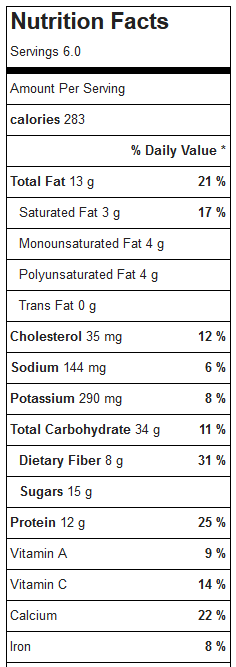
Nutrition information:

Zone 10a Gardening

It’s like not riding a bicycle for 10 years and deciding today is going to be the day! Except the only passage of time was a three hour plane ride, 45 minute drive and here we are. Gardening anew. Five full USDA hardiness zones warmer. My first foray into growing my own food was in zone 9a and mostly container gardening, here we are coming full circle back south with more gardening and nutrition knowledge.

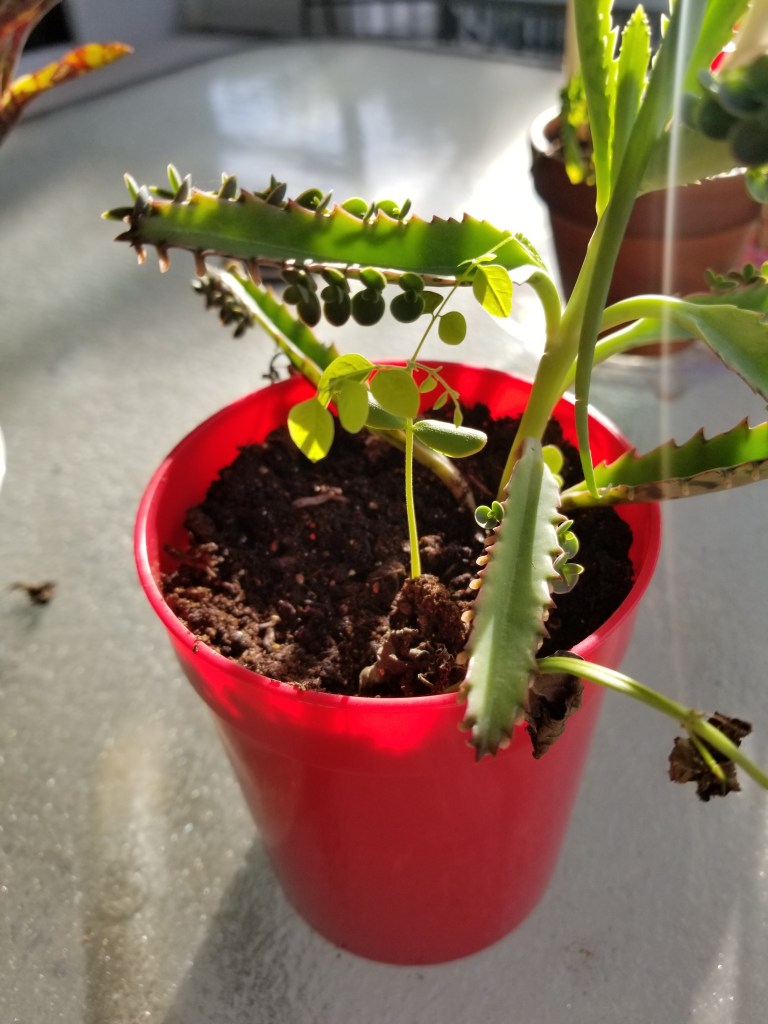
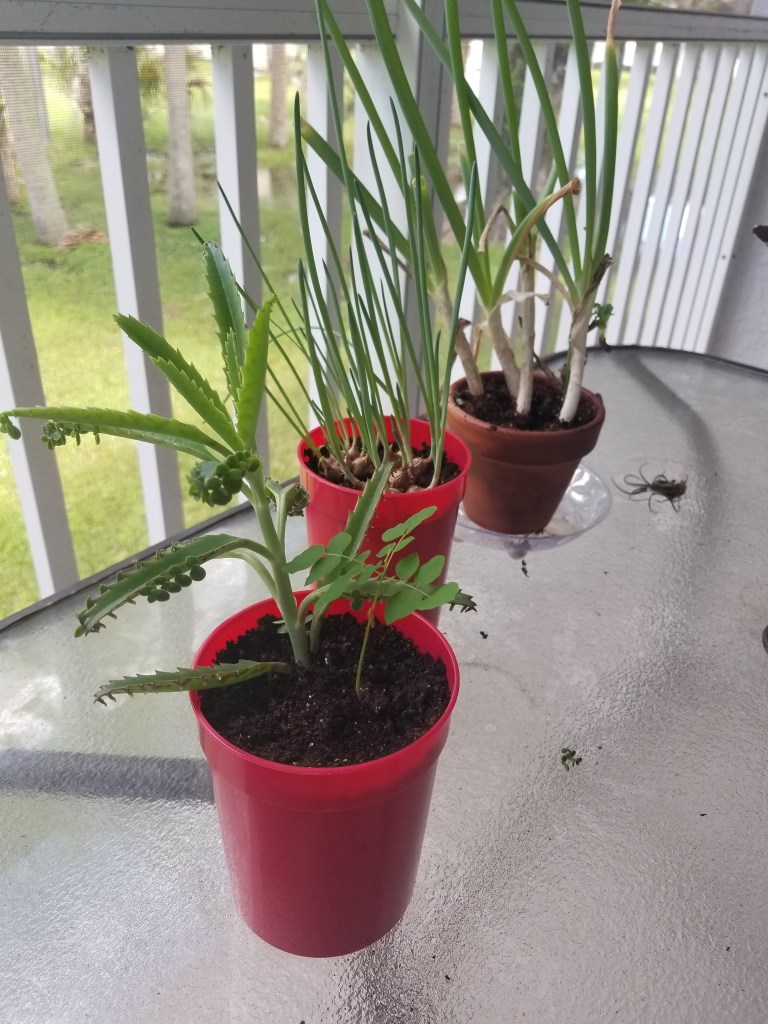
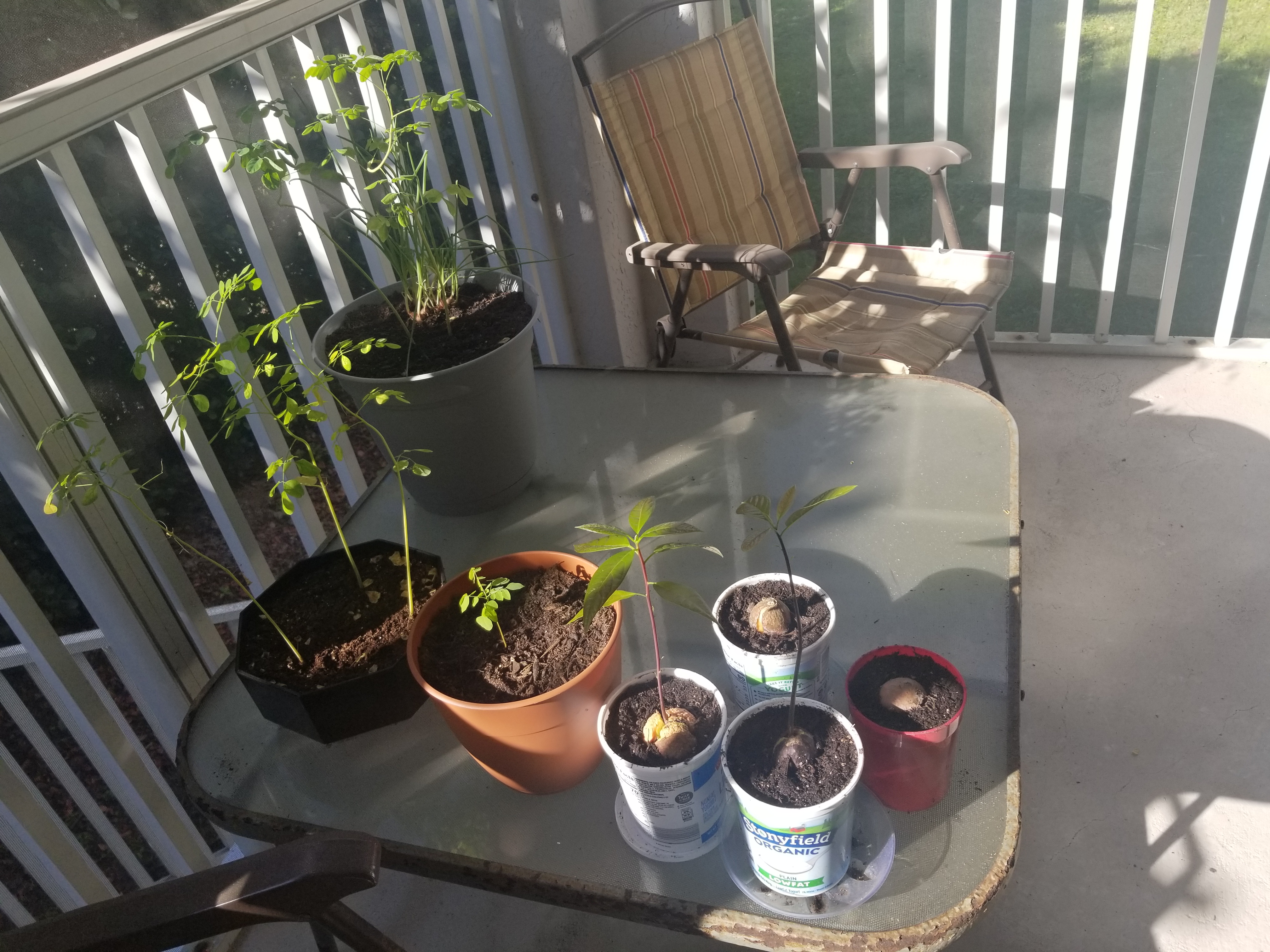
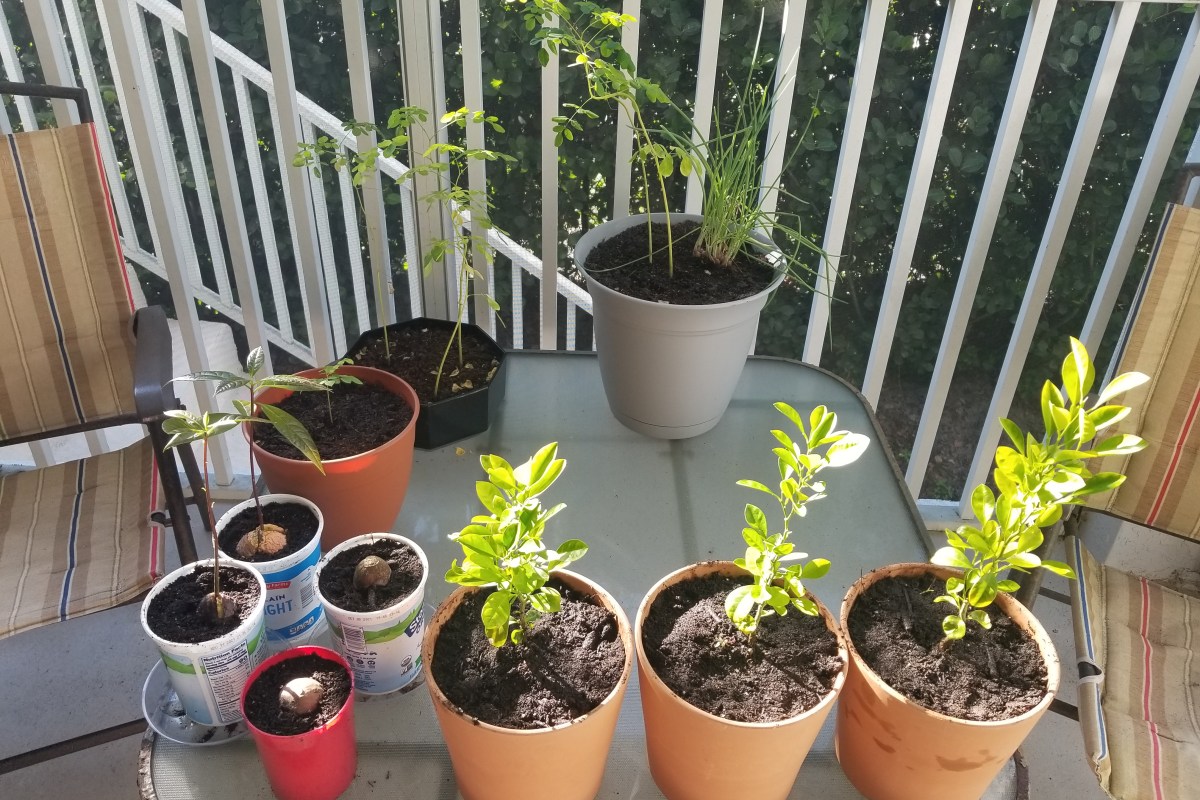
Carambola (starfruit) Averrhoa carambola, seedling. Took weeks to germinate, but sprang up double its size in only four days! The kalanchoe snapped off of a cluster of plants outside an office building and begged to be brought back with me. In the middle are Eqyptian walking onions I brought down from MI and green onions scrap planted from the farmer’s market. Most of these have been repotted already as you’ll see below.

I’d forgotten just how FAST things can grow in a tropical climate. A “tropical savanna”, to be more precise, with an average monthly temperature at or above 64.4F, hot & wet summers, and “cold” & dry winters. When I moved here, I was told there are four seasons: rain, hurricane, tourist, and fire. I moved here during the first and am now in the thickest of the third.

For the next few weeks, the only gardening space I have is a lanai (screened-in porch) that gets mainly northern and then highly filtered west sun for about 45 minutes. The next big feat will be in securing an actual grow space, but what that will look like is still fluid at this point: apartment windows or patio, community garden space, or purchasing a property all remains to be seen. It’s definitely stressful, but I do have some good plants to show for the move.

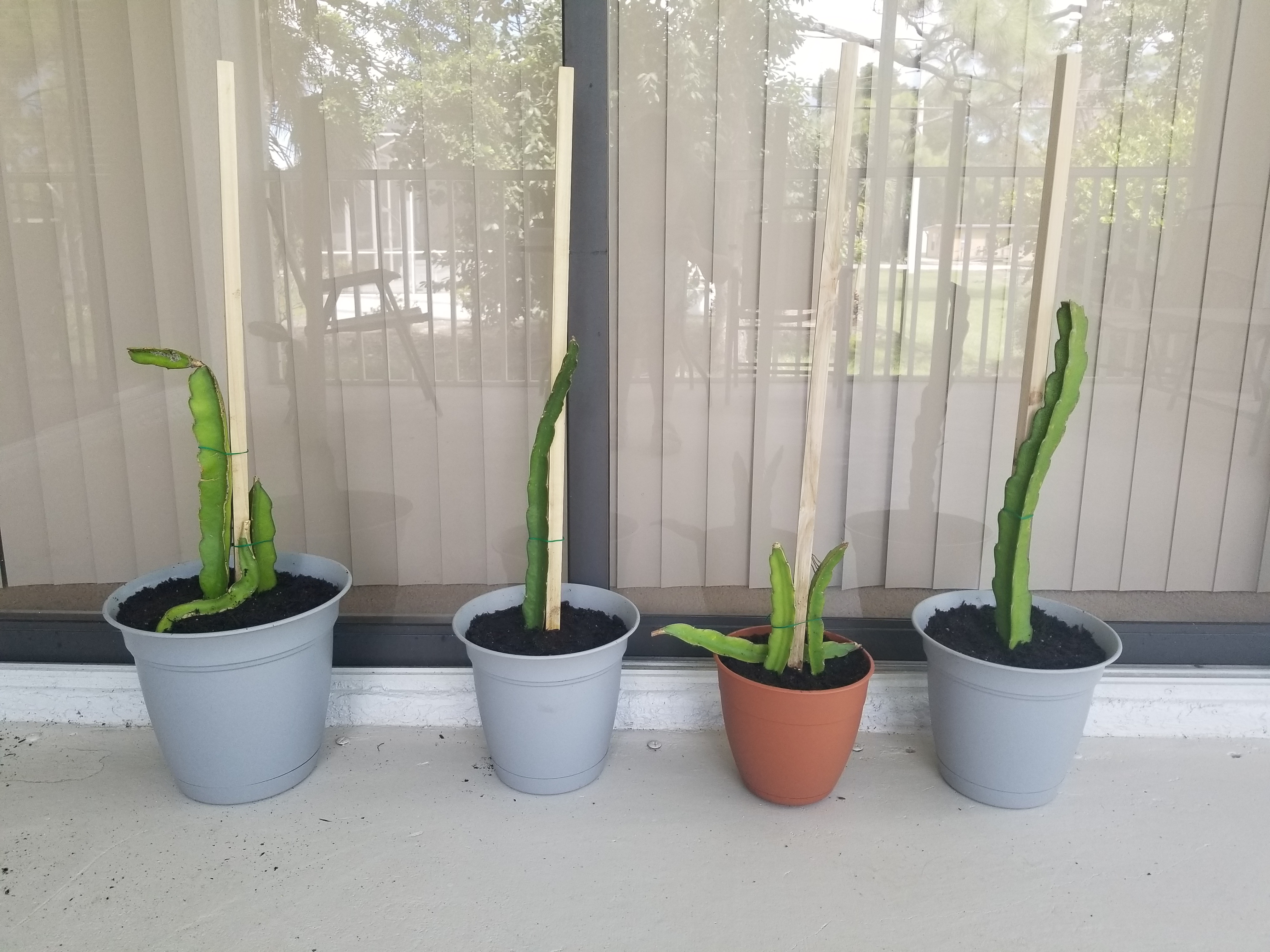
I was gifted a box full of dragon fruit cuttings – both red and white fleshed, some of which have finally started to show new growth! These are quite temporary homes for these plants, they need a much sturdier and larger trellis, but I was so excited to get them started I just went for it with some square dowels from the hardware store.

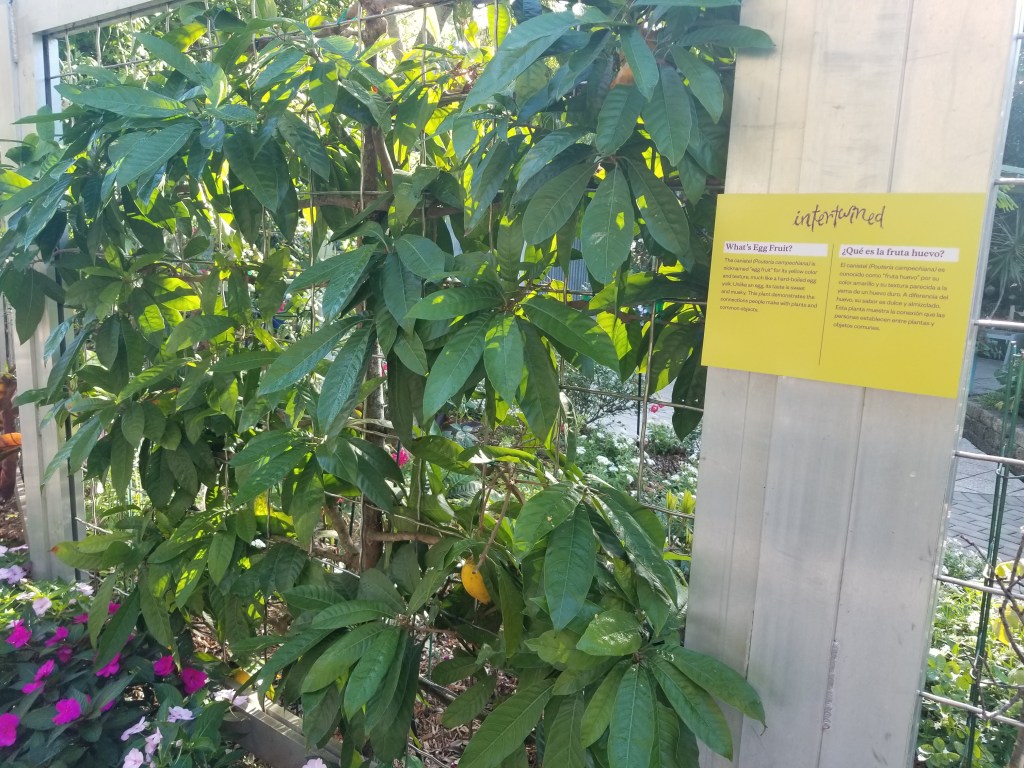
Most of my new edibles here have been gifts or scraps. I’m up to three avocado trees, five moringa trees (seeds purchased at market), one carambola seedling, and three calamondin (Citrus × microcarpa) trees (free off craigslist). On the docket, space prohibiting, are kumquats and pigeon peas gifted from a coworker. I’m patiently waiting on any one of three canistel (yellow sapote, eggfruit) Pouteria campechiana seeds to germinate. According to the Extension services down here that may take up for four months.

Canistel was described to me by my new farmer friend David as “sweet pumpkin”, which in no way does this fruit justice. It is in the top five of best things I have ever eaten. Like a golden egg yolk in color and creamy texture–there’s nothing like it. We went to the Botanical Gardens last weekend and found a tree they were growing trellised as a hedgerow. I love it:

Other than that, cooking has been strange. Learning how to use an electric stove again (first time with the glass top version though) has been quite a steep hurdle. Combine that with almost the entirety of our belongings still in a storage container and it has reduced cooking much closer to being a chore than something enjoyable.

Hopefully as we get settled into a more “permanent” living situation, and now that I’ve completed my M.S., there will be more time to explore the unique ingredients that this climate offers.

Recipe: Thai Chanterelle Coconut Rice

Enjoy this latest recipe creation lightly adapted from Moosewood Restaurant. Keep scrolling to find the bloggy bit where I talk about jasmine rice and oyster mushroom heartache.

Ingredients for 4-6 servings:

  • 1 13.5 oz can of coconut milk, divided
  • 4 tbsp lime juice, divided
  • 1 tbsp minced fresh basil
  • 1 tsp minced fresh cilantro
  • 1 tsp sugar
  • 2 tsp canola oil, divided
  • 3 small chiles, seeded + minced, divided
  • 1 1/3 c long grain white rice
  • 1 1/4 c boiling water
  • 2.5 tbsp kosher salt, divided
  • 1 red bell pepper
  • 1 orange bell pepper
  • 1 pint green beans
  • 1 tbsp unsalted butter (optional)
  • 1 tsp grated fresh ginger
  • 2 garlic cloves
  • 10-14 oz chanterelles, sliced into bite size pieces (or white oyster mushrooms)

First, bring 1 1/4 c water to a boil. While waiting on the water to heat, make the dressing by combining 1/4 c coconut milk, 3 tbsp lime juice, minced basil + cilantro, and 1 tsp sugar. Whisk vigorously ~2 minutes until sugar is dissolved. Alternately, you could combine all ingredients in a lidded container and shake vigorously for ~2 minutes.

In a medium sized (roughly 1.5-2 qt) lidded sauce pan (probably the one you usually cook rice in if you don’t have a rice cooker), heat 1 tsp canola oil over medium heat. Add two thirds of you minced seeded chiles and 1 1/3 c long grain white rice (jasmine works too), stir in with the hot oil and continue stirring and cooking over medium heat for 1-2 minutes–the chiles should start to be fragrant. Add the 1 1/4 c boiling water, 1/2 tbsp kosher salt, and 3/4 c coconut milk. Stir and bring to a boil uncovered over high heat. Once boiling, cover and reduce heat to lowest setting. Cook for 15-20 minutes until the liquid is completely absorbed and rice is fully cooked. Fluff with a fork and set aside.

While the rice is cooking, bring a few cups of water to boil in a large lidded pot. Slice bell peppers into 1-2″ long batons and cut green beans into simliar sized pieces. Once the water is boiling, add 1 tbsp kosher salt and sliced bell peppers. Return cover and boil 1-2 minutes. Remove peppers with a slotted spoon and place in serving bowl. Once the water has returned to a boil, repeat the process with the green beans, starting with adding another tbsp of salt. [The dish can be served hot or cold, and I think this lazy blanching without an ice bath is so nice].

Add the remaining tsp of canola oil to a pan over medium heat. Add the remaining minced chiles, ginger, and garlic, cooking 1-2 minutes until fragrant. Add the optional 1 tbsp unsalted butter and mushrooms. Saute mushrooms over medium heat until softened and lightly browned. Add the remaining tbsp of lime juice and toss to coat. Freeze remaining leftover coconut milk for up to three months.

Two options to serve: combine all vegetables and serve alongside coconut rice drizzled with dressing. Equally as good, but slightly less visually pleasing: combine rice and vegetables, toss with dressing and enjoy. Optional (but you probably should) toppings include microgreens and crushed cashews.

The chiles I used are called lemondrops. I purchased them last year at a farmer’s market in Madison, WI. The vendor told me they were not heirloom, but I saved the seeds anyway to see what would happen. To my delight, they are such beautiful and productive plants! Hotter than a serrano, thin fleshed, bright yellow when ripe with a slightly citrus aroma.

Another decadent option would be to roast either one or both of the bell peppers for a subtle flavor, textural, and visual change. I roasted one of the peppers the first time I made this and would absolutely do it that way again.

This makes a very rice forward dish, which is great for cooking on a budget or feeding a large crowd. Personally, I prefer a higher vegetable:rice ratio, which is why I added sauteed zucchini to my leftovers. As always, feel free to experiment. Increase the amount of listed vegetables. Add more vegetables: leafy greens (spinach, chard, or kale), onions, broccoli, bamboo shoots, water chestnuts, or sprouts would be great here. Seasonal variations could include swapping in peas and asparagus in the spring time.

To increase protein content, but keep it vegan I would use either extra firm tofu or tempeh with this dish. If that is not a dietary concern, baked chicken, pork, or salmon would be my top choices.

Mushrooms are one of very few sources of dietary B-12 not derived from animal products. B-12 is an essential vitamin that is involved in metabolism and energy pathways. For more information, check out the NIH.

We ordered a CSA for the week, that upon pick up came with a free 12 oz of white oyster mushrooms! I was too excited about free food to remember where they came from, but they were definitely foraged, not commercially grown. Having this addition to our box is what led me to this recipe idea. My heartache with this dish began when my curbside grocery pick up order did not include the jasmine rice I bought just to make this. It probably would have enhanced the flavor a little bit, but we did not miss it. The second heartache came when the entire dish was prepared except for the mushrooms. When I went to cut into them, I realized they were full of holes. Burrowing holes. Having grown up with a father who loves mushroom hunting, I knew what this meant before I cut in. I thought, “Maybe it’s okay. Maybe it is just a little bit.”

It was not a little bit. It was a whole lot of large squiggly… fly larvae and I’m horrified for whoever else received this “gift” without knowing it could be a possibility. Luckily for me, my partner reminded me we had frozen mushrooms my dad had previously gifted us. A sandwich bag of chanterelles saved the day! This is especially pleasing as they are the only mushroom I would choose to eat. [Free is my favorite flavor, which is why I was willing to give the oyster mushrooms a spotlight].

Let me know if you try this out or what other changes you think would be good!

Pizza Crust, Improved

As I explained in my last post, I have been working to suss out moments of “cutting the ends off the meatloaf.” I love pizza and will be the first to admit I have been using the same reliably subpar pizza crust recipe for the better part of a decade.

It always turned out the same. Easy to work with and shape. Somewhat grainy texture and almost nonexistent taste. But it was always the same! Half whole wheat? Completely whole wheat? Add ground flax seeds? Forget to bloom the yeast? It reliably produced the exact same result no matter the stresses I put it under. But eventually, reliably mediocre is not enough.

The first new recipe I attempted was from Alton Brown. I wanted to trust this recipe for multiple reasons:

  • the ingredients are by weight, which is imperative in baking
  • percent hydration is discussed, as well as multiple comments including seasonal textural alterations
  • rave reviews
  • it’s Alton Brown!

The major setback with this new pizza crust recipe is that is makes THREE 12″ crusts. Now, I read through more comments on this recipe than I have on anything (combined) in the last year and no one in the comments seems to have a problem with this; there was only one off hand mention of potentially freezing the dough. Additionally, it should be noted that the dough must be started the day *before* you want pizza, due to an 18-24 hour rest in the fridge.

The crust was a pain to work with. In the next iteration, I will trust myself to play with the hydration percentage a little bit–the summer has the house extra humid and I am certain this impacted the product. It was however, much more flavorful, with a slightly chewy crumb. Much more like pizza crust than my old standby recipe!

Another setback here is our lack of a pizza paddle. This meant cooking the pizza in two ways: from a cold pizza stone and on a heated sheet pan. We now are the fortunate owners of a baker’s dozen of aluminum pizza pans which I will work with in the future.

As for the recipe as written, we are two people. Three 12″ pizzas is too much for us at once. As such, I instigated a freezing regime.

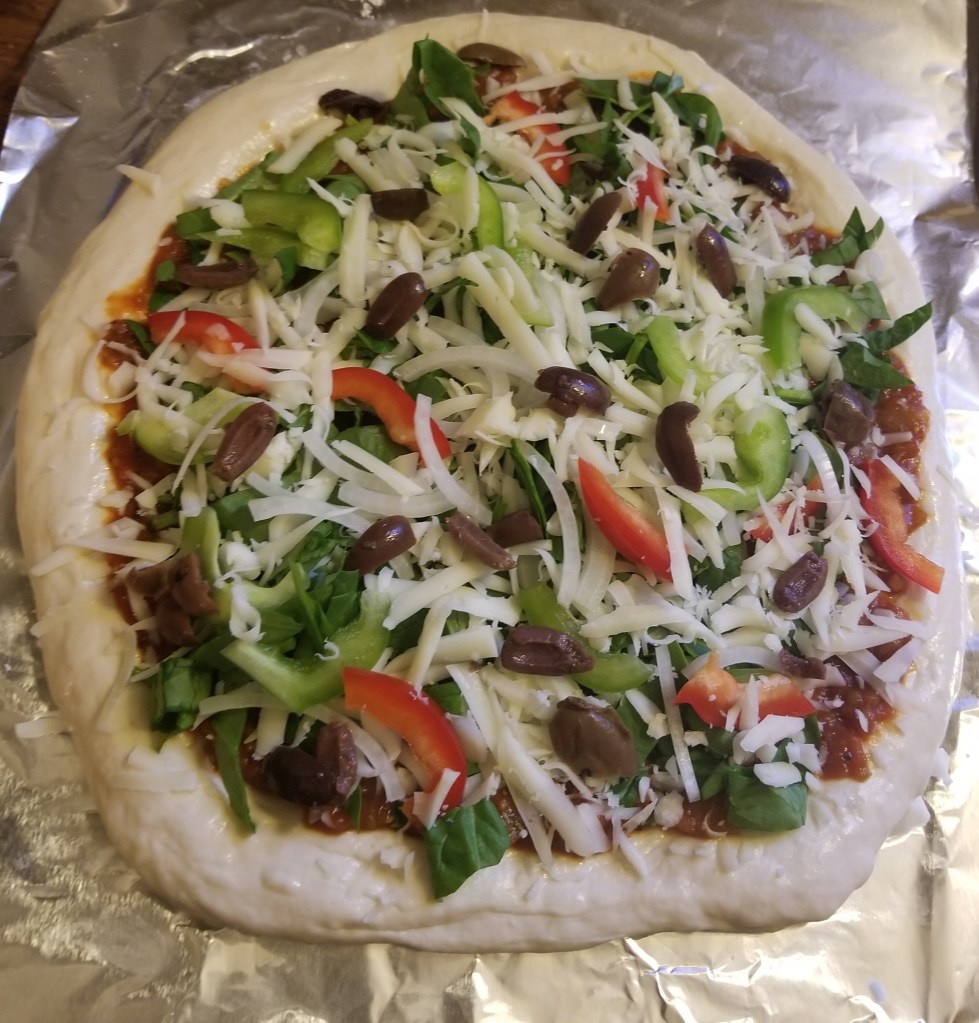
Stretched and topped, I allowed the pizza to freeze open for a few hours before wrapping tightly in aluminum foil.

There are no photos of this pizza baked, likely because the product was more than underwhelming. A requirement of Alton’s recipe it allowing the dough to come fully to room temperature before baking. Attempting to cook this crust from frozen was very disappointing. Not only did it hardly rise, but it never browned. The next time, I will try freezing a dough ball and allowing it to thaw before topping and baking.

Overall, this is a recipe I will attempt again, troubleshooting with the hindsight I now have.

Please allow me to introduce sourdough starter #2. She is doing much better than her predecessor. But as we can only eat so many english muffins, it was her turn to take part in the pizza escapades. I chose this recipe from Alexandra’s kitchen based on many of the same criteria as before. It has excellent reviews, measures ingredients, discusses hydration percentage, and even has a video highlighting the crucial steps of the recipe. What could go wrong?!

If I thought Alton’s crust was a goopy, miserable mess… this was so, so much worse. When working with it after the initial rise, I thought about giving up baking forever. I even decreased the hydration percentage as I could tell from the pictures that my starter, at a 1:1 ratio, is much wetter than hers. Strands of gluten never formed for me. Instead of nice bubbles in the dough that bake into a chewy, light crumb… I had webs. The dough fell apart while I attempted to shape it. It was thin, and barely rose during baking.

There are many places this recipe may have gone wrong for me. A huge impediment is my oven. The recipe calls for 550°F, whereas mine barely makes it to 500°F. Clearly I needed to bulk up the dough with much more flour than the recipe called for. Another fault, I left the dough to rise too long. It more than tripled in volume, which likely caused the final product to be so flat.

Though she was ugly and much more “flatbread” like than pizza, we still devoured the whole thing. While not the “pizza” I was hoping for, it did taste good!

This recipe does not specify how much pizza it makes, but calls for dividing the dough into 4 portions. I only had 3 containers of the correct size, so I made three dough balls. Pictured above is one, roughly a 10″ pizza. At this exact moment, I have combined the other two and am allowing them to come to room temperature while I decide whether I am going to bake or freeze it.

All in all, both recipes produced a better product than what I’ve been eating for the last decade and I am excited moving forward to play with both of them a little bit.

Fast forward 20 minutes… I chose to freeze it.

Have you tried either of these recipes? Do you have a go-to pizza crust recipe that you want to share so I don’t drive us all crazy trying to perfect these?

Media Influence

An old parable begins with a family recipe. In our home, it is grandma’s meatloaf. The final step of the recipe includes cutting the ends of the meatloaf. This is done, unquestionably, by all the generations that follow. Until one day, a new cook asks grandmother, “Why do we cut the ends off the meatloaf?” to which she replies, “Otherwise it will not fit in my pan!” It is just as important knowing that something works as to knowing why. Improvements and changes do not invalidate the past or traditions.

Animal, Vegetable, Miracle by Barbara Kingsolver is where I still pull culinary and gardening references from. I have used her pizza dough recipe for over a decade. It worked halved. It was easily adjusted to whole wheat or additions of ground flax seed. It always produced the exact same results: good enough.

That book is the reason I purchased, and continue to purchase, seeds from Seed Savers Exchange. It’s the reason I grow Red Russian Kale every year, saving my own seeds. It is where I learned that “heirloom” simply means you can save the seeds and grow the same plant the next year; that growing these plants improves biodiversity; that you want improved biodiversity for the health of your soil; that you want healthy soil to grow health plants; that it is okay to experiment, play, fail. That these are the ingredients for growth.

My bolognese sauce recipe hails from the novel The School of Essential Ingredients by Erica Bauermeister. This book, and another like it that I’m unable to recollect the title of, convinced me that with no food allergies it was my obligation and privilege to try any and every food presented to me. This was while I lived in Chicago and I joyfully spent hundreds at Taste of Chicago to fulfill this “duty”. This belief has been integral to every country I’ve visited: when someone offered me food or drink, I’ve always graciously accepted–never first questioning what it is, but giving thanks.

Even my personal mantra of sustainability, “Waste not one grain of rice” is from an early 2000s food documentary. I’ve spent hours searching, but have been unable to locate the film’s title. All I recall is a gentleman in a white robe teaching cooking classes in a temple/monastery and such is his call to his students both while they are creating and enjoying different dishes. If you’re able to find it, please let me know!

I hope you’ve enjoyed this throwback read of old items that continue to influence how I live. But, as Eric likes to remind me, it is important to question why you are cutting the ends off the meatloaf. In this vein, I have been experimenting with “new” recipes to improve beyond those that create identical, subpar results. The most recent iteration was a 36 hour pizza crust that I will review and detail in my next post.

Upcoming is an update to the substandard bagel recipe that is only slightly older than the pizza crust one, but produces unreliable results.

Unrelated to food: Since roughly 2006, I’ve wanted a wooden sign for my bathroom that reads, “In this land of fun and sun, we don’t flush for number one.” Emblazoned with palm trees and a sunset. This can be traced back to (likely) the TV show “Trading Spaces”.

The header image is a pile of books I am currently reading. I hope you’ve enjoyed this throwback read of old items that continue to influence how I live and that it’s given you pause to question what meatloaf ends you’ve been cutting off.