Pakoras

Indian spiced vegetable fritters.

The perfect recipe for transitioning seasons. As we slowly roll from spring into summer, the kale and radishes are still coming in strong. I love these dipped in just about any sauce, but they go great with tamarind chutney, hummus, lemon tahini dressing, or the included recipe for mint yogurt sauce.

This recipe makes a bunch and they heat and crisp back up nicely in the oven or toaster oven. They also freeze really well, so this is a nice make ahead freezer meal. There’s a lot of room to play around with the recipe, do what feels right for you.

I prefer using a food processor to shred the vegetables, but if one is not available to you this can be accomplished with a sharp cheese grater.

Mint Yogurt Sauce Ingredients

  • 2 tbsp minced fresh mint
  • 1/2 cup plain yogurt
  • 1 tsp minced fresh garlic
  • 1/4 tsp salt

Pakora Ingredients

  • 1 bunch kale, rinsed, stems discarded, leaves diced
  • 1 bunch radishes, rinsed, greens removed*
  • 1 onion
  • 1 tsp ground turmeric
  • 1/2 tsp curry powder
  • 1/2 tsp ground cayenne
  • 1/2 tsp salt
  • flour**
  • canola oil, for frying

Combine sauce ingredients and allow to marinate in the fridge while you make the pakoras.

Place the diced kale in a large bowl and set aside.

Heat a large, heavy-bottomed skillet with enough oil to coat up to about 1 cm. Remember, the hotter your oil, the less the fritters will soak up. But this is a balance because you do not want your oil to smoke – watch for wavy lines to indicate heat or use a thermometer if you have it and try to keep the oil around 250-300 degrees.

Cut the onion in half, peel, and chop each half roughly into 1-2 inch chunks. Use the shredder blade for the food processor to grate the onion, followed by the radishes.

Add the shredded onion and radish to the diced kale. Add turmeric, curry powder, cayenne, and salt to the vegetable mixture and stir well to combine.

Add the flour, 1/4 cup at a time, stirring until it is no longer visible. Continue to add flour bit by bit until your mixture comes together and can be formed into balls between two spoons.

Another way to tell it is a good consistency is if you lift a spoonful in the air, the batter does not slide off.

If you find it is too dry, simply add a little bit of water.

Super chef secret tip: Once you are ready to start frying the pakoras, add only ONE small one to the hot oil. Once it’s nice and ready, let it drain and give it a taste. This will let you adjust the seasoning for the rest of the batch as needed. I almost always add more salt.

Using two dinner spoons, shape pakoras and add to the hot oil. When you can see the edges brown, they are ready to flip. The photo below is NOT ready to flip!

Remove fried pakoras from the pan and allow to drain on a paper towel lined plate.

Serve warm with the sauce of your choice and enjoy!

*radish greens are totally edible, I always dice them along with the kale. They have a very mild taste and the fuzzy/prickly feel of them is lost when they are cooked.

**If I have it on hand, I use chickpea flour (sometimes also call besan or gram flour), if not I like to use whole wheat. Using chickpea flour makes this recipe both vegan and gluten free. I have found that the biggest difference between the two flours is in the leftovers. If you use chickpea flour, I recommend only eating the leftovers reheated, otherwise the texture cold is quite unpleasant. However, if you use whole wheat flour, I think the cold leftovers are just dandy.
Leftovers Pot Pie

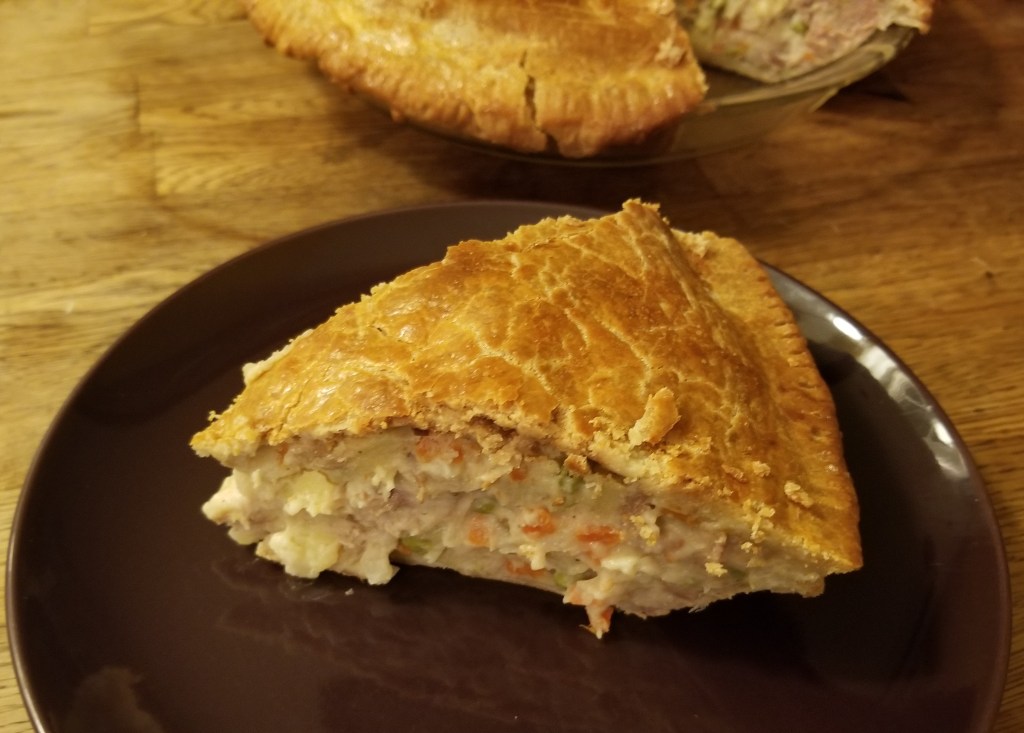
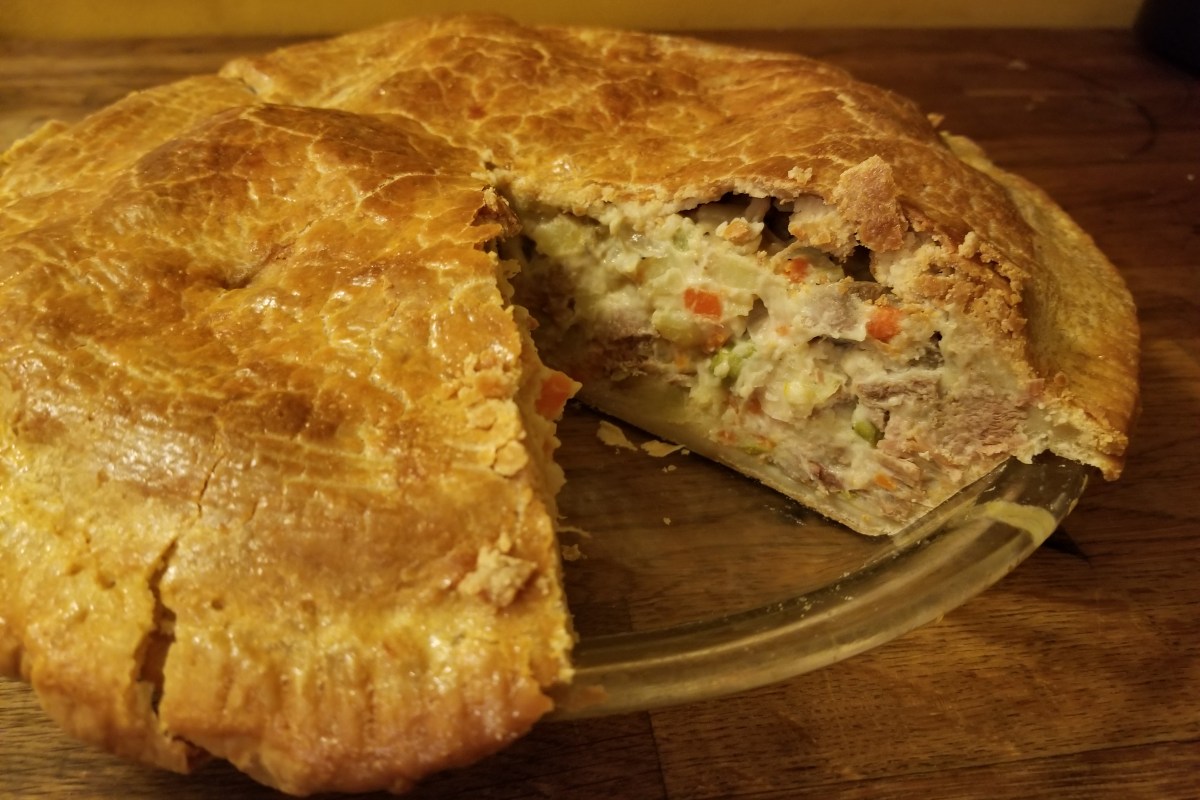
With the end of the big cooking holidays within our grasp, the fridge always begs, “What are you going to do with all this abundance?!” The following recipe works with whatever leftover roasted poultry you have on hand. After Fall Feast, I used the leftover roast duck to make one 9″ pot pie. The leftovers from our Christmas goose made two 9″ pot pies.

The beauty of this recipe lies in its flexibility and efficiency. TLDR: cut one ingredient, add to pot over medium heat, while it cooks cut the next ingredient, add to pot, and so on as by the time you are done cutting and adding all the ingredients, the previous ones will be perfectly cooked.

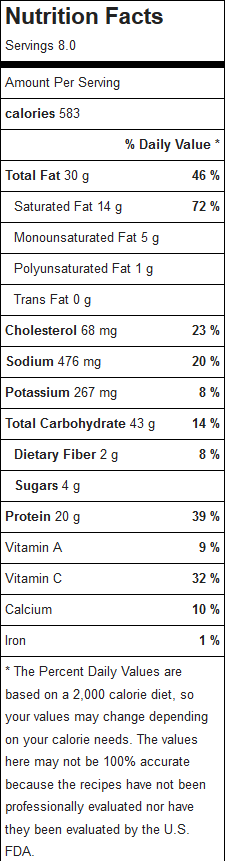
Goose Pot Pie, serves 8 very generously.

Ingredients:

  • 1 tbsp fat (I used goose fat, but butter or the oil of your choice works fine)
  • 2 large yukon gold potatoes
  • 2 large carrots
  • 2 stalks celery (the pictured ones were sooo tiny, but roughly equated 2 stalks)
  • 1 cup broth (I used goose broth, surprise, but any broth or even water will do)
  • 1.5 large yellow onions
  • 5 cloves garlic
  • 1-1.5 cups frozen peas
  • roughly 3 cups diced leftover poultry
  • 4 tbsp unsalted butter
  • 5 tbsp all-purpose flour
  • 1 cup whole milk
  • 2 oz mozzarella, shredded
  • 2 oz pepperjack, shredded
  • salt, pepper, and garlic powder to taste
  • store bought or prepared pie crust from your favorite recipe
    • After all the cooking and baking of the last few weeks, the last thing I want to do is make pie crust. My leftover pot pie is always made with store bought crust!

If you are making your own pie crust, do this first. If you are using frozen, you should have thawed it yesterday.

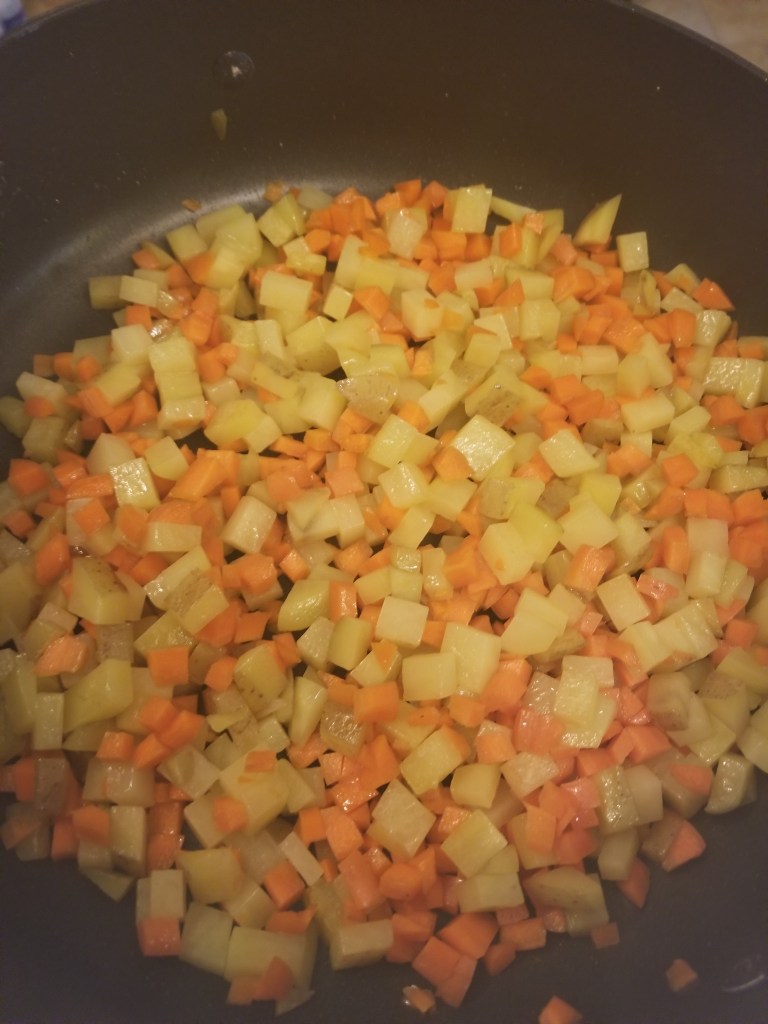
Cut potatoes into ~1/2″ dice. No need to peel. Toss in a really big pan with your 1 tbsp of fat and about a 1/2 tsp of table salt. Turn to medium heat. Remember to stir every once and awhile.

Cut carrots into ~1/4″ dice. Again, no need to peel. Once they are both diced, toss on top of the potatoes. Stir eventually and every once and awhile.

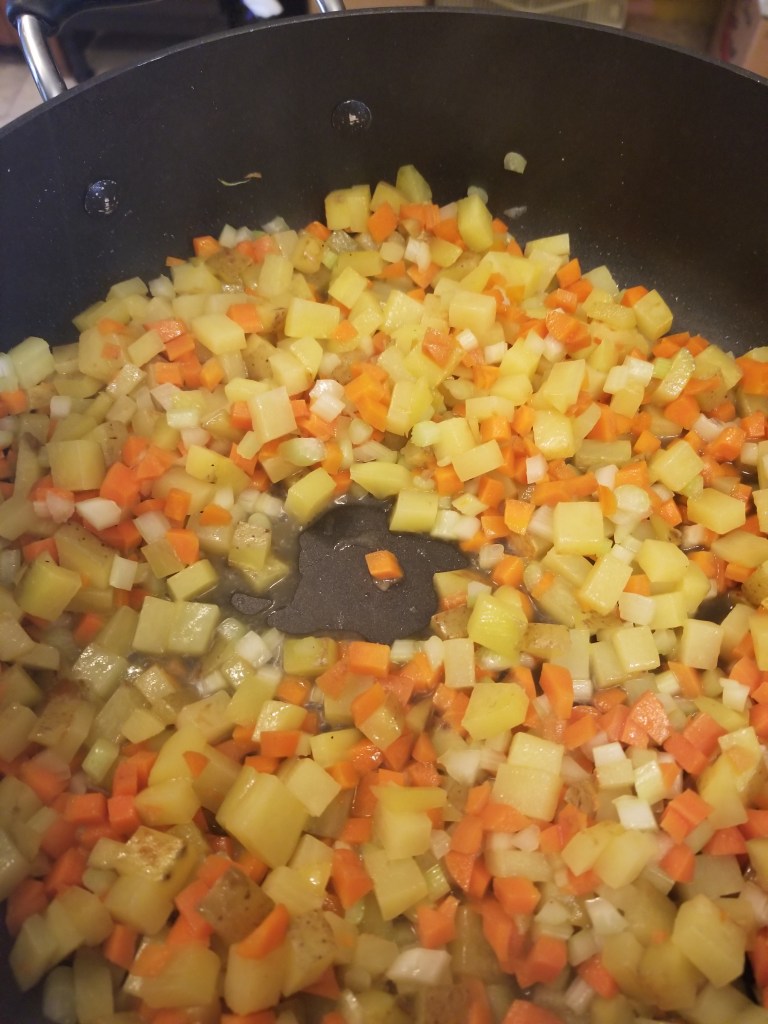
Celery, you guessed it: ~1.4″ dice. Once finished chopping, add to the pan. Stir. Add your broth in two separate additions a few minutes apart, stirring to coat.

Not to sound like a broken record, but now it’s time to chop up all the onions. You want them roughly the same size as the potatoes, but smaller is great too. Once finished chopping, add to pan and stir.

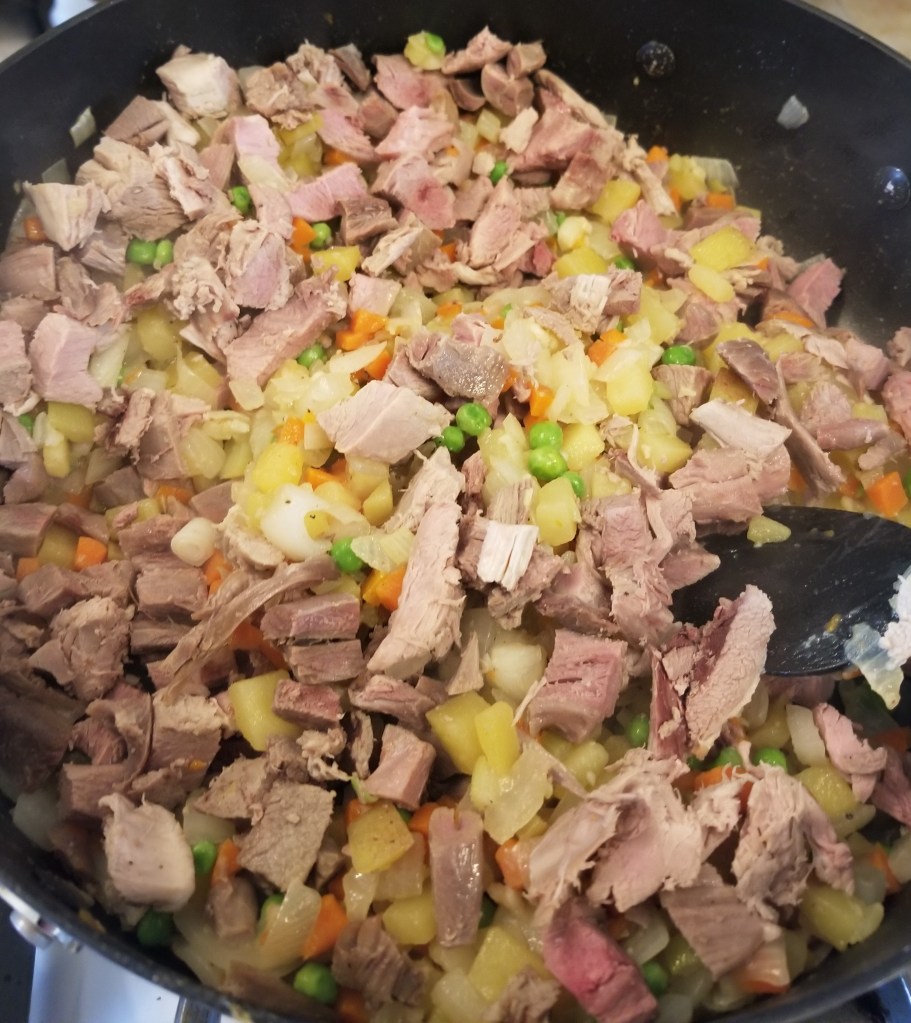
Begin dicing up your poultry. I prefer it on the smaller side, barely larger than the potato chunks, but you do you. Once you’re finished, the onions should be slightly translucent. Toss in the peas and a little more broth if it seems dry. After about five minutes, add the poultry, stir and reduce heat to medium-low.

At this point, I would preheat the over to 400° if you haven’t already.

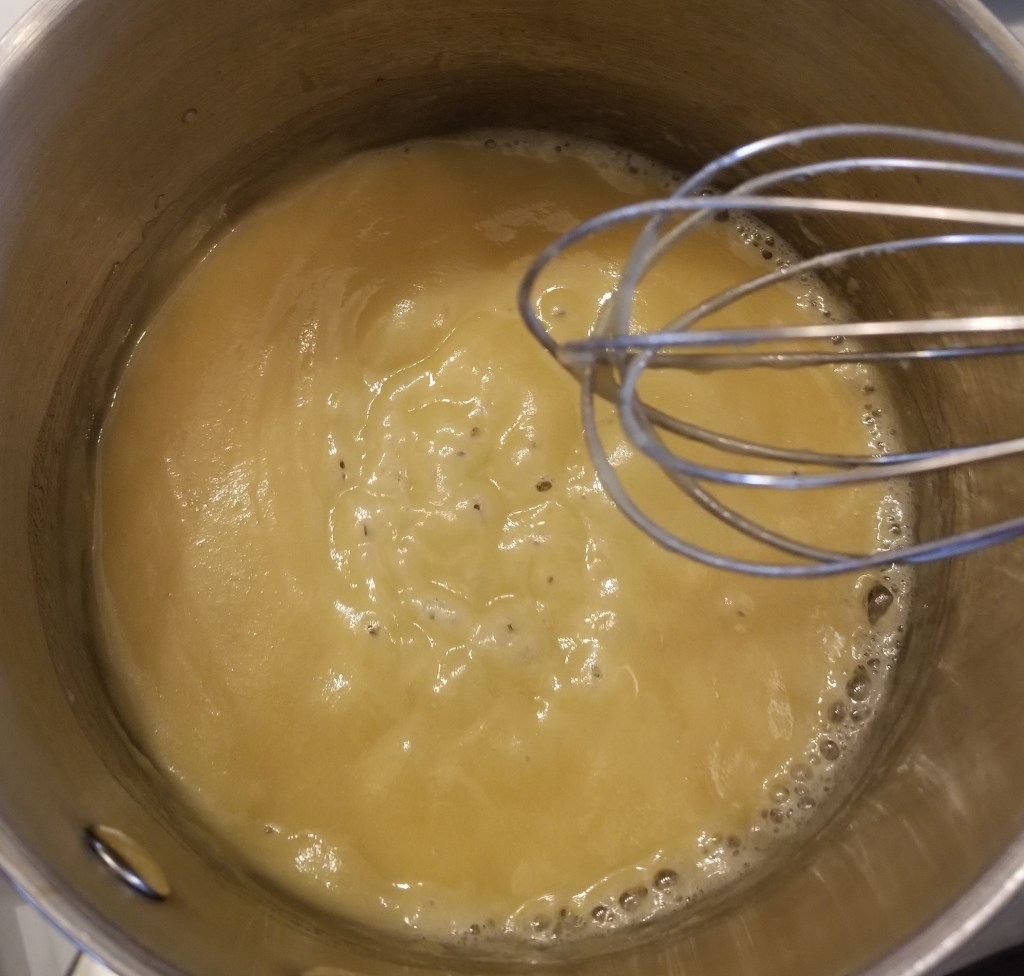
Grab a sauce pan (I love my 2 qt stainless for this task) and plop in 4 tbsp of butter in one chunk. Heat over medium-low heat until melted. Add 5 tbsp all purpose flour and whisk. You may need to reduce the heat, you do not want this to burn. Cook for about 3 minutes. It should look roughly like this:

You’re going to add the milk in 3-4 additions, stirring completely until fully incorporated before adding more. At first, you may think you have broken everything, but once all the milk is added you will have a nice, thick sauce. The texture will be something like room temperature cream cheese frosting.

Add the shredded cheese in at least 4 additions, whisking vigorously and non-stop until incorporated. It may get a little lumpy and probably very stringy, which is fine as everything will homogenize upon baking.

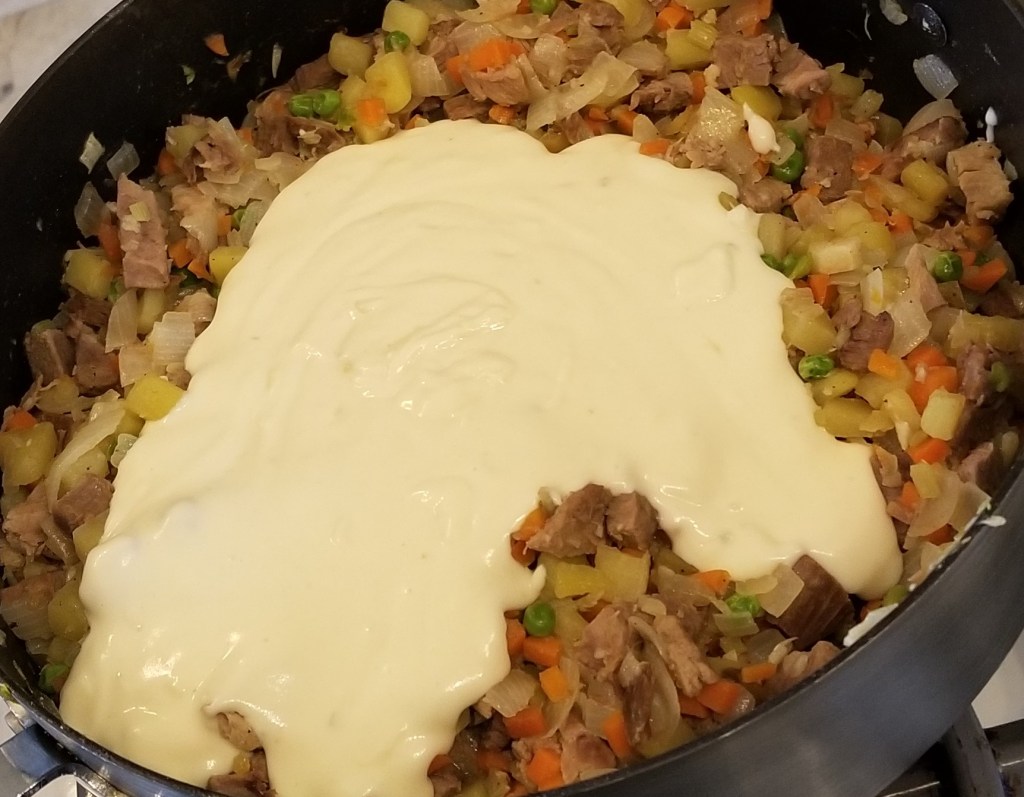
Taste at least 4 large potato pieces. They should be fully cooked. If not, turn the heat up, add a little broth/water as needed and check another potato every few minutes. Once the potatoes are cooked, remove from heat and dump your sauce on top. And stir to coat and combine.

This is your last chance to adjust any seasoning, so grab a big bite! I like to get a piece of each ingredient in one spoonful. I always add salt, pepper, and garlic powder, and usually twice. Keep tasting and adding until you are happy with it.

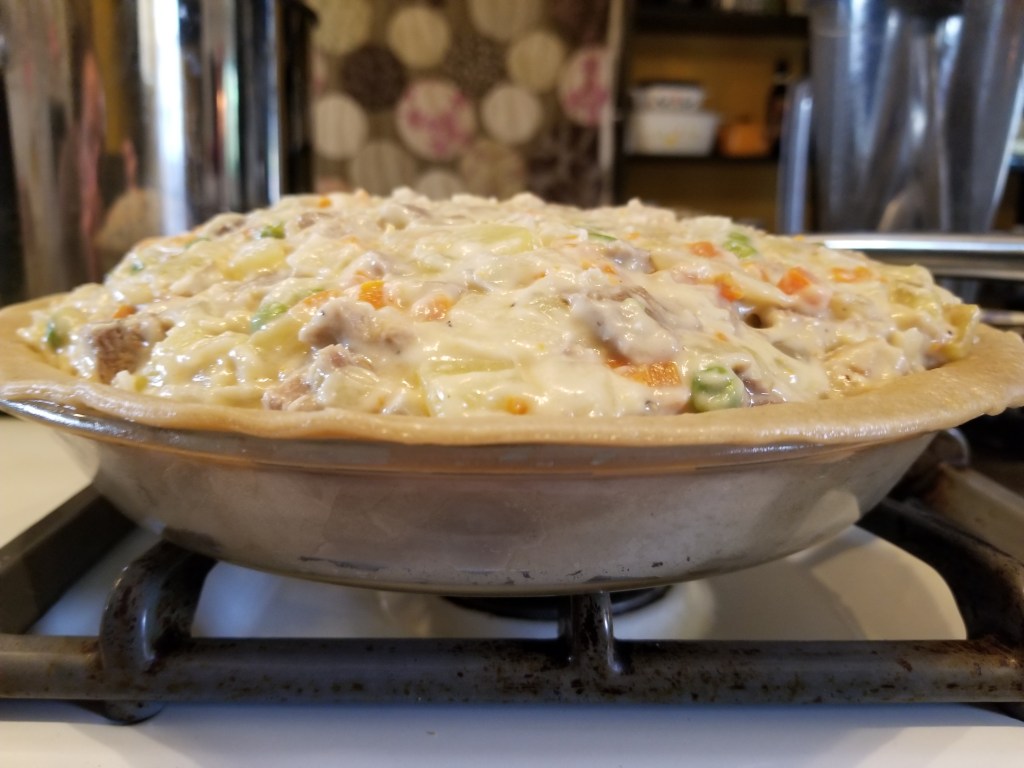
Roll out the pie crust and mold to a 9″ glass pie tin. I only specify glass because that is all I have. I’m sure this would be fine in a metal pie tin. Add your filling. It will be very, very full.

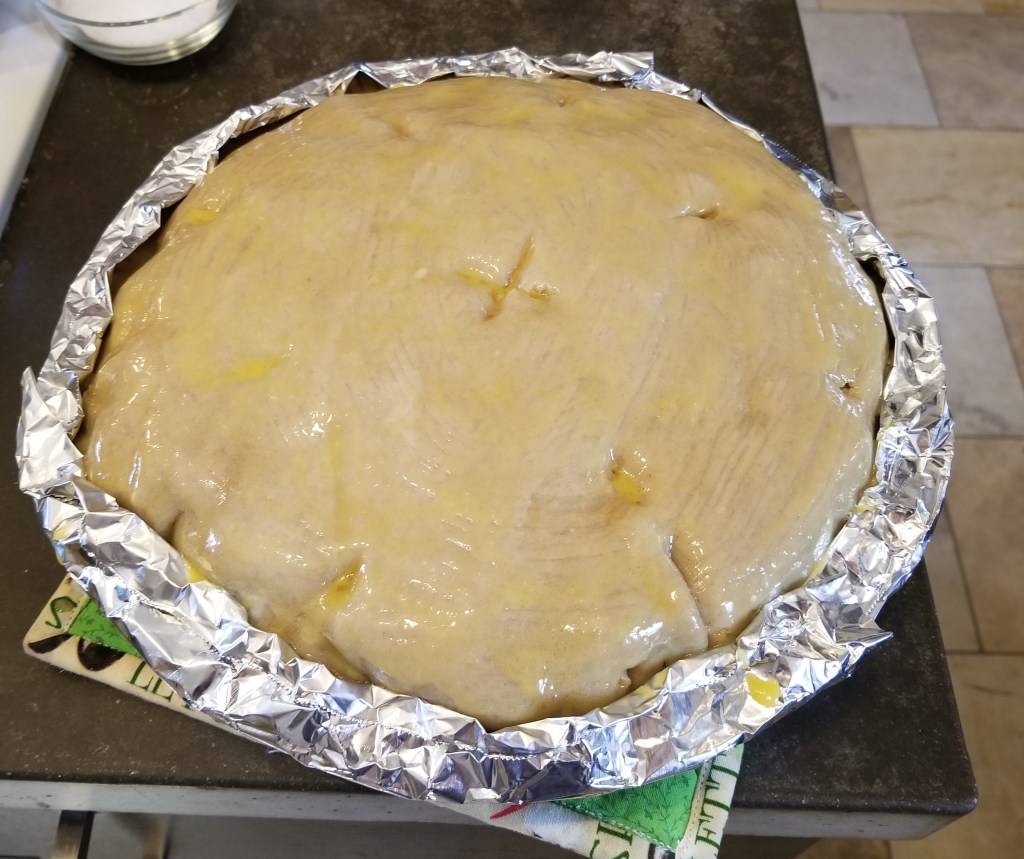
Top with the other circle of pie crust and crimp the edges together. I like to use a fork like it is strawberry rhubarb pie. Cut some slits in the top so steam can escape.

I prefer my pot pie with an egg wash, so shiny! If you do this, do not egg wash the edges. The edges cook too fast and you have to do that annoying thing where you wrap them in aluminum foil so they don’t burn. If you eggwash them, the edges will bake beautifully on to the foil. I promise. Don’t do this.

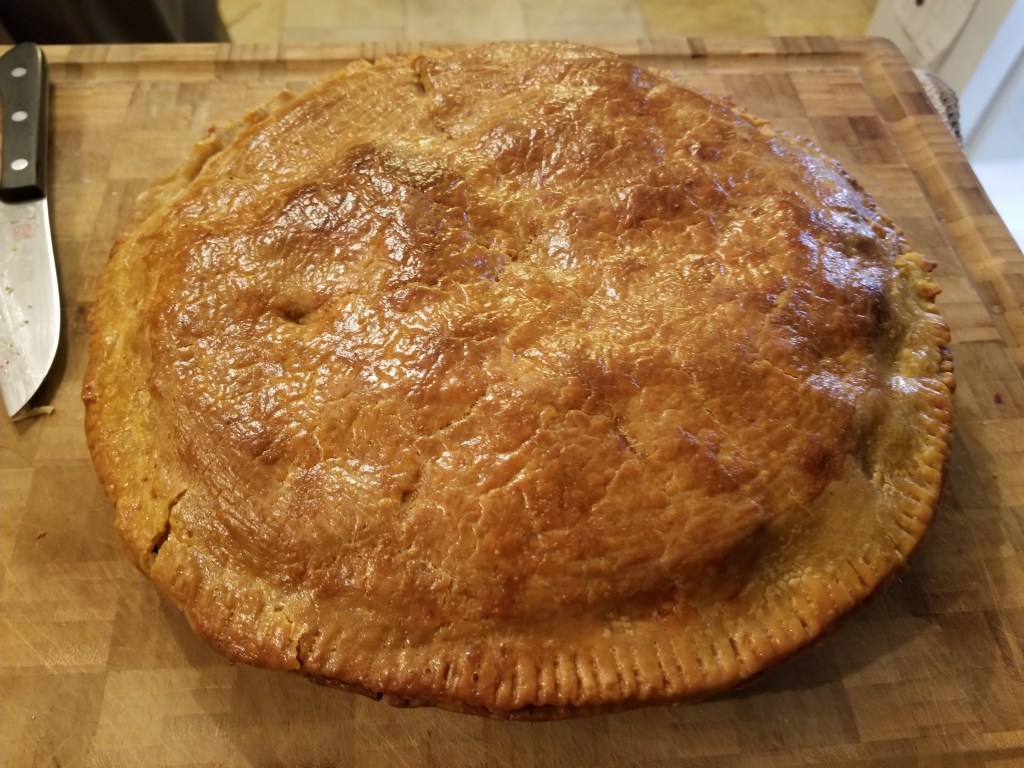
Bake for roughly 30-45 minutes (check after 20, every oven is different) until the top is lightly browned. Remove the foil. If you chose to do an egg wash, now you can egg wash those edges and bake for another 10-15 minutes.

Remove from oven and let cool roughly 45 minutes before either serving or refrigerating. You can absolutely dig in sooner, but the filling may not be set. If you don’t mind messy pie, eat up!

It may not win any beauty contests, but it uses up a lot of ingredients you likely have, almost all of which can be substituted with what you do have.

A note: I like my pot pies full of peas. I would probably put at least two cups of peas in this recipe if it wouldn’t cause a household riot. Add whatever amount of peas feels right in your heart.