
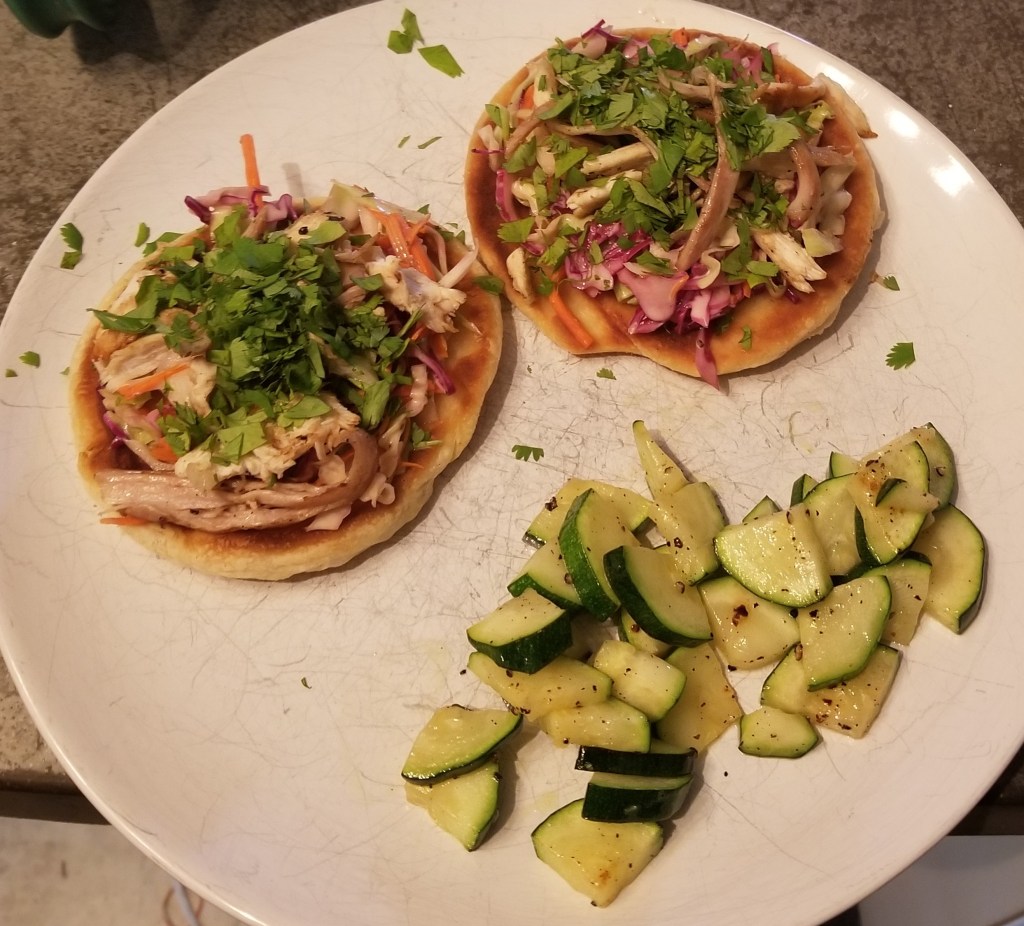
This is the first, but certainly not the last, of my odes to cruciferous vegetables. Part love note to cabbage (Brassica oleracea), a bit of food science and experimentation, and sort of a recipe.
Cabbage nutrition: 100 g (a heaping cup chopped) of cabbage will put you back 25 calories, mainly from carbohydrates including an impresive 2.5 g dietary fiber. Cabbage is an excellent source of vitamin C (just over 33% of DV), contains 1.3 g of protein, and a host of phytochemicals.1
If ever there were one really good, uninteresting fact about myself it is that I do not like vinegar. I’ve said for over a decade that pickles are my kryptonite. What a travesty when your burger and fries comes with a pickle atop the fries, rendering them soaked in pickle juice and inedible. We all have that one thing. This distaste expands to most condiments (ketchup, mustard, mayo, dressing), though my tastes have slightly evolved. I will eat balsamic vinegar because it is sweeter, goddess dressing is the only type I will use (though this is lemon juice based), ketchup is reserved for sweet potato fries (otherwise they are too sweet), and I do enjoy the sweet zucchini relish I can every year (apple cider vinegar in this one). However, one other exception continues to exist outside this rule.
My love of coleslaw was born out of necessity. When I was staying with a German ex-pat in Belize for three weeks, the cheapest meal I could buy was fried chicken (a thigh and a drumstick), a homemade tortilla, and coleslaw. This dinner set me back about $4 and could usually carry me over to the next days lunch. I would cut my tortilla into quarters, strip some chicken from the bone and top it with coleslaw like an open-faced sandwich.
While it seems that pink/red coleslaw has found it’s place recently on some hip menus and it realistically doesn’t taste any different than it’s non-pink counterpart, sometimes you don’t want to eat pink food! After a bit of internet research, I found no good consensus on how to incorporate red cabbage into coleslaw without changing the overall hue. First, let’s look at why red cabbage turns coleslaw pink.
Plant foods (fruits, veg, legumes, nuts, and seeds) are full of antioxidants, but I’m sure you’ve heard that before. A group of these naturally occurring antioxidants are called phytochemicals, which are typically responsible for the rainbow colors of produce. Red cabbage is rich in anthocyanins and sulfur compounds – turning red in acid and blue in basic solutions. When cooking, red cabbage will usually turn blue; to mitigate this, add acid (vinegar, lemon juice, or fruit) to the pot to retain the red color. Red cabbage contains more antioxidants than its green counterparts, though green, chinese, and savoy cabbage have shown higher anti-inflammatory capabilities.2 That’s where this coleslaw comes in, best of both worlds plus some carotenoids from carrots for good measure and extra vitamin A.
To avoid the leeching, color changing anthocyanin, I tried four methods.
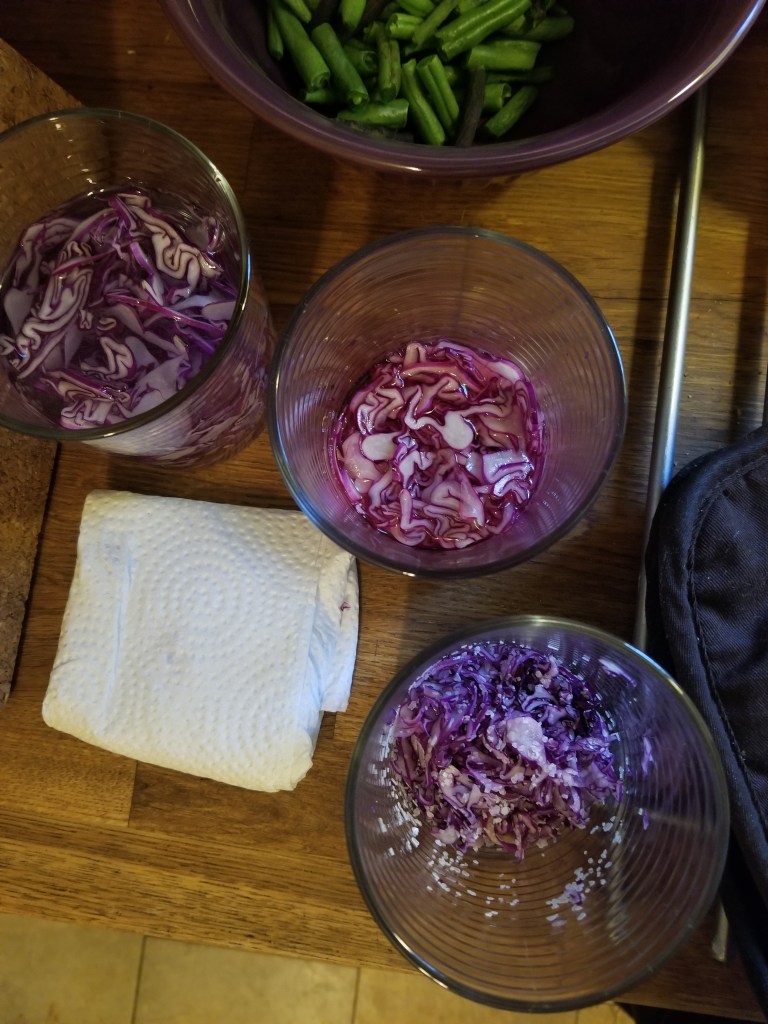
Salted, dried, soaked in water, and soaked in white vinegar. I let these all set for two hours. You can see the vinegar began it’s work immediately. The hope here was that any of these techniques would be enough to pull out anthocyanins from the cabbage.
Left to right: vinegar, salt, water, dry.

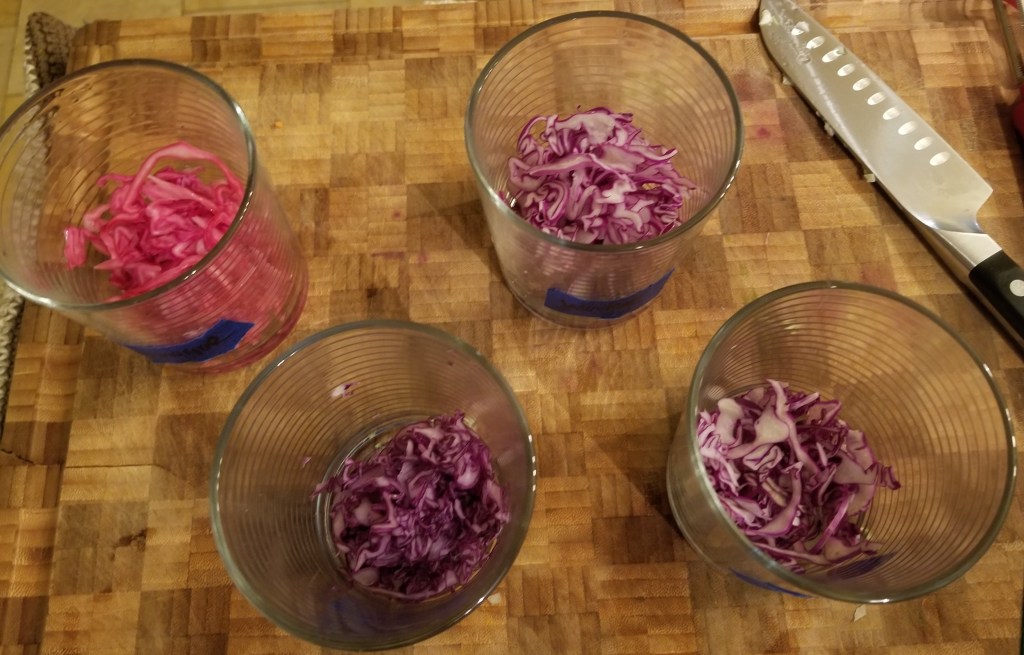
Prior to mixing with green cabbage, carrot, and dressing (mayo, white vinegar, cayenne, and celery seed*) I drained, rinsed, and dried each of the samples (except the dry, that one I kept… dry).

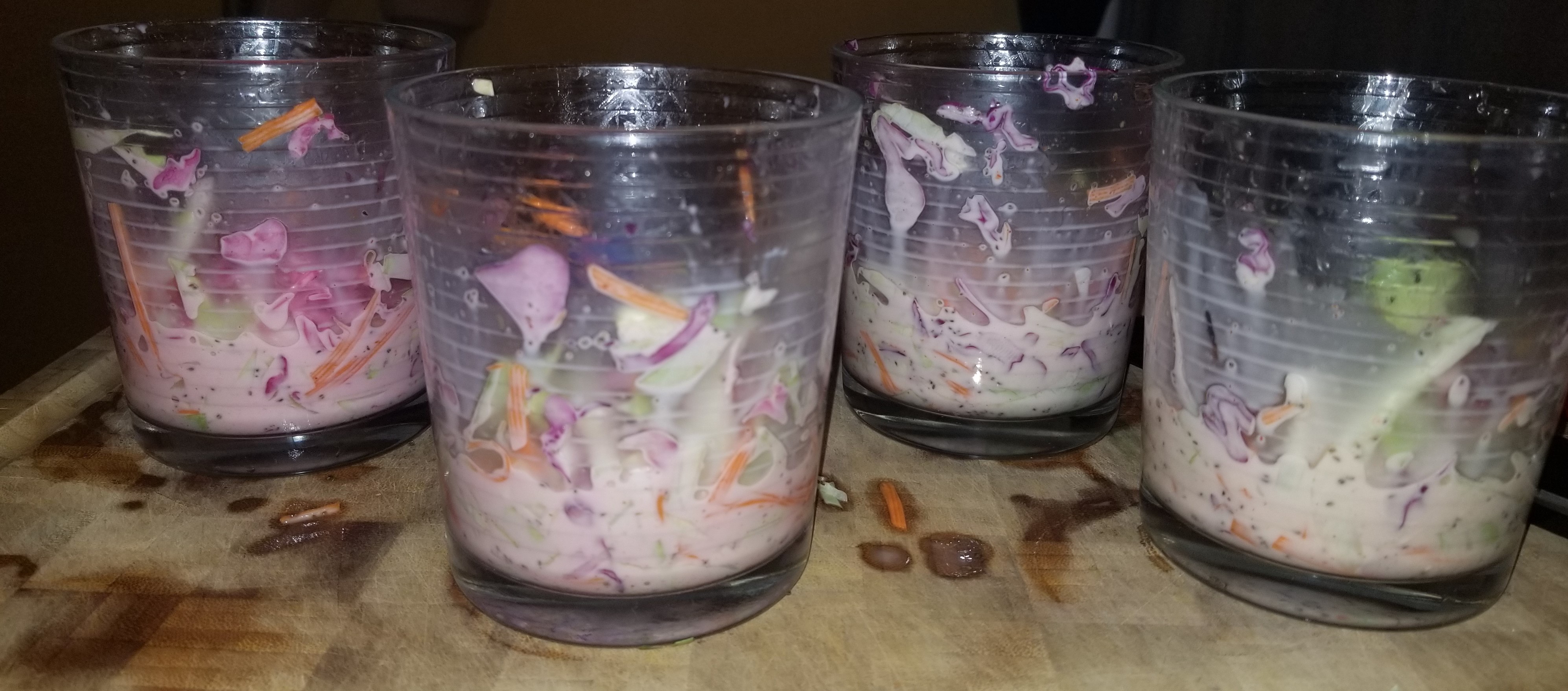
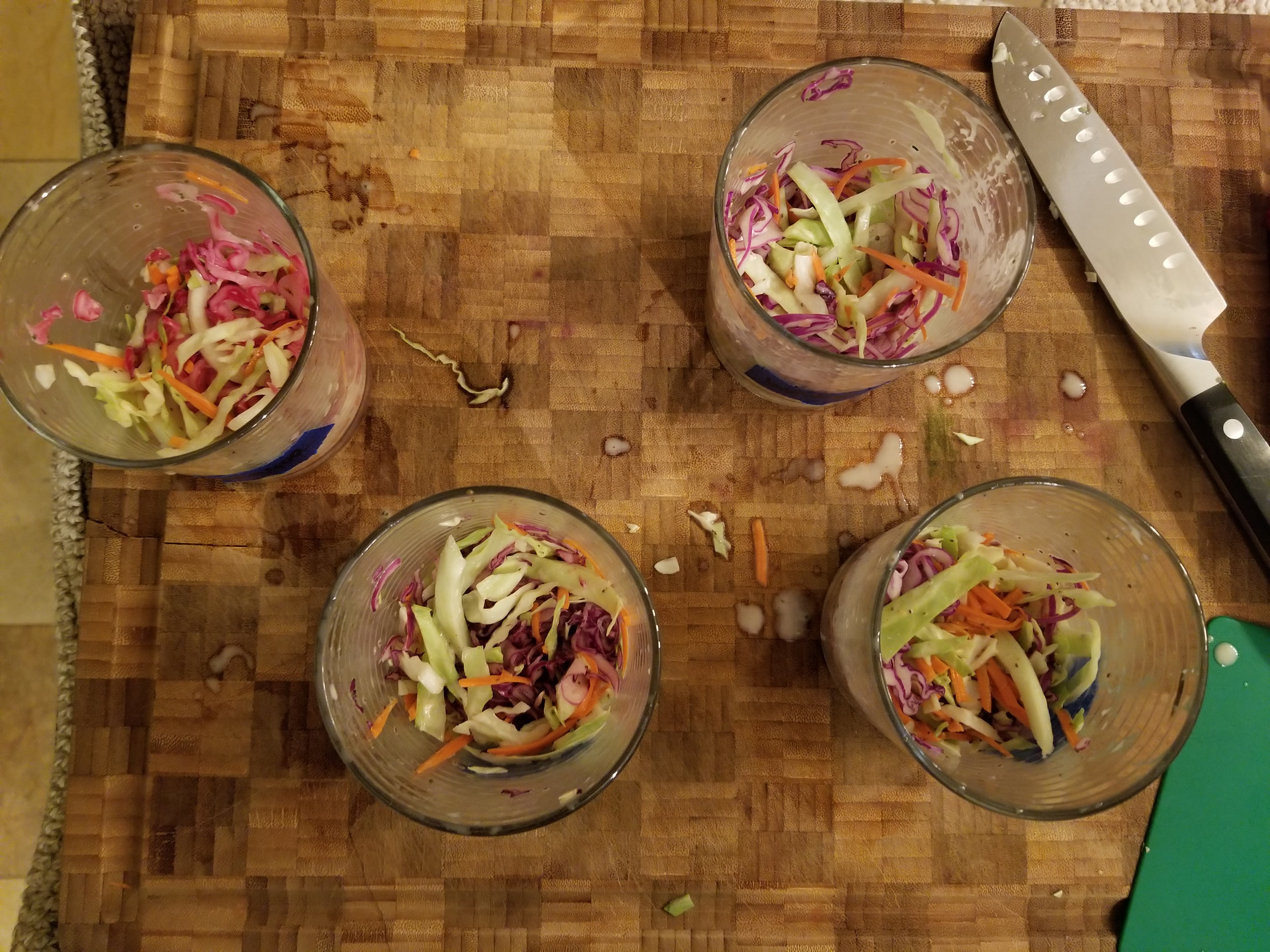

This is what each looked like after an hour in the fridge – without and with flash.
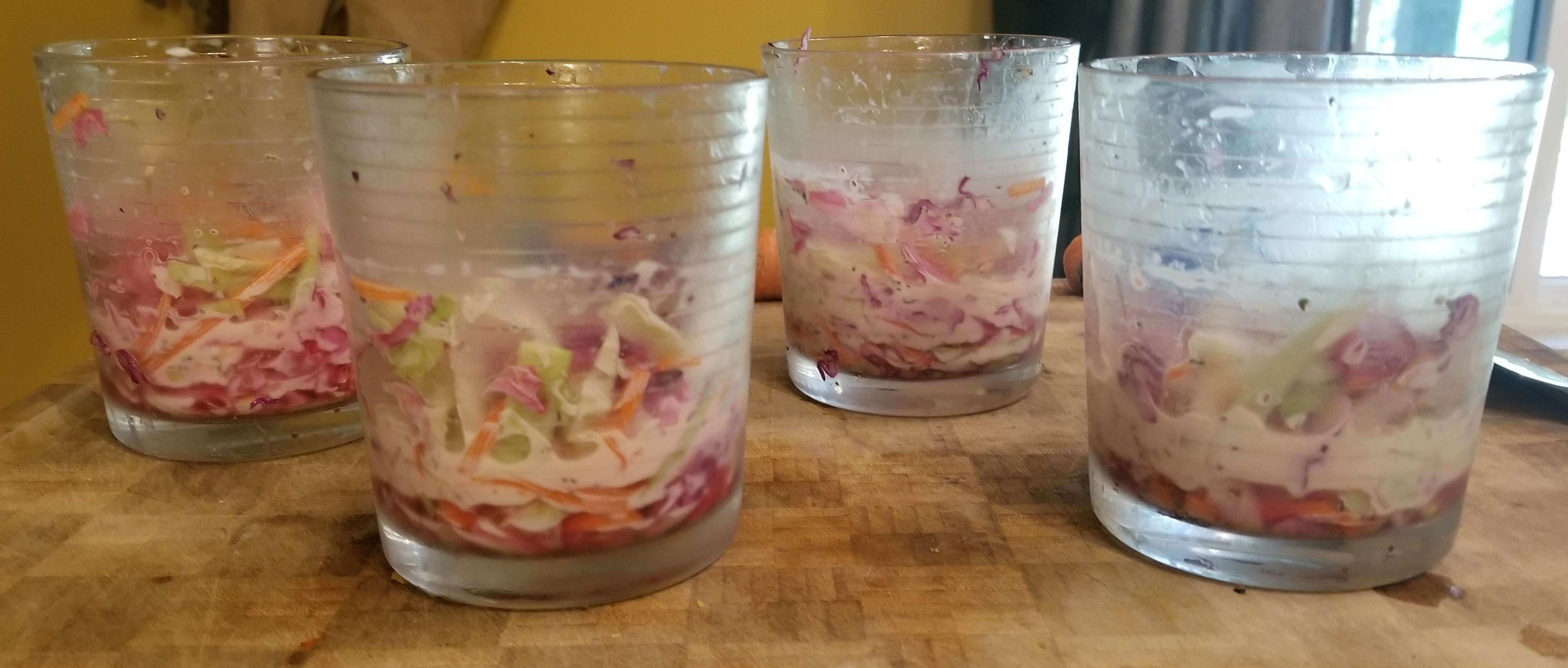
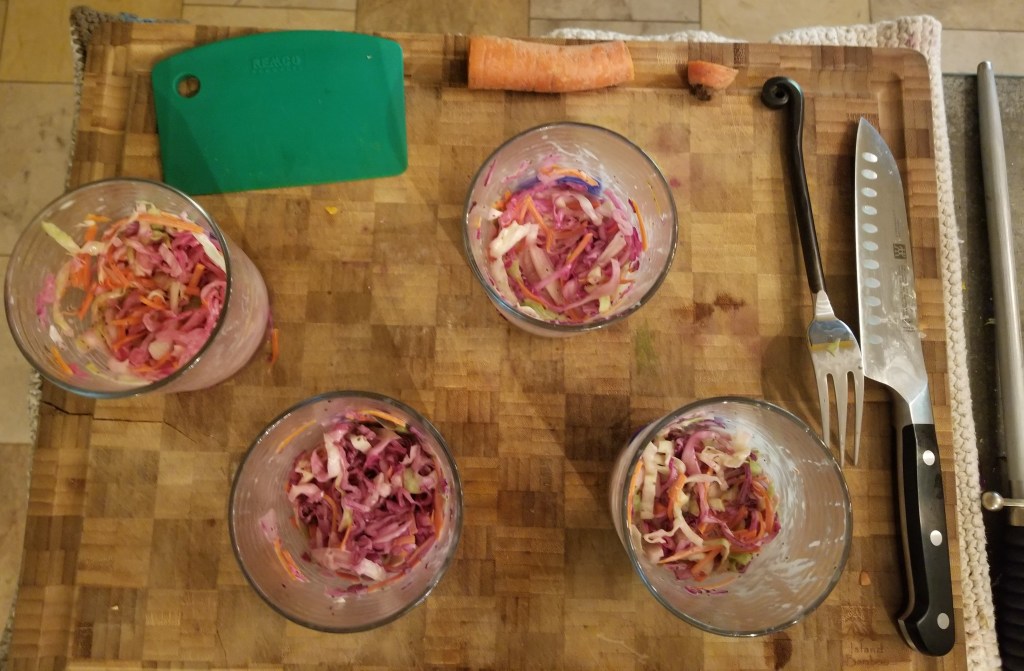

This is what each looked like after an overnight (12 hour) rest in the fridge, before and after stirring.
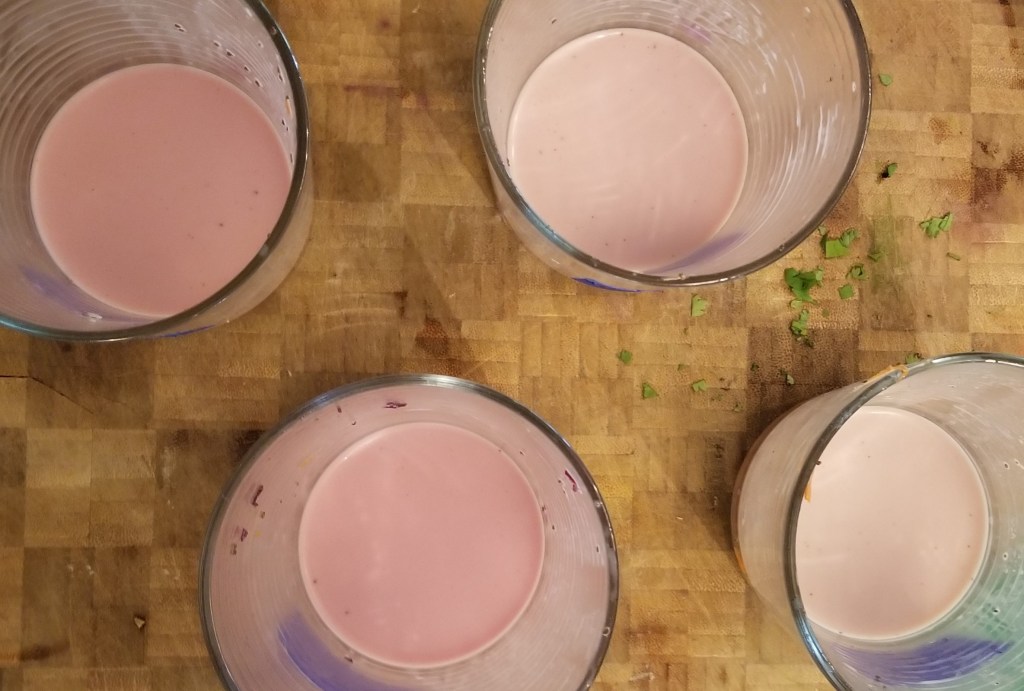
There was no real noticeable taste difference between any of the samples. I drained the liquid off (and combined all the samples for eating) to showcase the subtle difference in saturation and hue present in each. Still left to right: vinegar, salt, water, dry.
Lightly drawn conclusions: If you don’t want your coleslaw to be pink, don’t use red cabbage. If you have your heart set on using red cabbage, but want your coleslaw to be as non-pink as possible, I suggestion slicing your red cabbage, blotting with a paper towel, and leaving it uncovered in the fridge overnight to dry out. A further step to take is waiting to add the red cabbage until serving.
Conversely, for the pinkest possible coleslaw, I suggest using red cabbage in place of green and swooning at your neon culinary masterpiece.
*I prefer using apple cider vinegar, but my partner prefers white. If I’m making it for both of us, I default to white vinegar. We go real heavy on the celery seed in this household.
Cover photos are homemade coleslaw and pulled pork (homemade barbecue sauce and local pork), on a homemade wheat bun and homemade fried local chicken and coleslaw on homemade naan.
- Cabbage, raw. FoodData Central – USDA. https://fdc.nal.usda.gov/fdc-app.html#/food-details/169975/nutrients. Published April 1, 2019. Accessed February 19, 2021.
- Rokayya S, Li CJ, Zhao Y, Li Y, Sun CH. Cabbage (Brassica oleracea L. var. capitata) phytochemicals with antioxidant and anti-inflammatory potential. Asian Pac J Cancer Prev. 2014;14(11):6657-6662. doi:10.7314/apjcp.2013.14.11.6657
 Eat - Drink - Both