
I eat at least one egg per day; for a two person household we go through 12-18 eggs per week and with good reason. Not only are eggs delicious, they are also a high biological value protein–meaning they contain all the essential amino acids (protein building blocks) that your body needs, and they clock in at roughly 15 cents per serving.


Egg whites are a high-quality, fat-free source of protein and also a good source of niacin, riboflavin, potassium, and magnesium.
Egg yolks contain all of the egg’s fat; fat-soluble vitamins A, D, and E; zinc; and choline, an essential nutrient for human liver and muscle functions. The yolk is also a source of dietary cholesterol. However, if you’ve been avoiding eggs for this reason, it is unlikely you should do so. In most cases, dietary cholesterol has a negligible effect on blood cholesterol levels which is why there are no current guidelines for dietary cholesterol restriction.
For a more precise nutrient breakdown, see the USDA and make sure to note the portion size being assessed.
One thing I will never forget from my dietetics education:

There is a three digit number that is printed on every egg carton, circled above. This number corresponds to the day of the year that these eggs were packed. By itself, this is a super neat piece of data, but what does it mean? As a general rule, eggs are good for five weeks past this date. If you are concerned that you may have let eggs sit in the fridge for too long, fill a larger than an egg sized container with cold water and put a raw, shelled egg into it. If the egg floats, toss it. If it stands up, use ASAP.
Basic Recipes
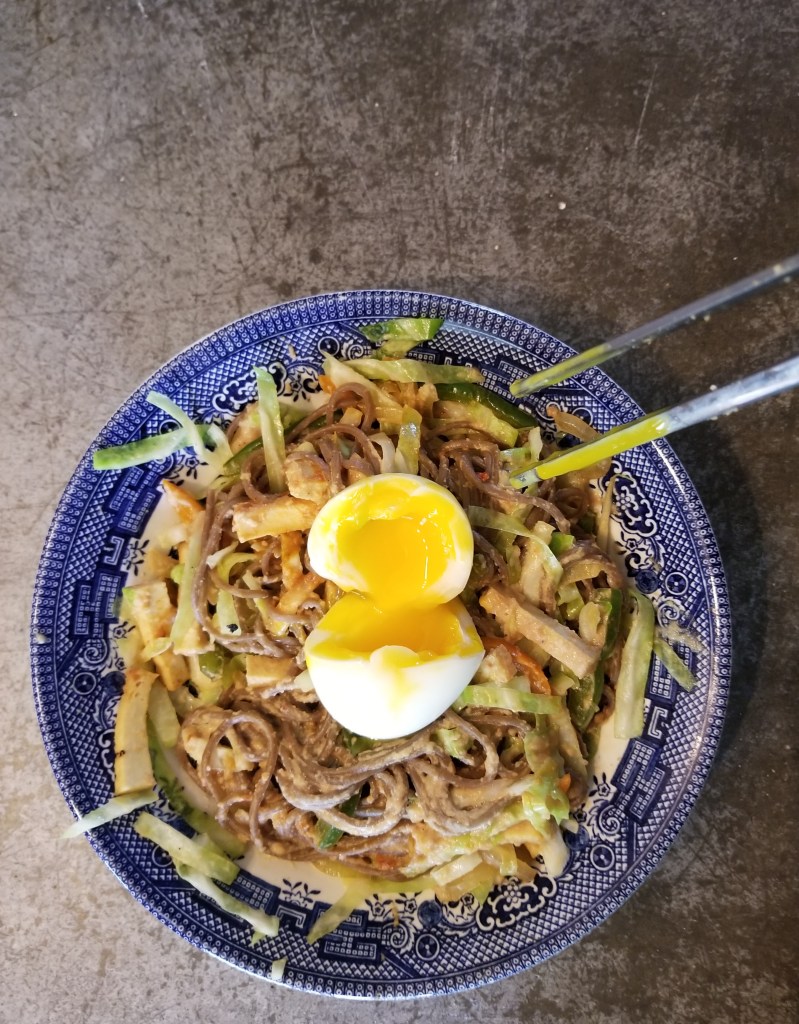
Perfect soft-boiled (six minute) egg – also known as the I-am-too-lazy-to-poach egg:
- I recommend either a cast iron or heavy bottomed 1 qt pot. This reduces both the amount of water used and the necessary amount of heat to maintain a boil.
- Fill the pot with cold water within 3/4 inch of the top and cover. Bring to a boil over high heat.
- Use a large, preferably slotted, spoon to gently lower your egg into the water and cover.
- Return to a boil and reduce heat to medium/medium-high (depending on your pot and your stove) to maintain boil.
- Start six-minute timer.
- Fill a bowl with cold water and maybe some ice cubes if you want.
- When the timer goes off, use slotted spoon to transfer egg to bowl of cold water.
- Swoosh the egg around in the water for ~60 seconds or until it feels barely warm when held in your palm.
- Smush the shell, rolling along a hard edge such as the sink until nicely crackled. I like to give it a few knocks as if I were cracking a raw egg before gently rolling it as to not split the egg, but make it easier to peel.
- Peel and enjoy!
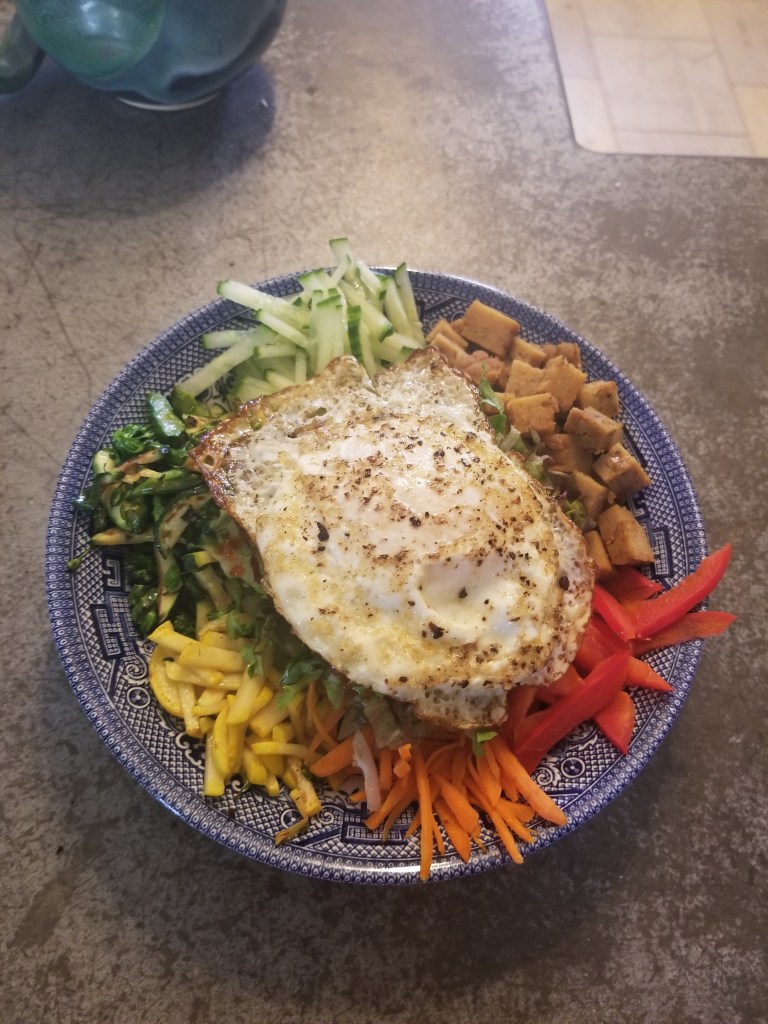
This is my go-to morning egg method. I like it on toast, over bibimbop, with veggie hash, or in a benedict.
Perfect hard-boiled egg + why yolks turn green:
- Fill a large pot roughly halfway with cold water.
- Add as many eggs as you would like to hardboil that will loosely fit in a single layer and cover the pot. I usually do 4-6 eggs.
- Bring to a boil over medium-high heat. Once boil is achieved, remove the pot from the heat and leave, covered, for 13 minutes.
- Fill a large bowl with ice, add water to cover.
- Remove eggs with a slotted spoon into the bowl of ice water.
- Enjoy or refrigerate within two hours of preparation.
- Hardboiled eggs in the shells or peeled will keep, refrigerated, for seven days.
Plagued by green yolks? Egg yolk contains iron which reacts with hydrogen sulfide in egg whites to produce ferrous sulfide. FeS is formed when the yolk reaches about 158°F, though the reaction is more likely to take place in older eggs (egg pH increases, or becomes more alkaline with age) or those boiled for 30 minutes or longer. Rapid cooling after cooking reduces the likelihood of green yolks.
Personally, I don’t mind what my hardboiled yolks look like, though the recipe above reproducibly produces the yellowest of yolks. Even in the rare case of my making deviled eggs, I generally add pureed peas or asparagus and turn them greenish anyway.
I will eat my eggs under just about any preparation technique as long as the whites are fully cooked. My mom, on the other hand, cannot handle runny yolks; neither could I until I was well into my twenties. I grew up eating eggs over-smashed, hard–broken yolk, fried until cooked solid. How do you like your eggs?
 Eat - Drink - Both