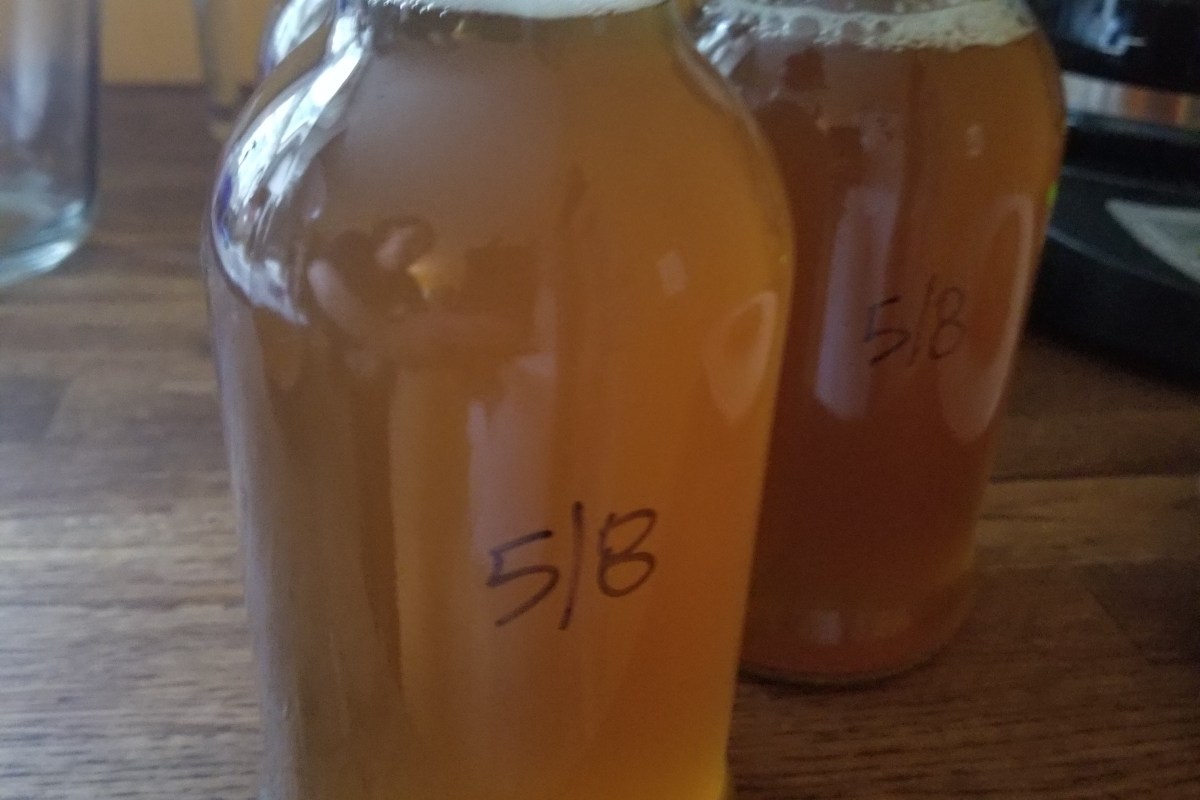
For the most part, we drink coffee and water in our household. Maybe a soda or juice every other month or so. Kombucha was included in this “treat” list, an occasional extravagance. That is until a fellow dietetic intern gifted me with a SCOBY. Now I ferment my own “booch” every other week.

SCOBY means “symbiotic culture of bacteria and yeast,” which is formed through the conversion of carbohydrates by of lactic acid bacteria, acetic acid bacteria, and yeast to form acids + alcohol; the magical process known as fermentation.
It’s slimy, a bit lumpy and squishy. Each new batch of booch grows a fully functional colony that can be used to ferment subsequent batches. The new layer forms on top, attached lightly to the one(s) below. My SCOBYs are really large at this point–though only one is need to make more kombucha, it seems almost cruel to toss one away. I brought this living thing into being and now it is my responsibility, or something like that. I’ve tried gifting them, but kombucha is a polarizing, acquired taste.
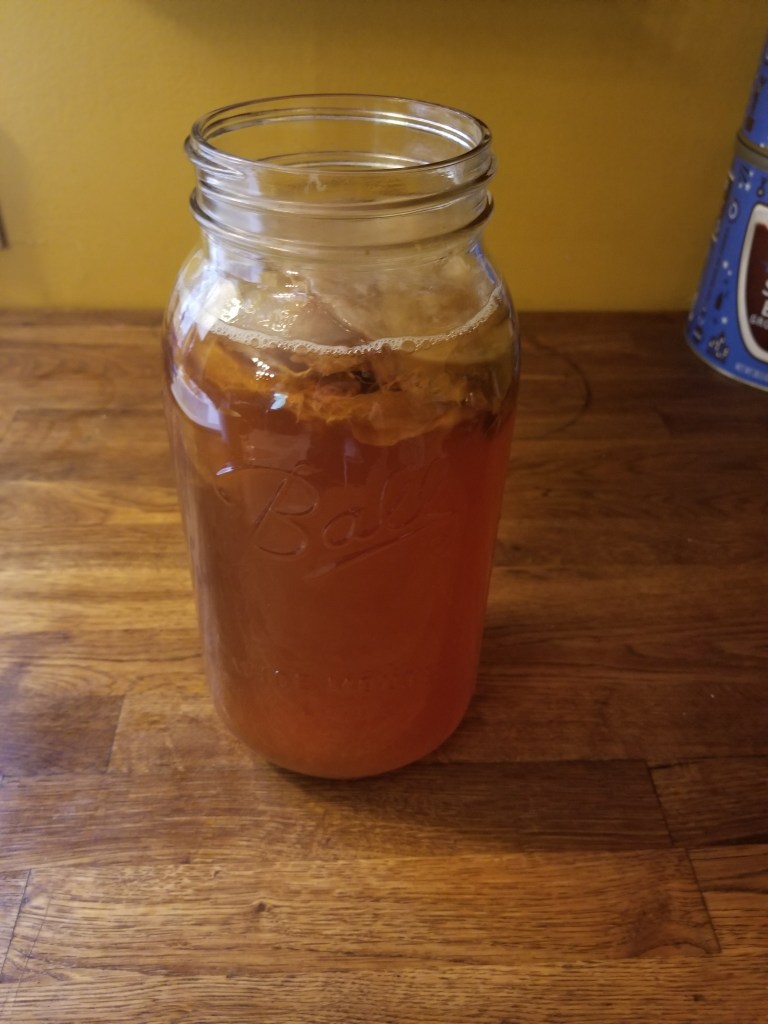


The process is simple. Brew some sweet tea, add previously brewed booch + SCOBY
- 1 cup sugar to ~ 1 gallon water (14 cups), 8 black tea bags (roughly 3 tbsp loose leaf tea)
- Bring water to a boil in a stainless steel pot
- Remove from heat, add sugar and tea, and allow to cool to room temperature
- Fill half gallon jars with ~7 cups of sweet tea, add previously brewed booch (adds bacteria cultures, yeast, and lowers the pH), add SCOBY right side up, cover with breathable material and set in a cool, dark place.
- Smell your booch after 3 days, it should have a sour, vinegar like scent.
- After 5-7 days, begin taste testing.
- When you are pleased with the tart-sweet ratio, it’s time to bottle!

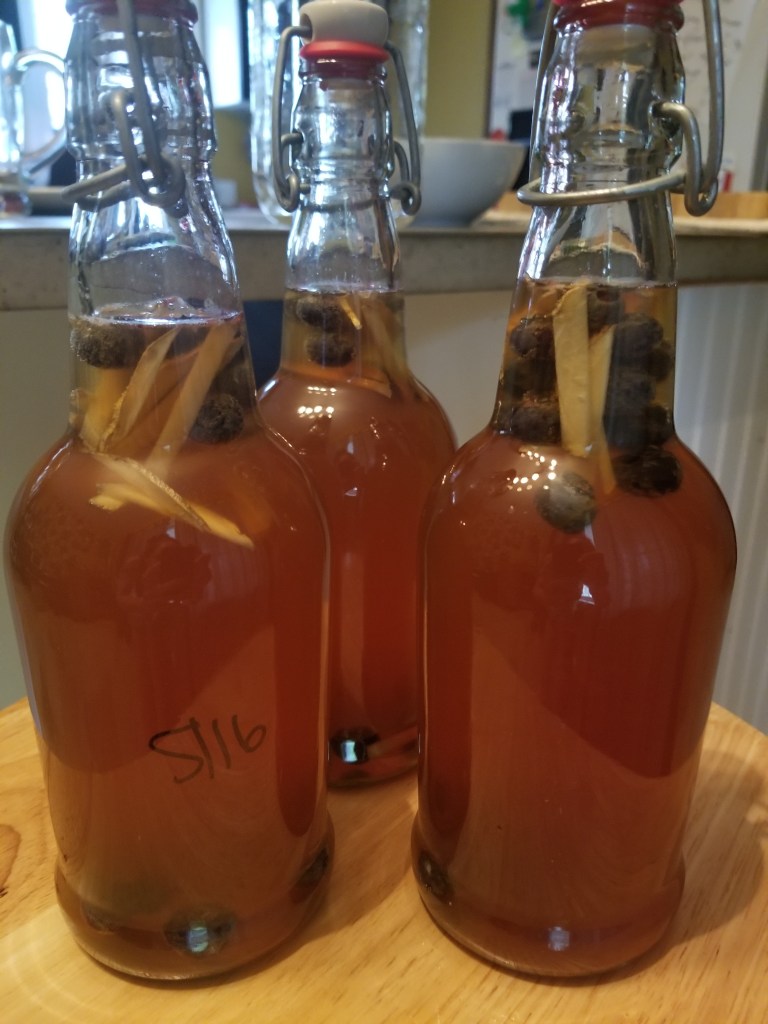

Some notes: minimize contact with metal, it can alter the taste and hurt the SCOBY. It was a game changer for me when I realized I could label the glass bottles with permanent marker instead of tape: it scrubs right off! Sometimes I add fruit, or fruit juices such as the strawberry I was gifted in exchange for greens. I cover my booch with two coffee filters and a rubber band, though I want to switch to a washable cotton system.
A book I highly recommend if you are interested in fermentation, from the history to recipes using your own fermented foods is Mary Karlin’s Mastering Fermentation. She provides really excellent, detailed information especially as it relates to food safety and sanitation.
While a lot of research has been and continues to be conducting into the benefits of fermented foods for the gut microbiome, it is important to note a few things:
- Start slow! If you don’t already consume a lot of fermented foods/beverages, it can be a lot for your bowels to handle at once. Yogurt is usually a good place to start. Even if you are lactose intolerant–the bacteria ferment the lactose into lactic acid, essentially digesting it so you don’t have to.
- Fermented foods contain live bacteria, I would not recommended home fermented foods for those with compromised immune systems.
- If it smells or tastes “off”, it likely is. I have let batches ferment too long, or used too much tea, and discarded all but a cup to start the next batch.
I learned a few things the hard way, such as only use tea you actually like to drink! I bought some Irish Breakfast tea from the bulk foods store because it was cheap. I did this even knowing I don’t care for Irish Breakfast tea. What happened? My booch tasted like Irish Breakfast. I’m still using it, though in a much lower ratio.
Bacteria need five things to thrive, represented by the acronym FATTOM: food, acidity, time, temperature, oxygen, and moisture. The food is the added sugar, acidity from the cup of previous booch, time + temperature usually 7-10 days though in the summer in my hot house it can be as quick as 3-5, oxygen – orientation is important: the yeast loving bacteria live on the bottom of the SCOBY while the oxygen loving are on top, and I think moisture is pretty self-evident in this case.
If you made it all the way through this quick overview, here is some additional reading should you be ready to take the plunge to brew your own kombucha or want to learn more about fermented foods and the gut microbiome:
 Eat - Drink - Both