Eggs – nutrition and recipes

I eat at least one egg per day; for a two person household we go through 12-18 eggs per week and with good reason. Not only are eggs delicious, they are also a high biological value protein–meaning they contain all the essential amino acids (protein building blocks) that your body needs, and they clock in at roughly 15 cents per serving.
Egg whites are a high-quality, fat-free source of protein and also a good source of niacin, riboflavin, potassium, and magnesium.

Egg yolks contain all of the egg’s fat; fat-soluble vitamins A, D, and E; zinc; and choline, an essential nutrient for human liver and muscle functions. The yolk is also a source of dietary cholesterol. However, if you’ve been avoiding eggs for this reason, it is unlikely you should do so. In most cases, dietary cholesterol has a negligible effect on blood cholesterol levels which is why there are no current guidelines for dietary cholesterol restriction.

For a more precise nutrient breakdown, see the USDA and make sure to note the portion size being assessed.

One thing I will never forget from my dietetics education:

There is a three digit number that is printed on every egg carton, circled above. This number corresponds to the day of the year that these eggs were packed. By itself, this is a super neat piece of data, but what does it mean? As a general rule, eggs are good for five weeks past this date. If you are concerned that you may have let eggs sit in the fridge for too long, fill a larger than an egg sized container with cold water and put a raw, shelled egg into it. If the egg floats, toss it. If it stands up, use ASAP.

Basic Recipes

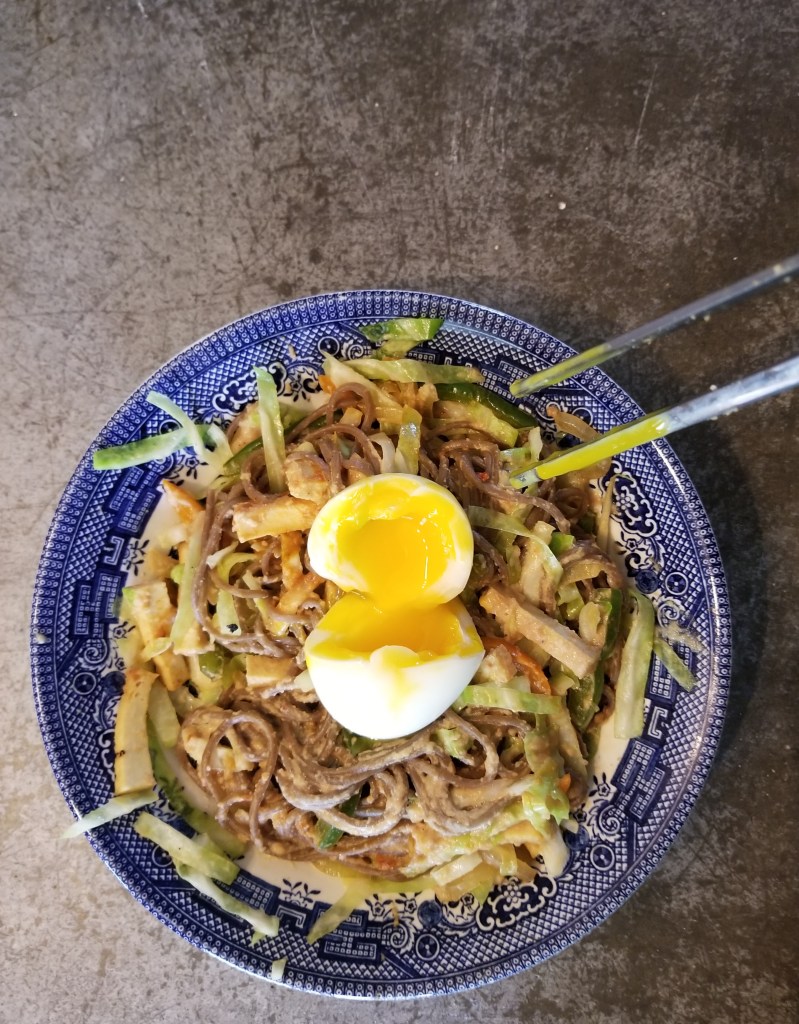
Perfect soft-boiled (six minute) egg – also known as the I-am-too-lazy-to-poach egg:

  • I recommend either a cast iron or heavy bottomed 1 qt pot. This reduces both the amount of water used and the necessary amount of heat to maintain a boil.
  1. Fill the pot with cold water within 3/4 inch of the top and cover. Bring to a boil over high heat.
  2. Use a large, preferably slotted, spoon to gently lower your egg into the water and cover.
  3. Return to a boil and reduce heat to medium/medium-high (depending on your pot and your stove) to maintain boil.
  4. Start six-minute timer.
  5. Fill a bowl with cold water and maybe some ice cubes if you want.
  6. When the timer goes off, use slotted spoon to transfer egg to bowl of cold water.
  7. Swoosh the egg around in the water for ~60 seconds or until it feels barely warm when held in your palm.
  8. Smush the shell, rolling along a hard edge such as the sink until nicely crackled. I like to give it a few knocks as if I were cracking a raw egg before gently rolling it as to not split the egg, but make it easier to peel.
  9. Peel and enjoy!

This is my go-to morning egg method. I like it on toast, over bibimbop, with veggie hash, or in a benedict.

Perfect hard-boiled egg + why yolks turn green:

  • Fill a large pot roughly halfway with cold water.
  • Add as many eggs as you would like to hardboil that will loosely fit in a single layer and cover the pot. I usually do 4-6 eggs.
  • Bring to a boil over medium-high heat. Once boil is achieved, remove the pot from the heat and leave, covered, for 13 minutes.
  • Fill a large bowl with ice, add water to cover.
  • Remove eggs with a slotted spoon into the bowl of ice water.
  • Enjoy or refrigerate within two hours of preparation.
  • Hardboiled eggs in the shells or peeled will keep, refrigerated, for seven days.

Plagued by green yolks? Egg yolk contains iron which reacts with hydrogen sulfide in egg whites to produce ferrous sulfide. FeS is formed when the yolk reaches about 158°F, though the reaction is more likely to take place in older eggs (egg pH increases, or becomes more alkaline with age) or those boiled for 30 minutes or longer. Rapid cooling after cooking reduces the likelihood of green yolks.

Personally, I don’t mind what my hardboiled yolks look like, though the recipe above reproducibly produces the yellowest of yolks. Even in the rare case of my making deviled eggs, I generally add pureed peas or asparagus and turn them greenish anyway.

I will eat my eggs under just about any preparation technique as long as the whites are fully cooked. My mom, on the other hand, cannot handle runny yolks; neither could I until I was well into my twenties. I grew up eating eggs over-smashed, hard–broken yolk, fried until cooked solid. How do you like your eggs?


Sourdough starter

https://www.explainxkcd.com/wiki/images/5/5a/sourdough_starter.png
Image from xkcd: https://xkcd.com/2296/

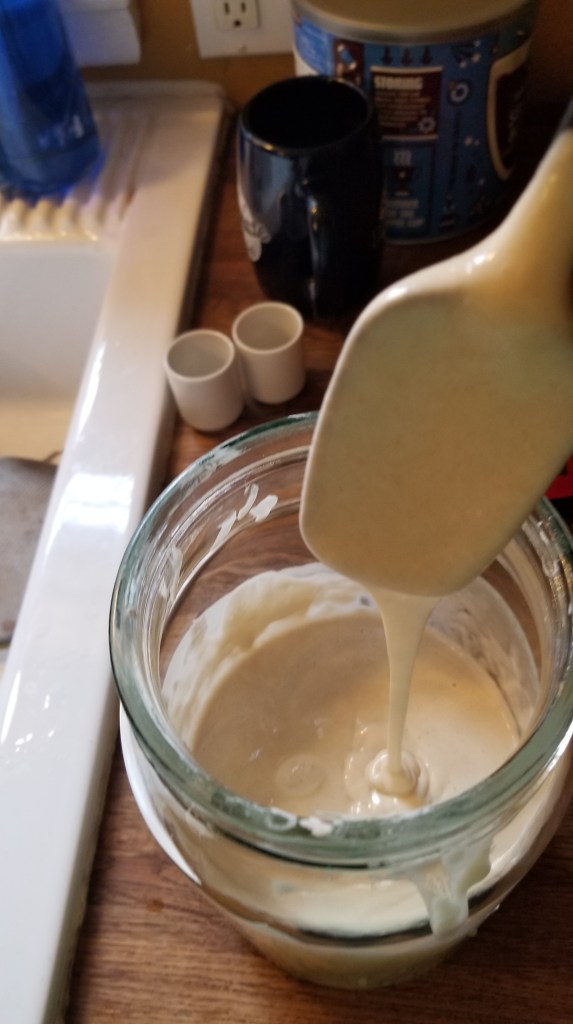
I waited two months into Stay Home to bake my first loaf of banana bread (with zucchini), which was shortly followed by starting a sourdough starter. I’ve been fermenting my own kombucha for about a year and have fermented chili-garlic paste to ferment kimchi, but the pound of yeast in my fridge led me (for good reason) to put off fermenting flour + water.

I followed the directions from the kitchn. Warning: the site has a fair amount of ads, but the directions are thorough and made me feel confident in my wild yeast harvesting ability.

The day 5 directions indicate that 1/2 of the starter should be used or discarded. I’m not one to discard just about anything–you can hear me chanting “waste not one grain of rice!” when wrapping up leftovers–and as I have had success with their recipes in the past, I chose to follow the advert at the end of the starter recipe to make a loaf of bread with the “discard” plus yeast (as we know, I have plenty).

While it may look roughly like bread, this was a severe disappointment. My baking projects are almost exclusively 50% excellent and 50% “okay I’ll eat it, but never make it again”. However, waste not want not, right?

Fortunately, we were out of breadcrumbs.

When I have stale bread, or small, nubby loaf heels, I usually cube and bake them to make croutons for french onion soup, but I already have about a half gallon of them in the freezer.

Making breadcrumbs is similar: cut the bread into thin slices, bake at a low temperature (I did 250°F) until extremely crisp, but not burned. Break into chunks into food processor (or blender, or coffee grinder if that’s all you have) and process until you are pleased with the consistency. Store in an airtight container in a cupboard.

However, neither the disappointing bread nor resulting crumbs were the reason behind this fermentation project. Can you guess?

Store bought “sourdough” english muffins are not flavorful and I have plenty of time on my hands to rectify this.

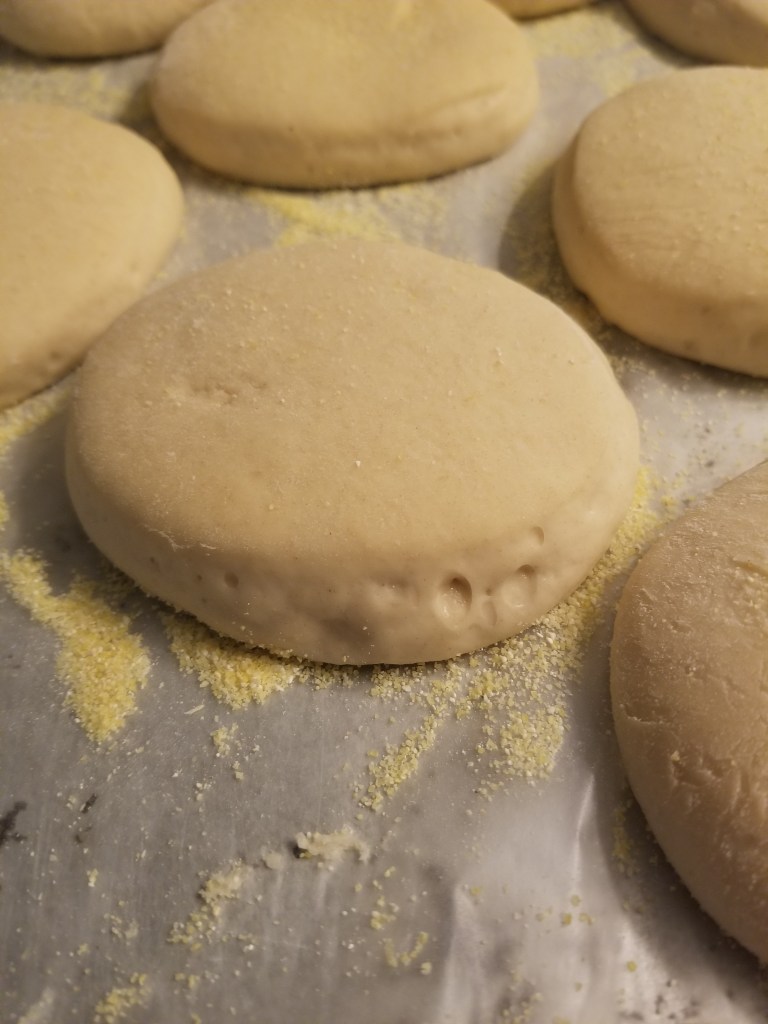
I had five days to peruse recipes online while my starter ripened, and I settled on this one based on not only the sheer volume of positive reviews, but most of them added photos! Surely I could follow this recipe and yield a product that at least looked like it should.

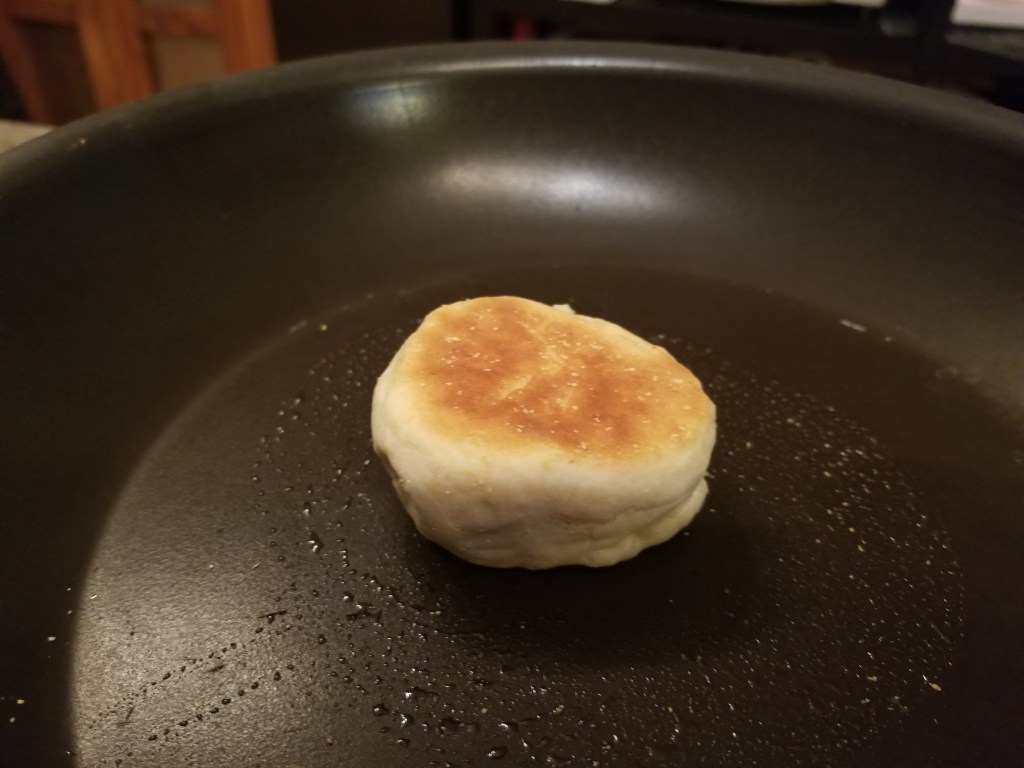
I ended up with 20 portions and a wee nob left over to make a tester. So far so good! It looked like an english muffin, had a nice crumb, and tasted good too! I was all set to cook up the rest.

A rousing success for my first try.

The only downside? Just like store bought they weren’t sour enough! Hopefully now that my starter is older and more pungent the next batch will be even better.
This afternoon, as an experiment, I added some of the starter to this week’s batch of naan (called narn in our household). It’s rising now and here’s hoping for delicious! Did you challenge yourself to bake anything new this week?

Transplanting

More often than not, I am a black-or-white all-or-nothing type of human. While I know better, gardening is not exempt from this trait. Lots of photos in this post, this is my favorite method of obtaining food and I’m very proud of how it’s turning out this year and all the work I’ve put in thus far.

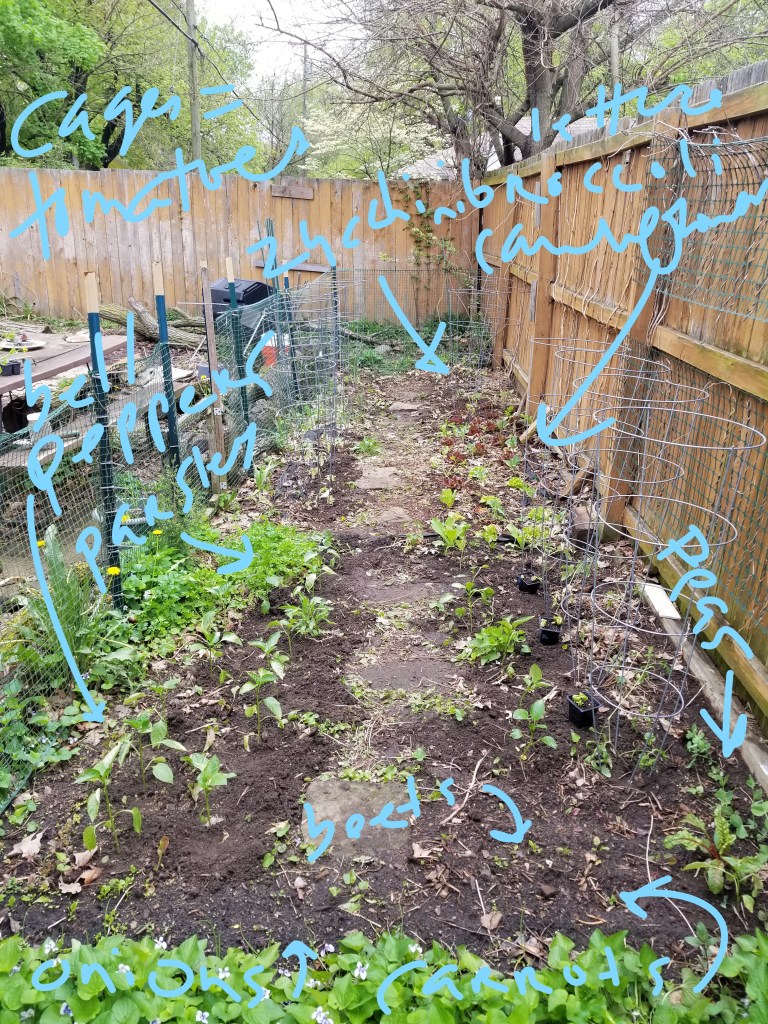
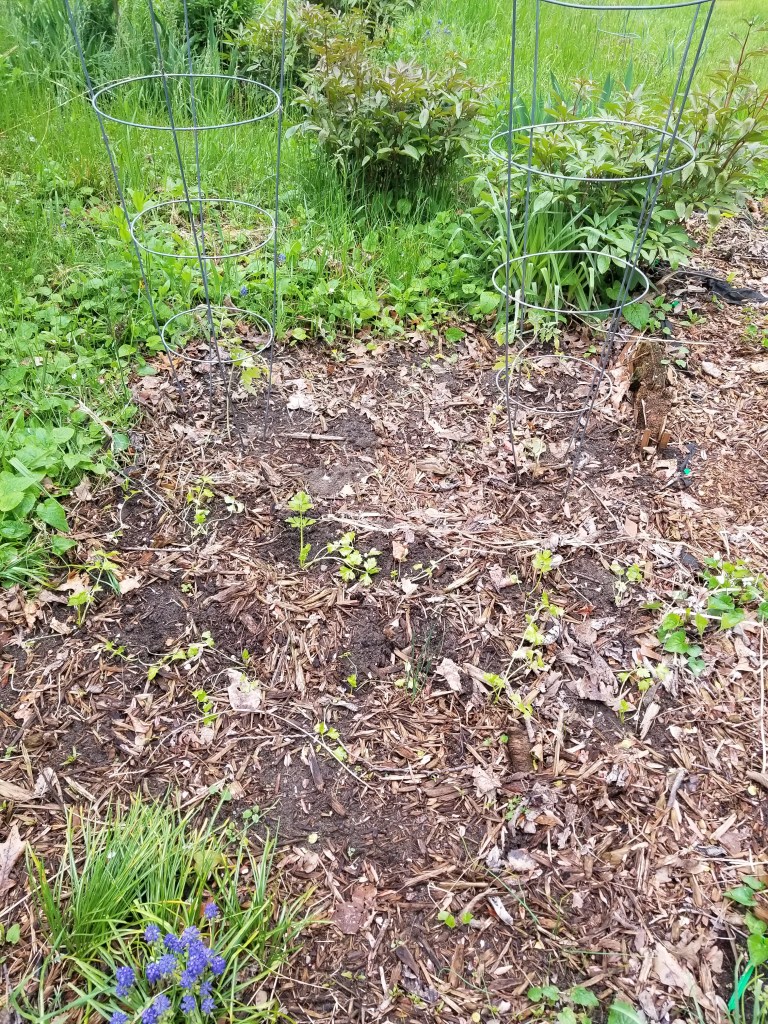
Each year, believe it or not, it is less crowded than the previous. These three fence sections are my main production space: mixed greens, beets, onions, carrots, tomatoes, basil, peas, pole beans, bush beans, bell peppers, parsley, two lettuce varieties, broccoli, cauliflower, chinese cabbage (bolting already!), swiss chard, and zucchini. I think that’s it. Oh, and celery. And spinach.

I will continue to shrug off how crowded it is until I’m getting stung by zucchini pokes on all sides while tramping lettuce and chard. This is a lesson I am unlikely to learn soon, but like I said each year it gets a wee bit more manageable.

Each section is distinct, but cozy!

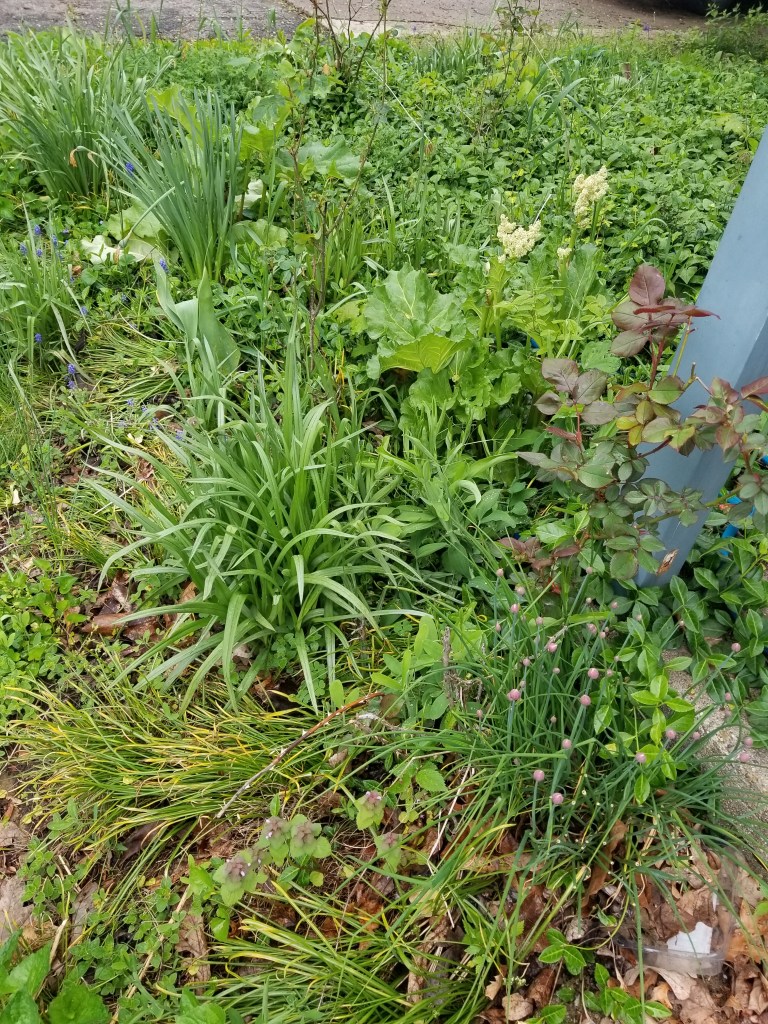
Raised beds and containers fill out the rest of this space. Not pictured: another massive parsley forest and 4′ x 4′ rhubarb plant. The other areas of the “farm” receive less hours of sunlight, which leads to contemplation of tree trimming/removal services, but like the crowding problem this is unlikely to see a timely solution.

As for the remainder of the garden:

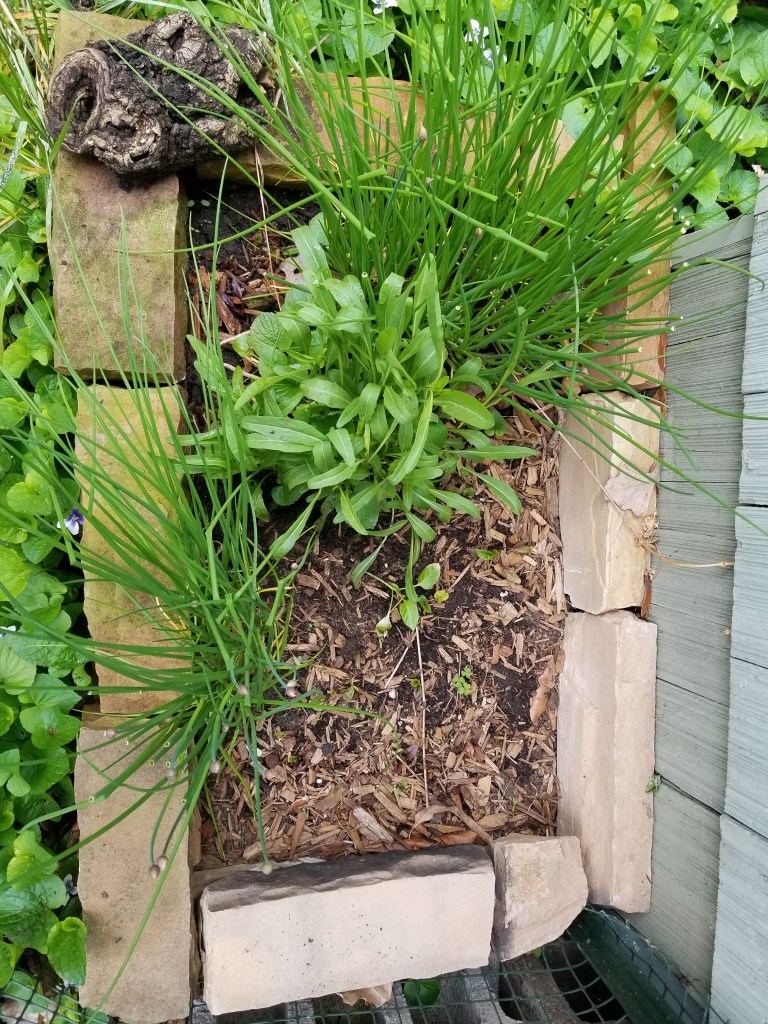
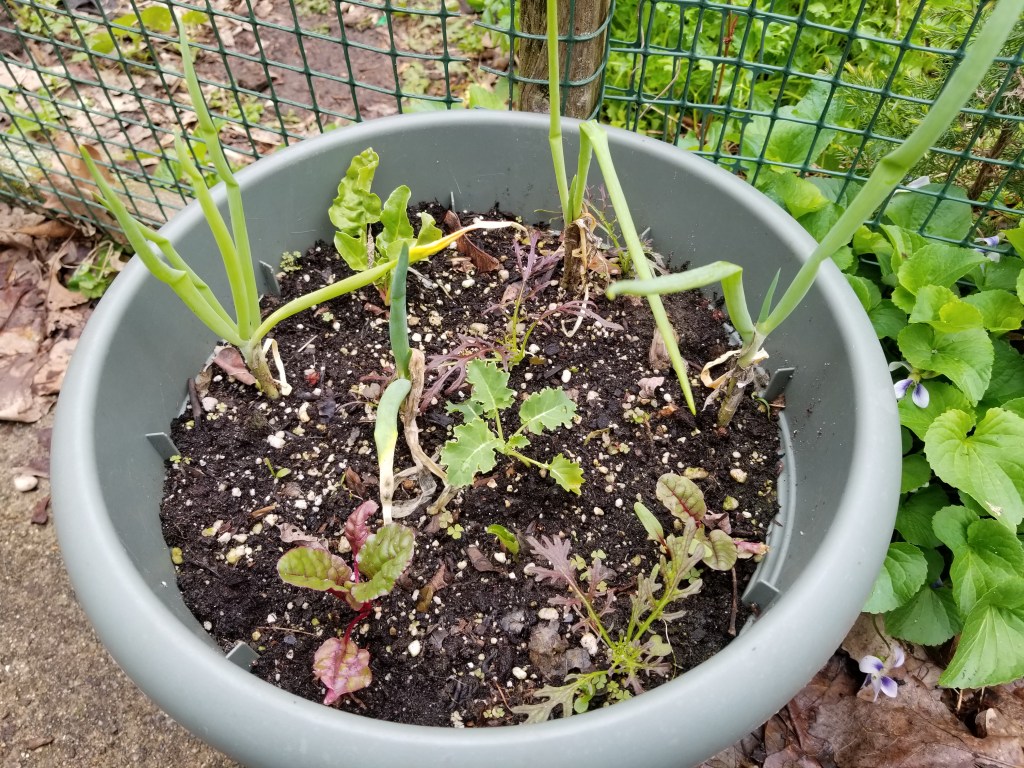
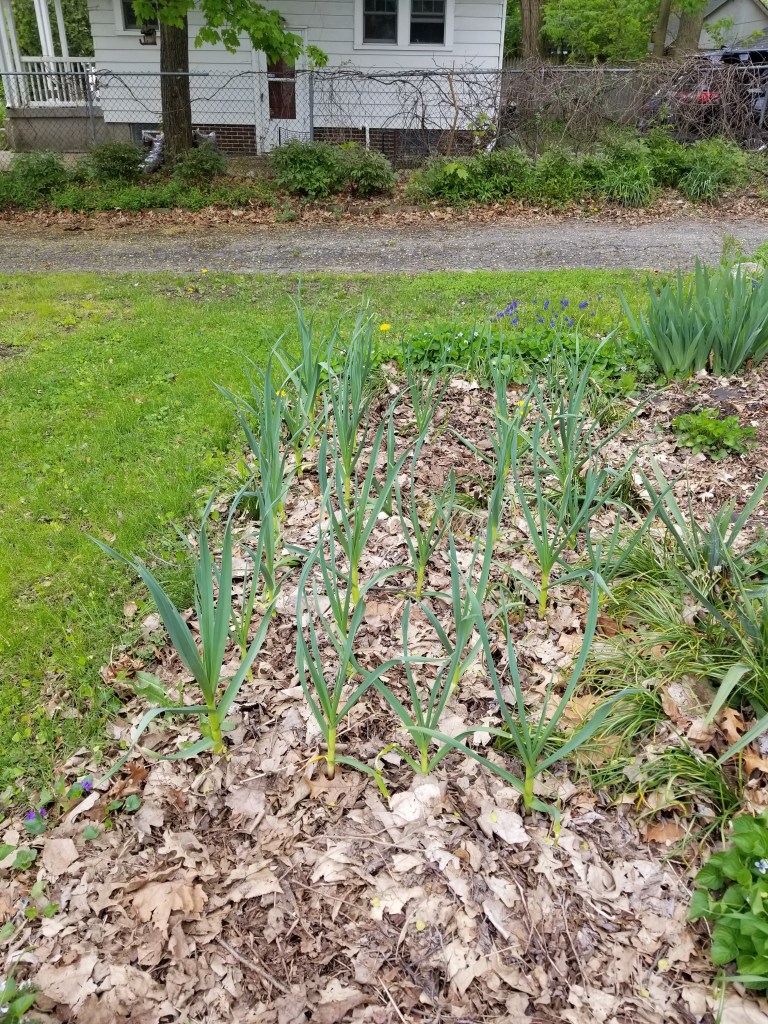
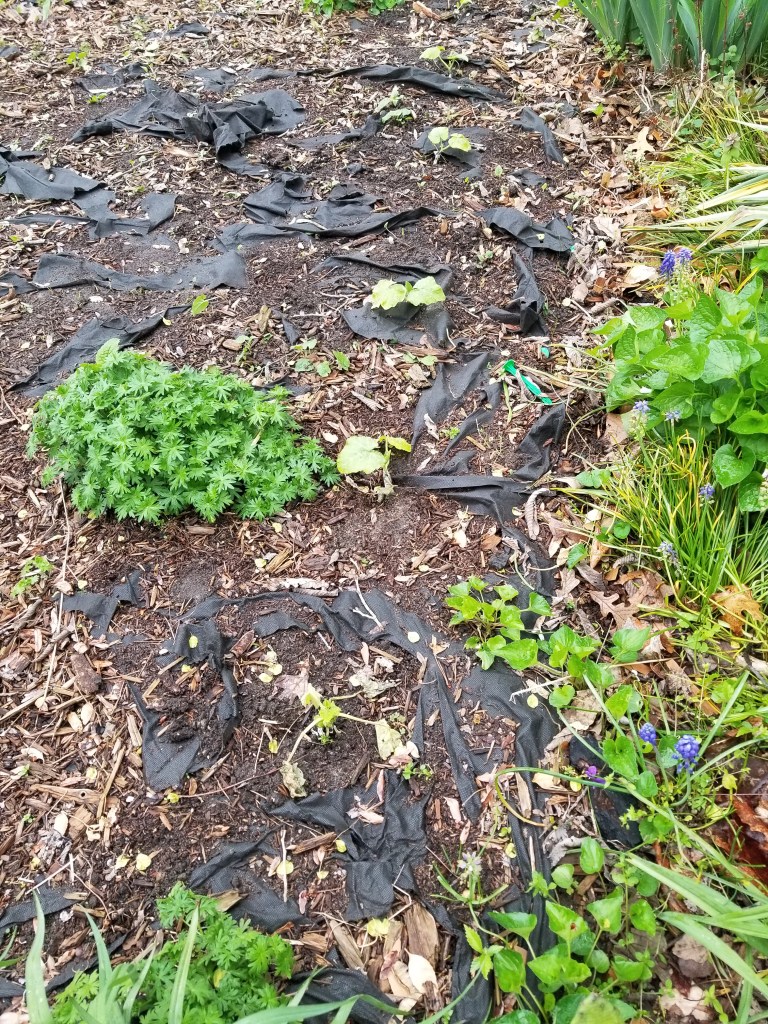
Garlic, lettuce stowaways, and two planter boxes with hands down the best lettuce I have ever grown in my life [interplanted with kale + onions]. This is the only nice thing I have to say about the fact that we got snow in May.

At least four varieties of bunching onions, tomatoes, celery, hot peppers (lemon, aurora, and chiltepin), bush beans, lima beans, leeks, onions, two varieties of winter squash, and yellow-crookneck squash.

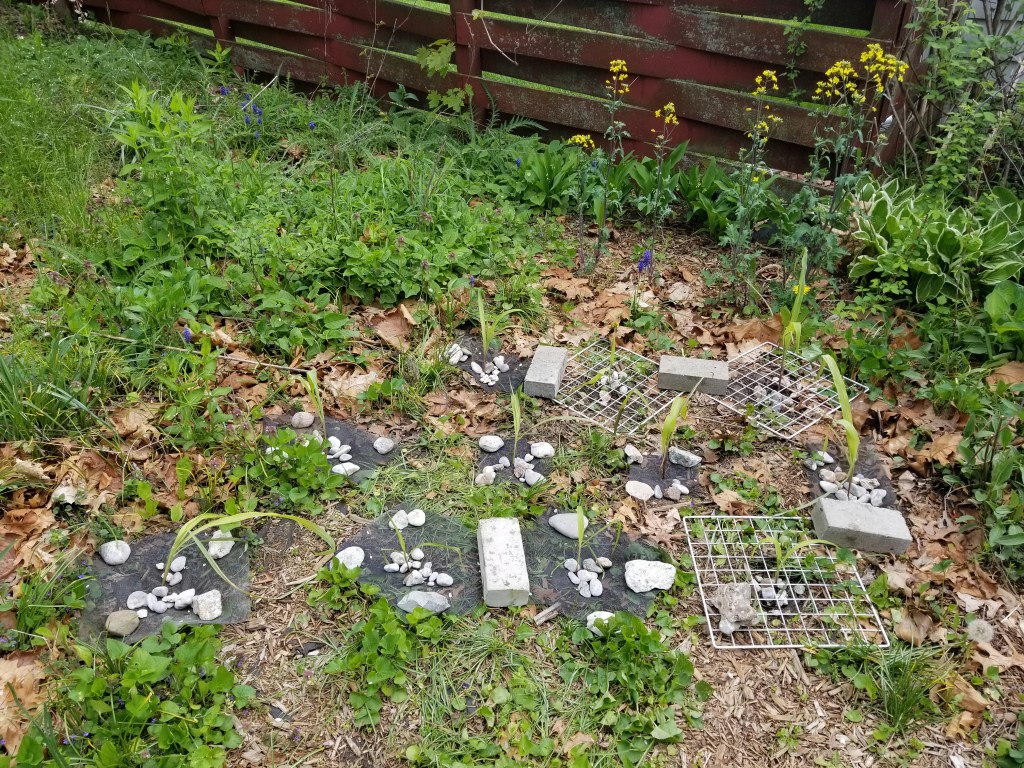
Last but not least, I’m trying my hand at growing corn again this year. However, my friendly neighborhood menace [rodent, squirrel, possum, racoon, cat?] decided to thoroughly dig up each of my 6″ transplants.*

I could not let this stand and devised what has abated assault now two days in a row.

Check out my Instagram for my most recent harvest including an excellent biennial example.

I mainly source my seeds from Seed Savers Exchange (I’ll discuss this in an upcoming post about pizza), but have some more recent acquisitions from Ann Arbor Seed Company and You Grow Girl. It has been a long few days and I look forward to the weeks of weeding and watering ahead!

Tell me: what are you growing that you are excited about?

*I start seeds early. Often too early.

Spring Foraging

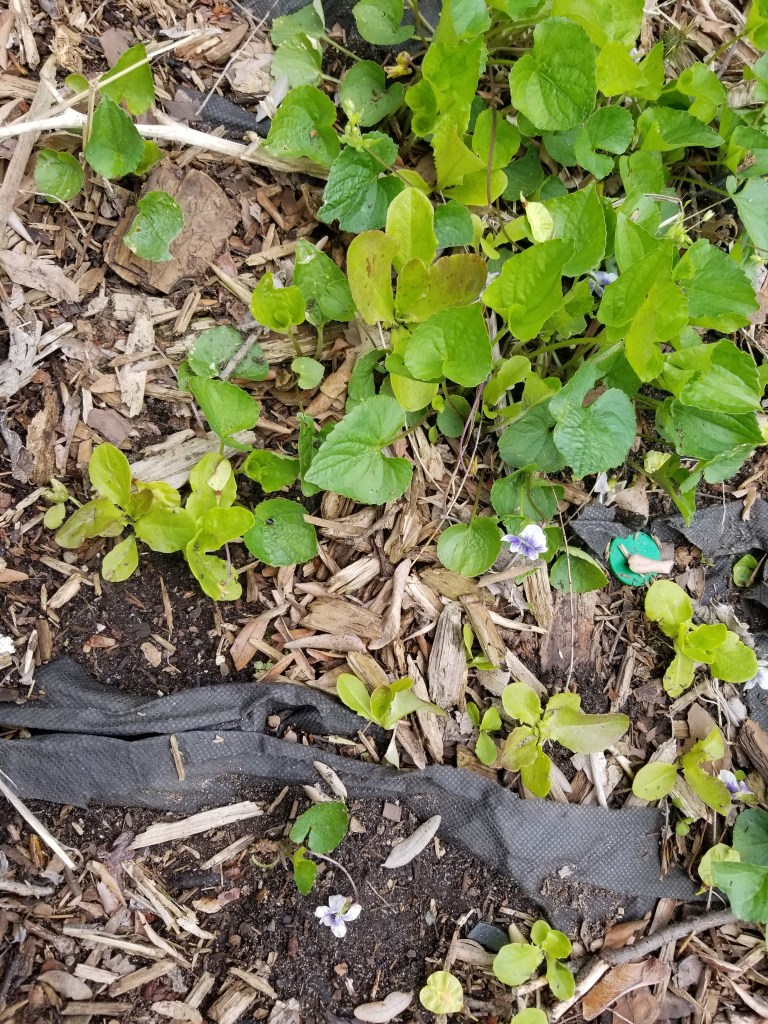
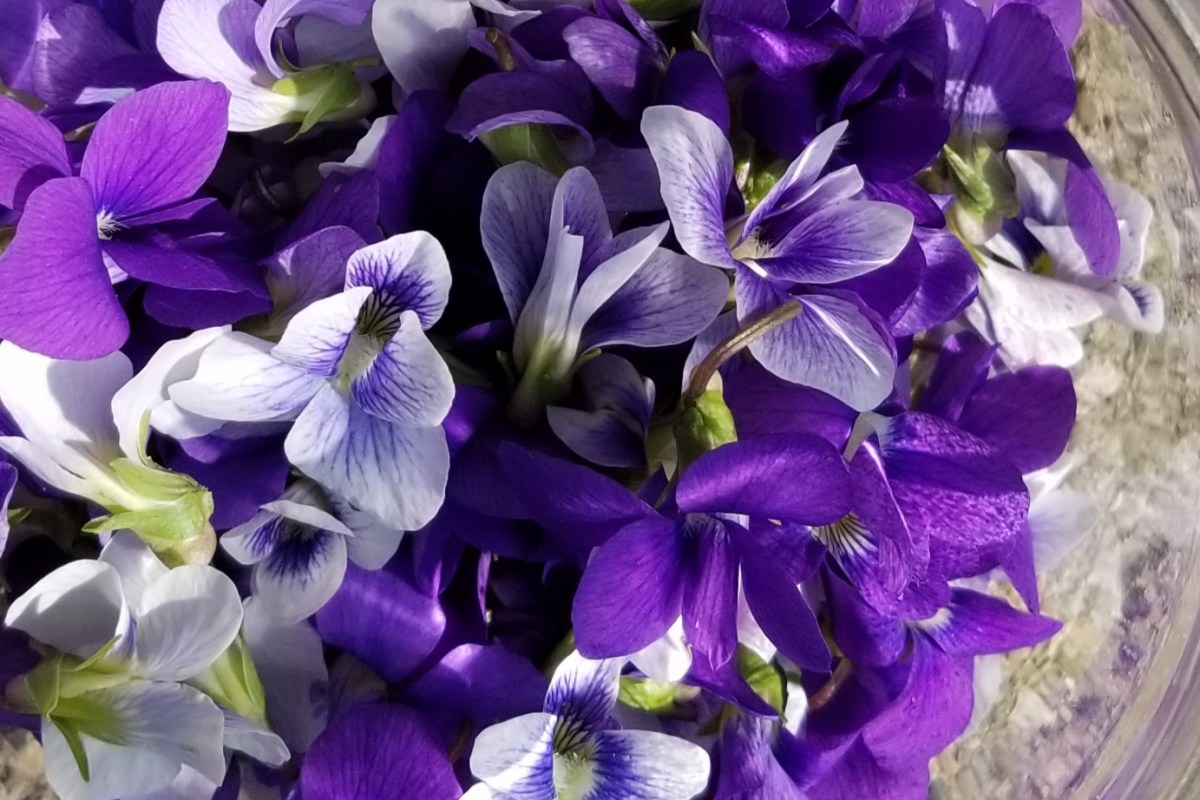
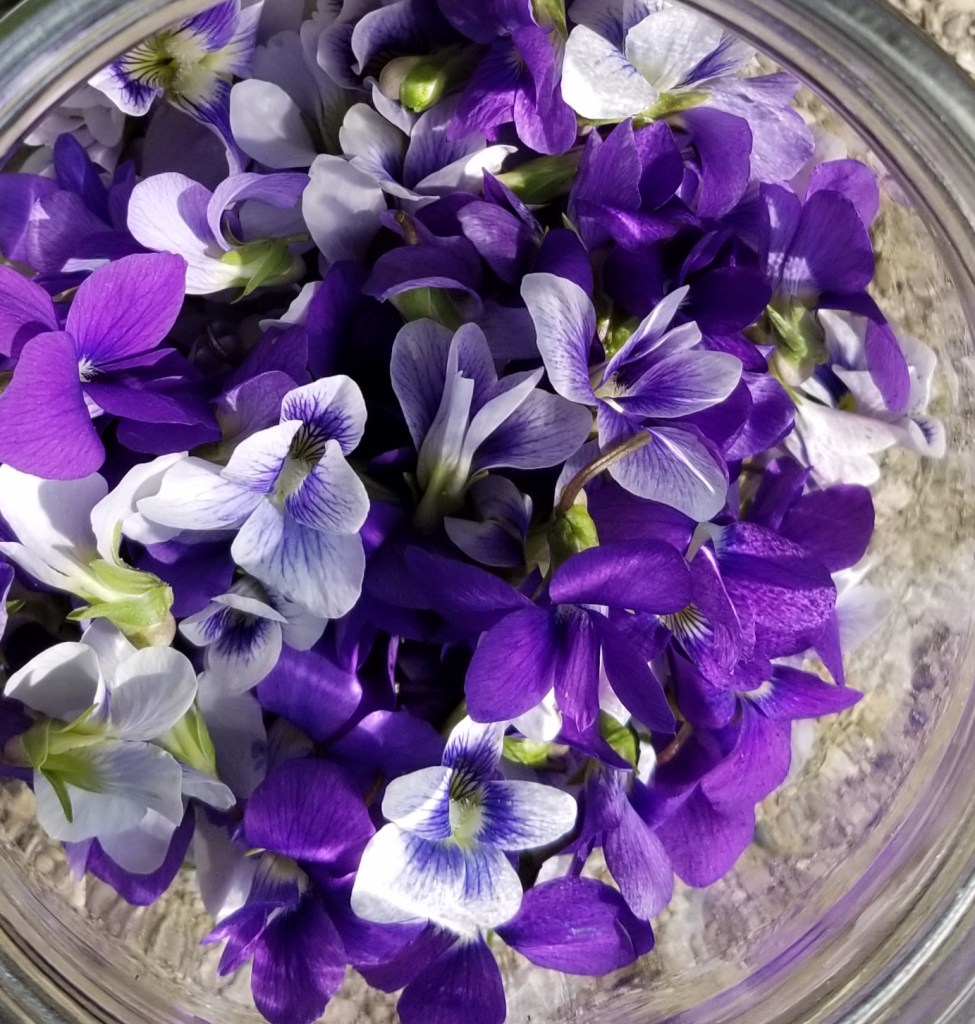
Violets (Viola odorata) and (V. sororia)

Both flowers and leaves are edible, but the leaves should be picked young, preferable prior to flowering. Large older leaves are tough, fibrous, and may be bitter.

These early warm days abound with foraging free food–plantains, dandelions, amaranth, and the most easily identifiable and versatile: violets.

Not only a hardy perennial, they are quick spreaders and tolerate even the most frivolous transplanting. When I bought my home, I inherited a veritable field of violets which I have since moved and mowed, and nearly each year I have found a new use for these edible flowers.

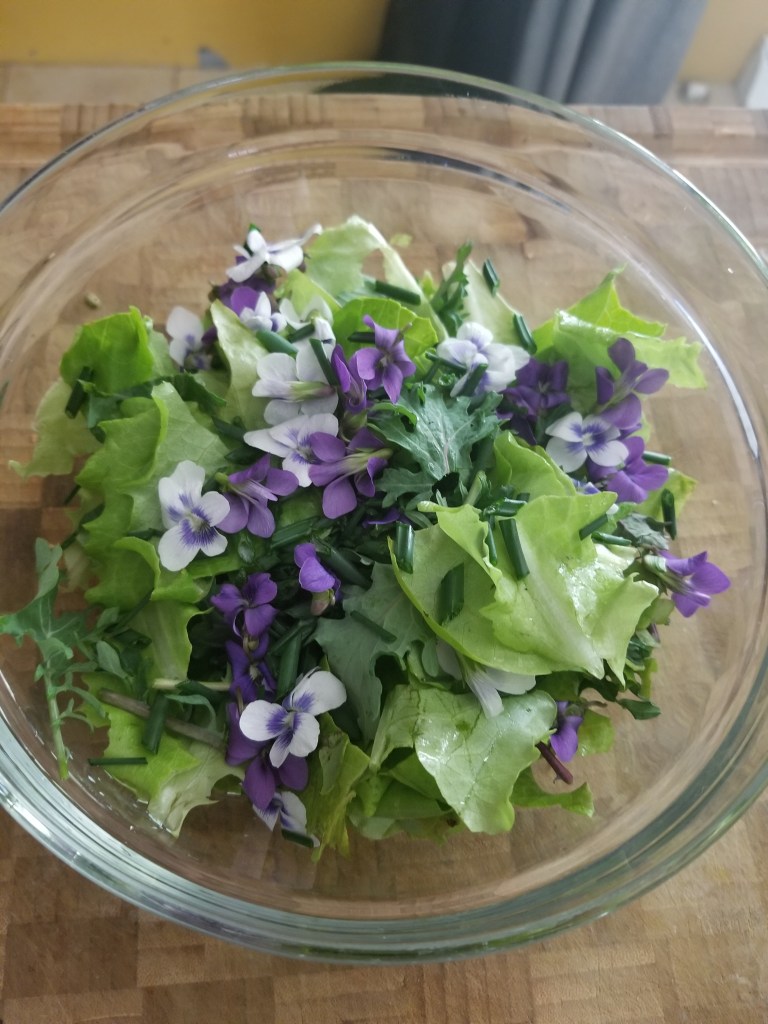
Spring salad with homegrown kale, two types of lettuce, walking onion greens, and violets.

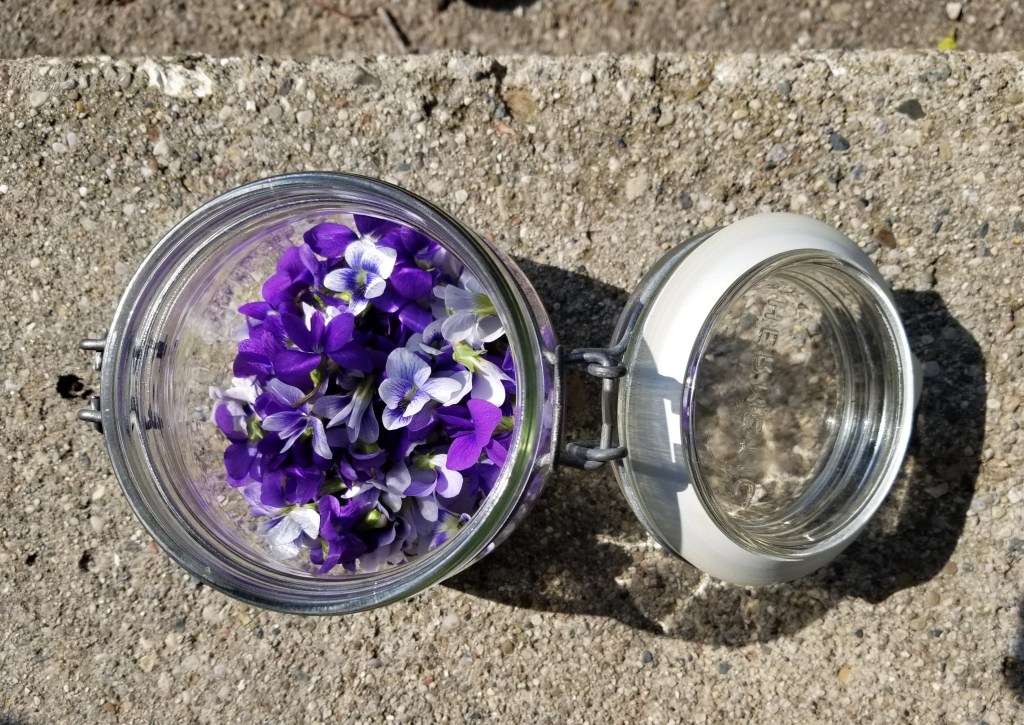
If you are harvesting violets for fresh use, they (and other edible flowers) are best stored in glass jars with glass lids.

Violets are an excellent introduction to edible flowers; they are abundant, easy to pick, and their floral flavor is nearly nonexistent. I’ve been adding them to salads since I was old enough to walk. More recently, however, with the excess time the Stay Home order has afforded me, I’ve been branching out.

Behold, Violet Jelly!

I’ve wanted to try my hand at this since I read about it in 2014. This year has been all about finishing old projects and tying up loose ends. It’s both satisfying and sad to check things off a list that has been around for so long.

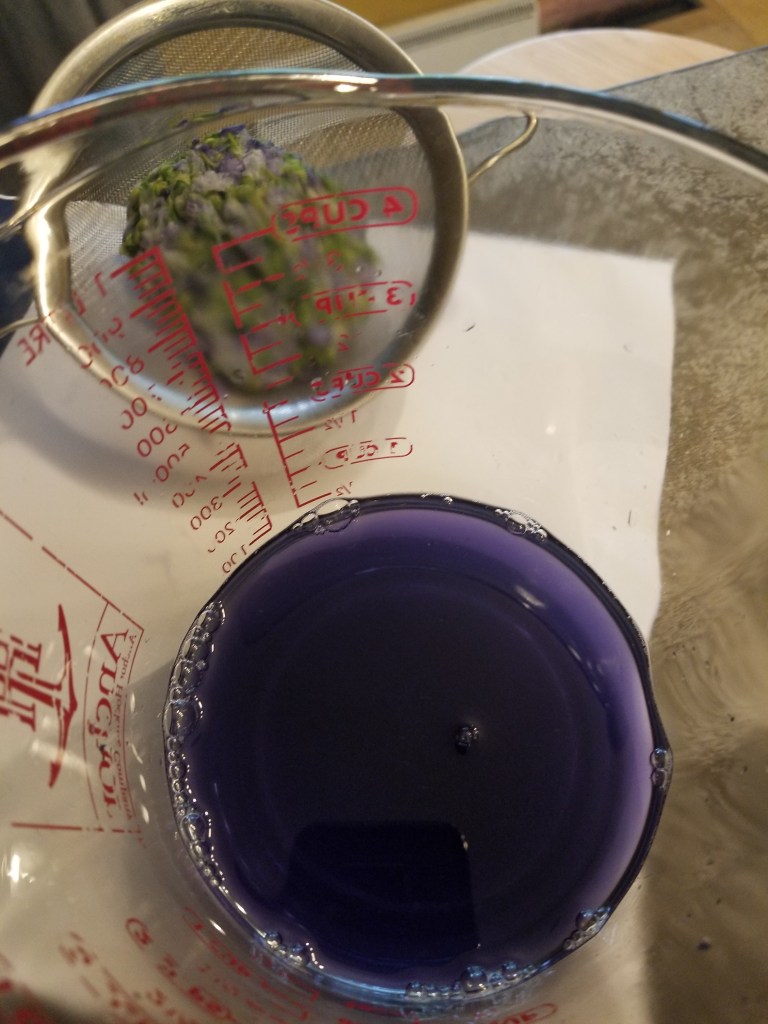
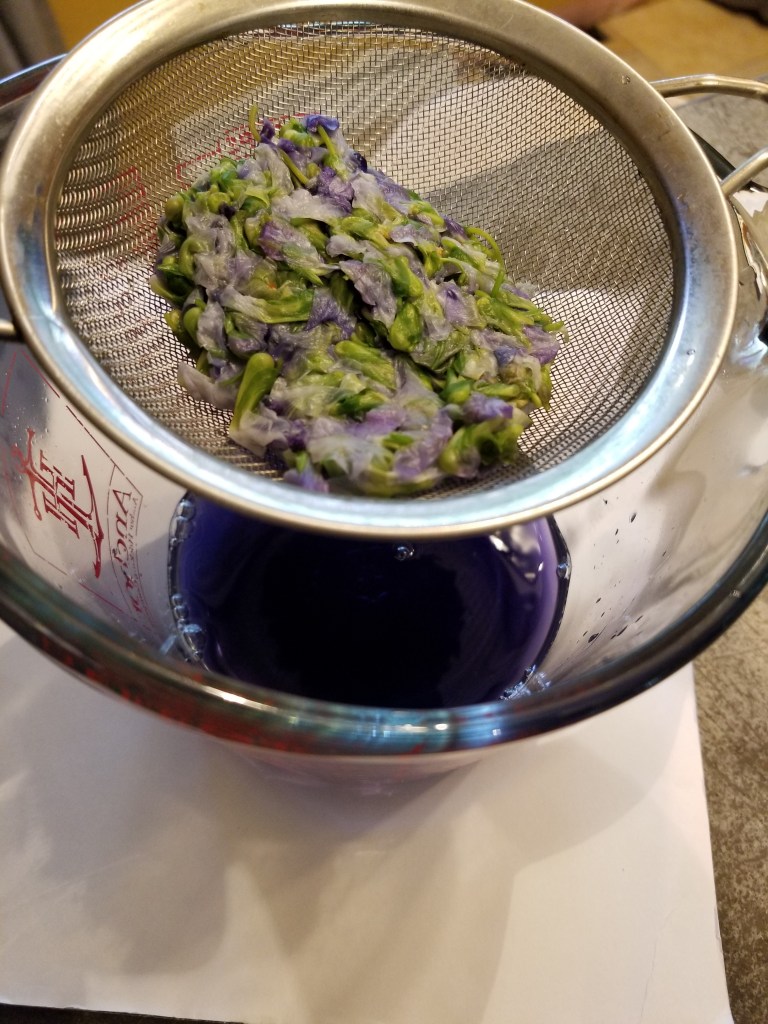
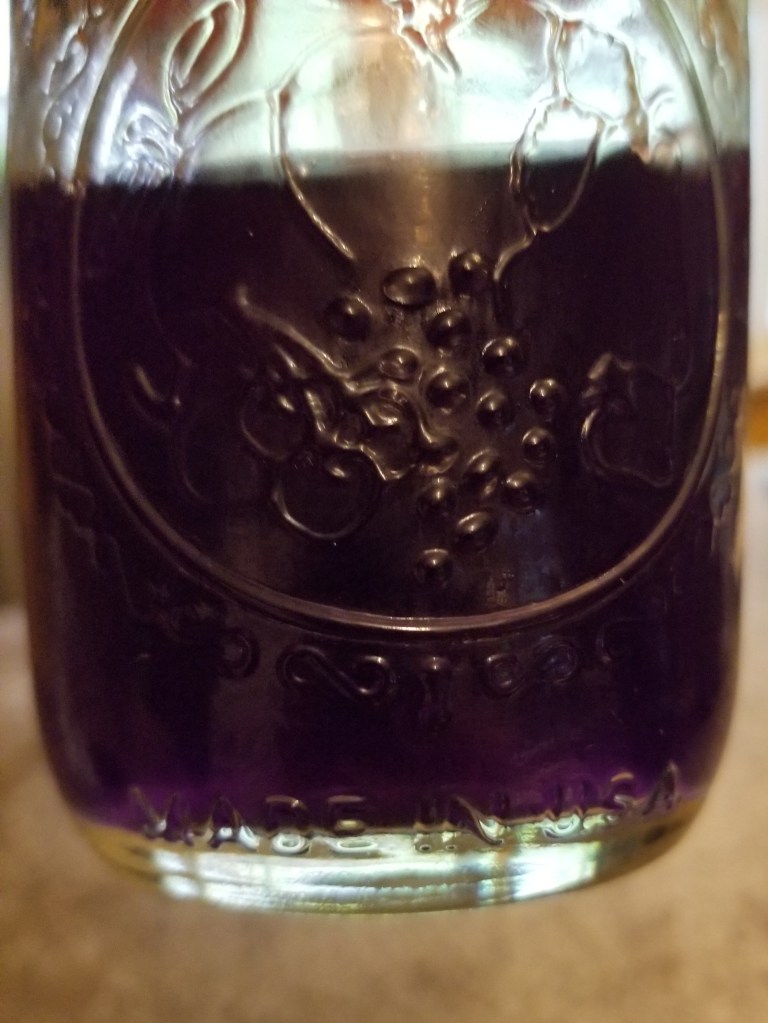
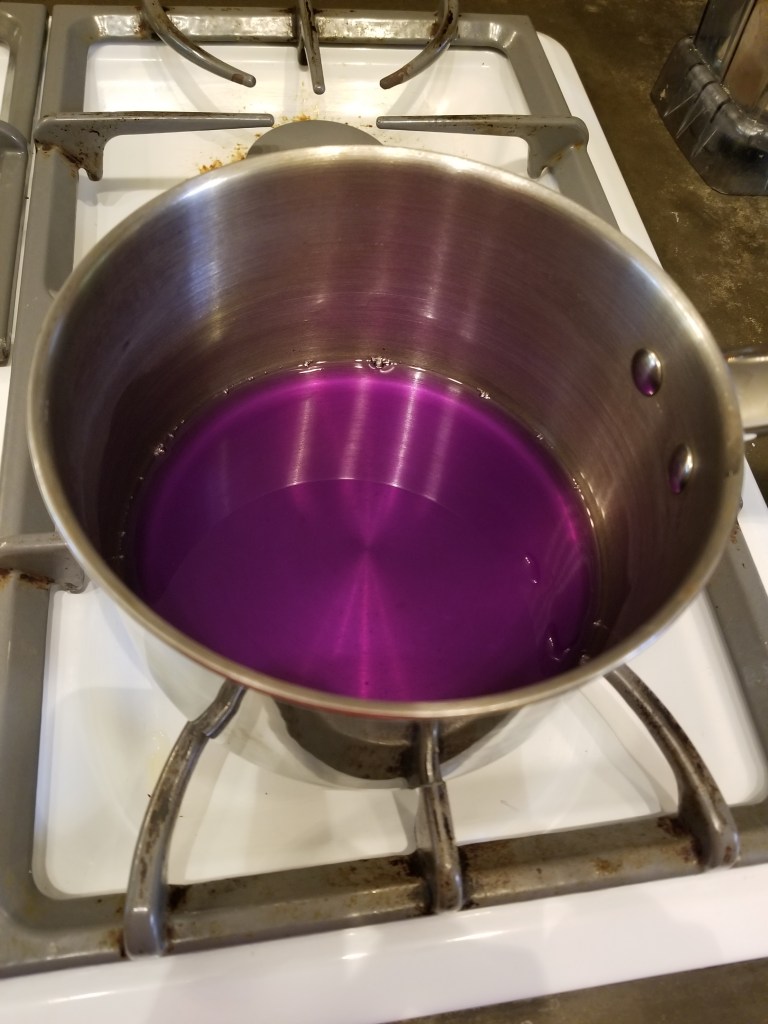
When you add acid, the sapphire violet tea turns bright purple.

It’s a simple process from making a tea, to experimenting with phytochemicals and pH, and creating a rolling boil with sugar and pectin. I used this recipe as a base, but reduced it to one pint and substituted powdered pectin. As I am unable to test the acid content of this recipe, I would not recommend it for traditional canning.

Next up?

The sapphire colored violet tea has me inspired. This current infusion will be added to my next batch of kombucha… here’s to hoping the acidity will turn it bright purple!

For more information about violets, see the links below from the USDA.

The future line up includes kombucha, sourdough starter & english muffins, and eggs. If there’s something you’d like to see or have questions about, send me an email or post a comment. Thanks!