Jin

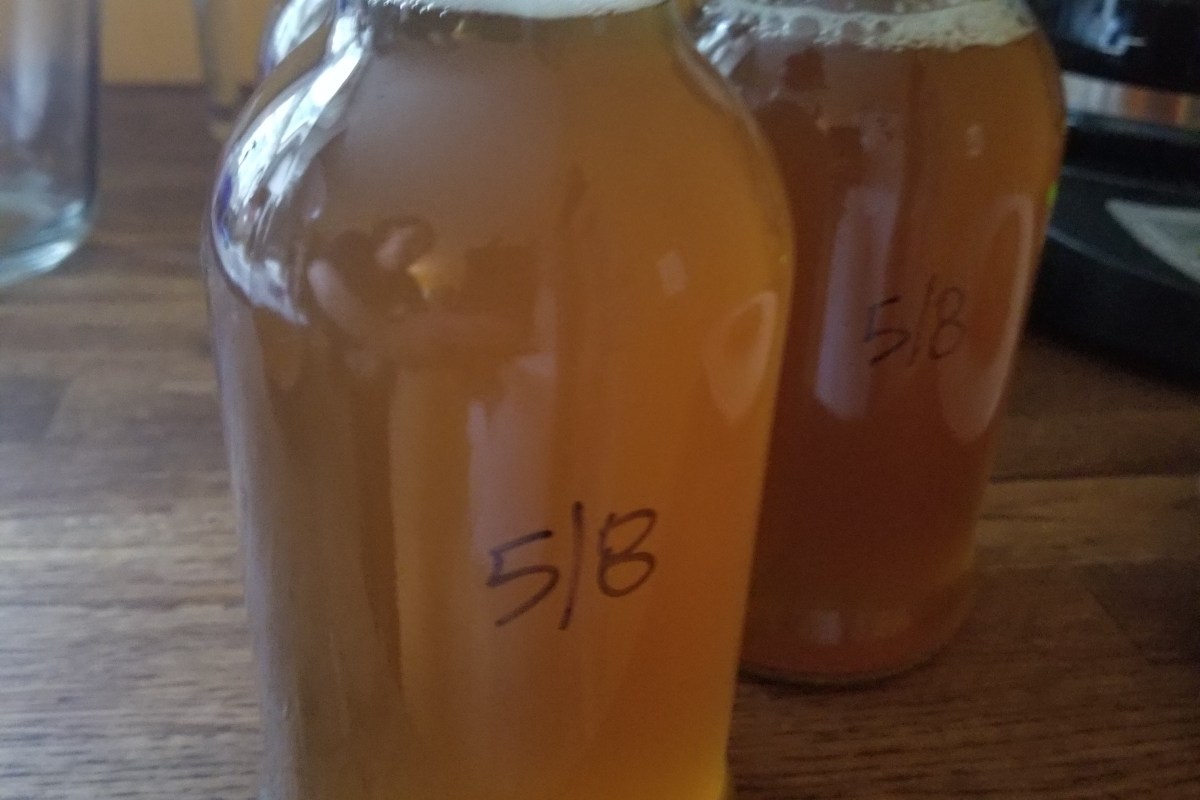
The champagne of kombucha. Light, crisp, ultra carbonated.

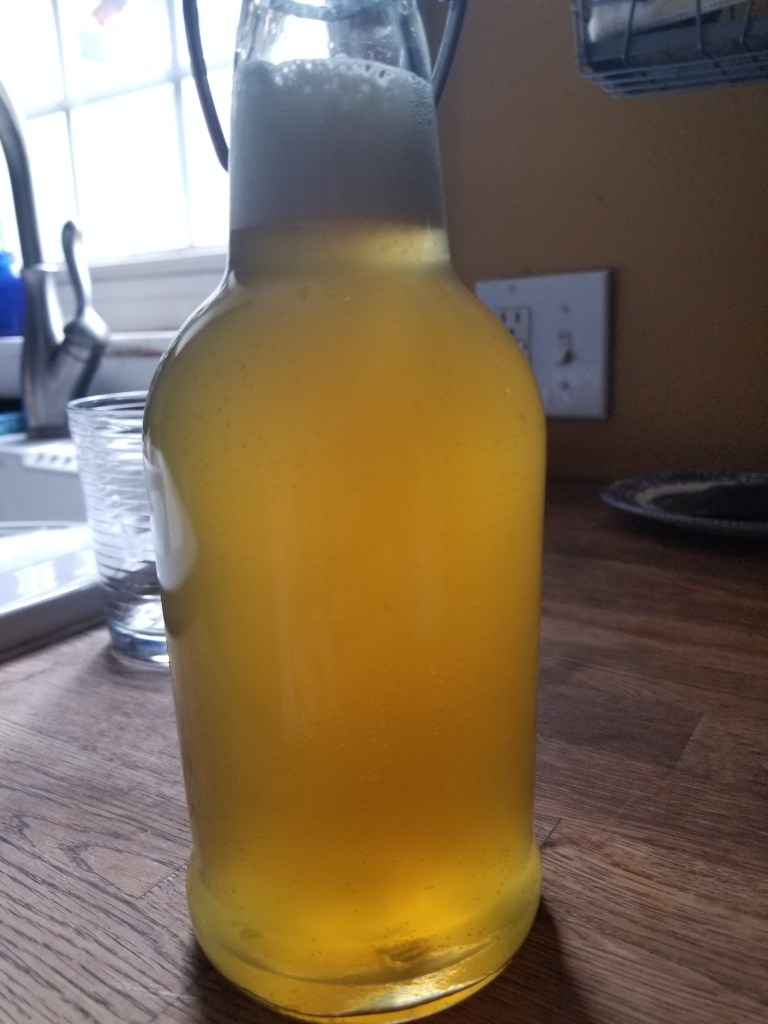
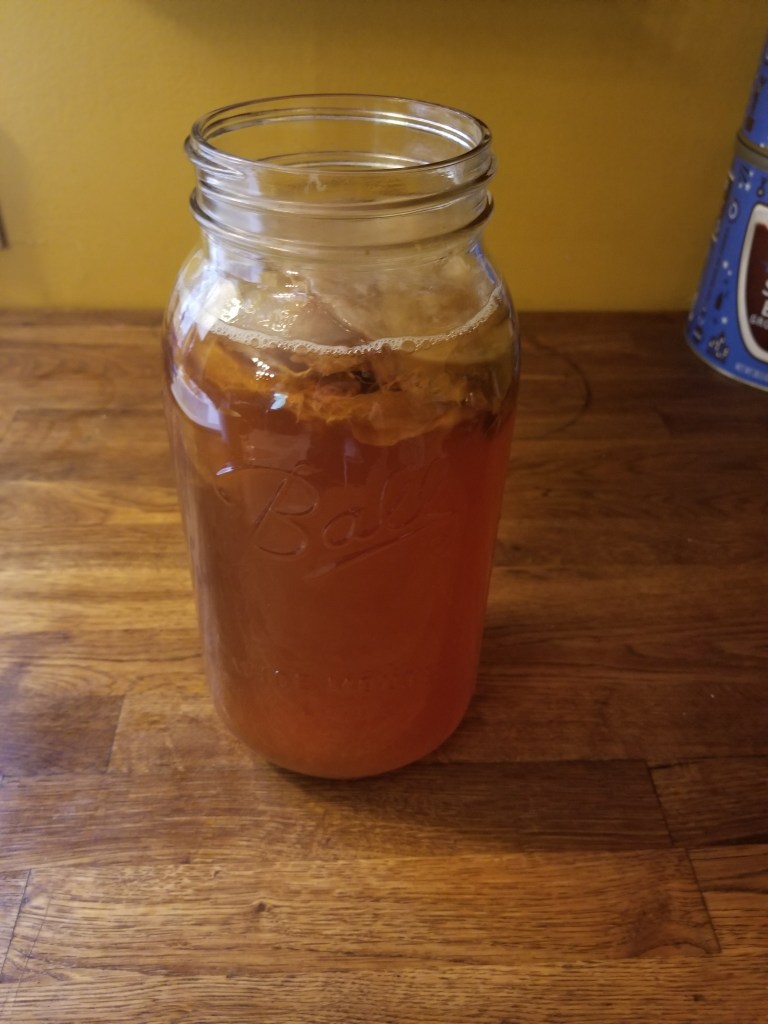
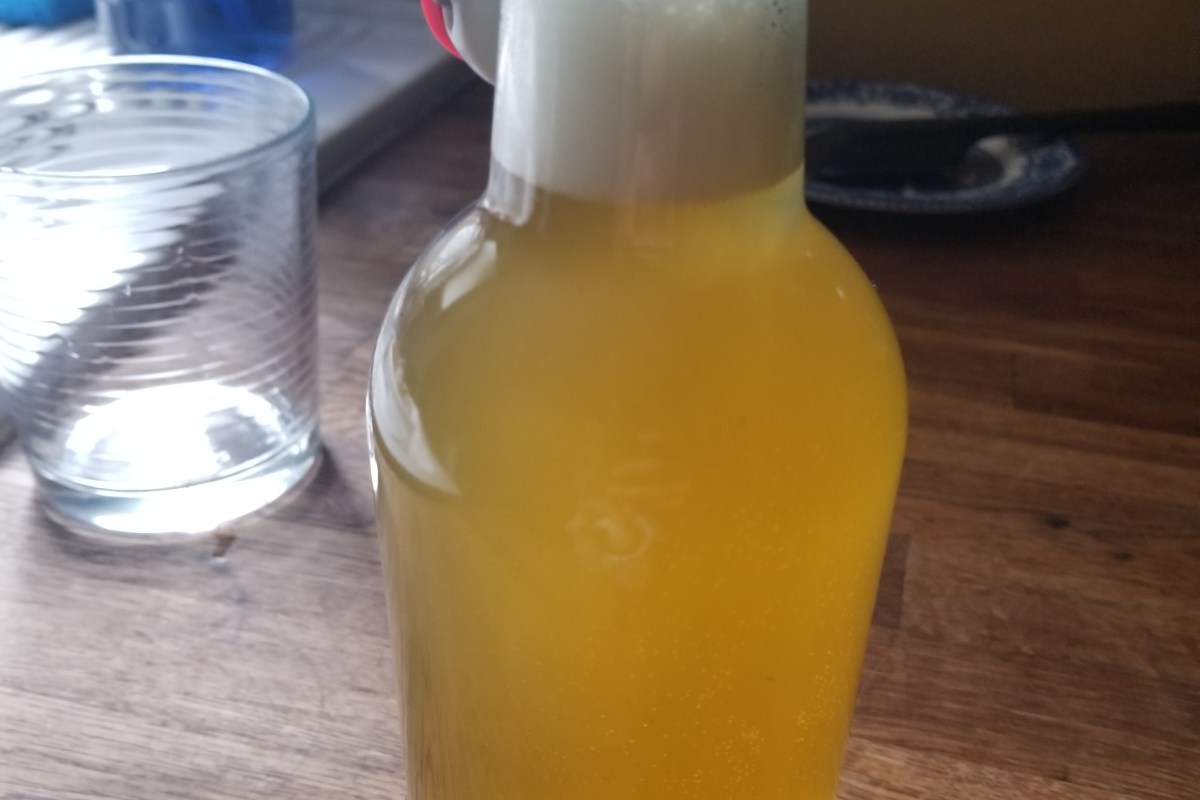
This sounded exactly like what I want to drink all of the time. After brewing, it looked exactly like it should.

An aside, what is Jin? Google provided links to many anecdotes about this kombucha cousin. Essentially Jin is green tea + honey + SCOBY. Some authors claim you can buy a Jin SCOBY off Amazon, others scoff that those products are a kombucha SCOBY trained to live off green tea and feed off honey. Some say it’s yeastier, some purport it has a higher alcohol content. But they all seem to agree on my original statement: refreshing, bubbly, decadent.

Because I have more SCOBY that you can shake a stick at, I did not go through a transition period. In other words, I did not wean the SCOBY whatsoever. It went straight from it’s kombucha into a batch of honeyed green tea. I scaled my recipe down to a quart (1 tbsp green tea + 1/4 c honey) and treated it like there was nothing special about it.

Pros: the fermentation time was on par with regular booch. The Jin grew the most milky white, textbook perfect SCOBY I have ever produced. When bottling, this was clearly the most carbonated product I have fermented. I was stoked.

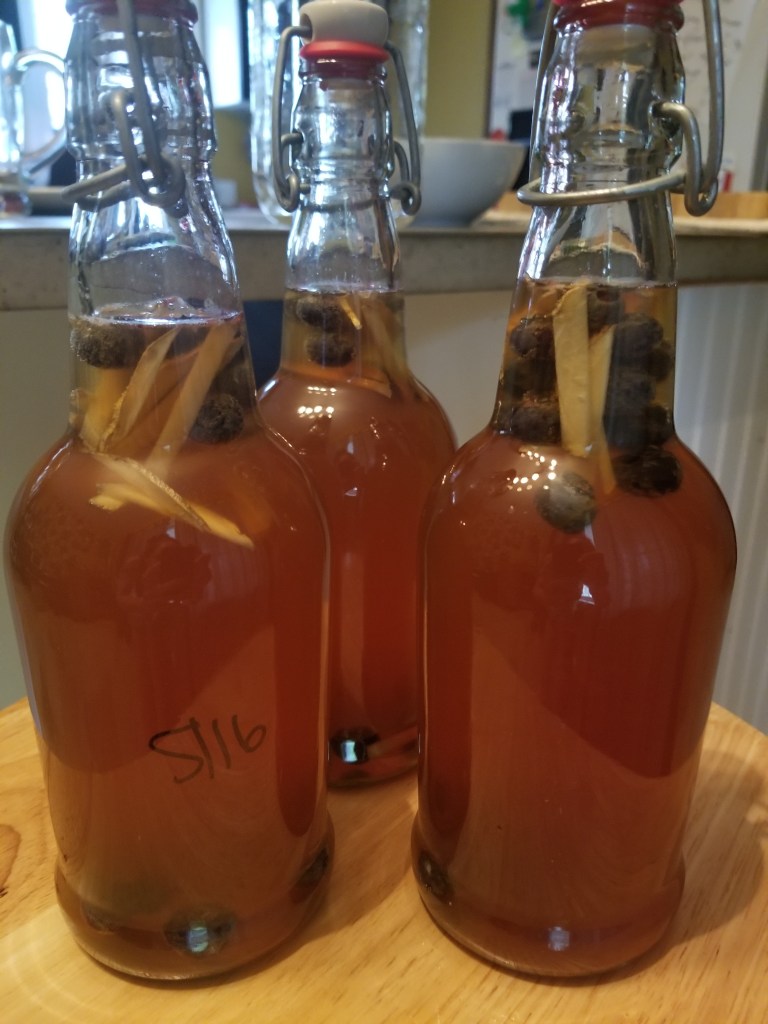
I did a two day second fermentation without releasing any gas. I wanted as much carbonation as possible. I scaled down to two days because I am still wary of exploding bottles. My one quart made one 16 oz bottle full. Perfect for a taster/treat.

.

.

.

I learned I do not like Jin. Maybe the second fermentation was my first mistake, because when I opened the bottle after a few days in the fridge it was completely flat. I knew from previous experience that I did not care for the taste of a half black tea, half green tea kombucha, but I thought full on green tea–which I love hot–would be okay. I even prefer the taste of honey over most sweeteners, but this did not work for me. It tasted like honey-cardboard-malt.

Not one to give up so easily, I brewed a second batch. I scaled up to a half gallon to provide myself the opportunity to experiment further. Knowing that I have had second fermentations fall flat if the booch is too far along (not enough sugar to feed the yeast) or without the addition of fruit (sugar), I went with an old standby.
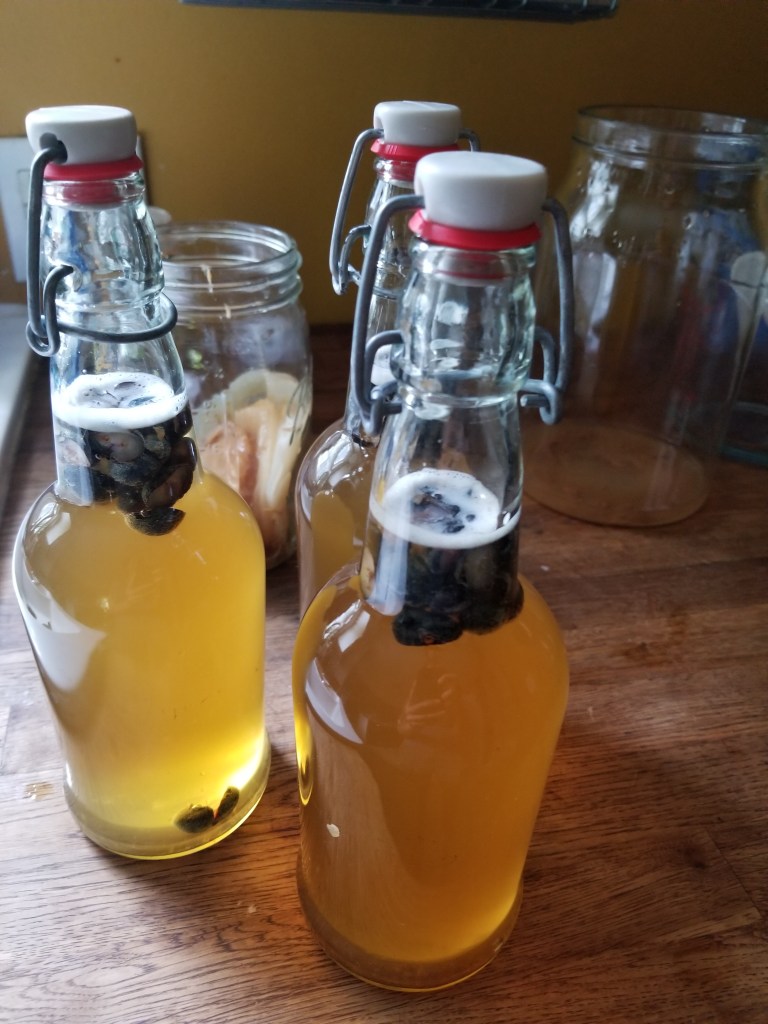
Blueberries, cut in half. Notice the excellent looking SCOBY in the background.

After 3 days, unburped, the Jin had turned a delightful maroon color. I refrigerated it hoping for improved taste and carbonation.

Both of these hopes were partially realized: the taste was much improved, the carbonation less so. However, neither of these factors were increased enough for me to want to continue the experiment. Just because you can eat (or drink) something, doesn’t mean you have to. While I tend to apply this sentiment more often to carrot greens, it was true here as well.

.

.

.

Another maleficence this week: carrot marmalade.
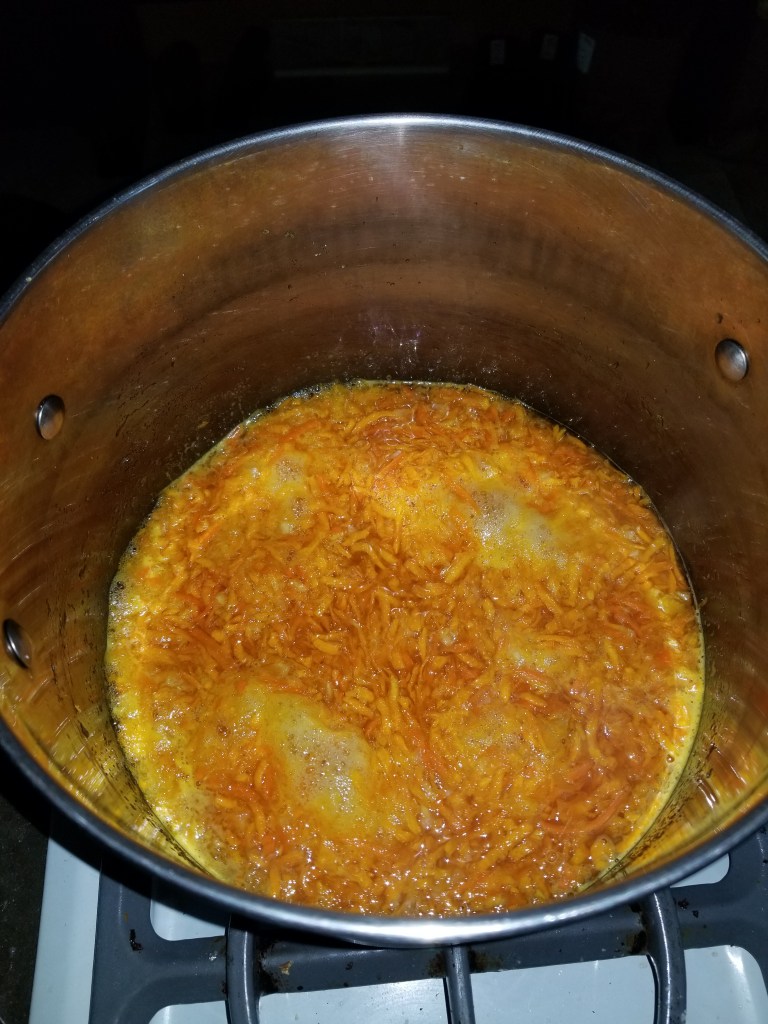
I have a few (er, 5 or so) canning recipe books, but there is one I always go to first: Well Preserved by Mary Anne Dragan. The recipes are well written, easy to understand and produce a delicious product every time. However, they always fall short of their intended target production. Knowing this, I always slightly scale up the recipes. This being my first time making carrot marmalade, I did not scale high enough. What should have been 4-5 jars ended up 3.5 before the bottom fell out of one of them. To add insult to injury, one of the two remaining jars didn’t seal. This equated to four and a half hours of work for one 8 oz jar into the pantry.

While every experiment may not have a successful ending, you are provided the opportunity to learn what you don’t like and potentially what not to do next time. Meanwhile, I still have about 7 pounds of carrots to attend to. I’m thinking about trying carrot halwa and avoiding carrot cake because I know I will eat it all. If you have any favorite carrot recipes, I’d love to hear it.


Cultivating Kindness

I would never tell someone they weren’t gardening well enough, but remind myself of this daily. I often forget to find joy instead of seeking productivity.

Many years ago, I was leaving from work to forage for wild raspberries. It was my first time that year and I lamented to my friend David, “What if the raspberries aren’t ready yet?” The spot was 25 minutes in the opposite direction of home, the brambles a good 30 minute walk into the woods. He looked at me incredulously and stated, “Then you had a nice walk in the woods,” as if it were the most obvious thing. It took me back and I stood mouth agape for a few moments as I realized a different, a better, perspective to what I had perceived as a task, as an objective to be accomplished.

As frustrating as it is, this is something I still remind myself of at least weekly. Separating worth from productivity is a daily struggle, especially when “relaxing” for me is still a form of doing: reading, repotting, cooking, weeding, cleaning… The “lower level” tasks that are more automatic, things are still being accomplished, but I don’t have to think too much. Lines are crossed off a to-do list, it is easier to feel like my time is not wasted.

Last week, my childhood friend Etta came over to trade bounty and I took her on a walk around the “farm”. She marveled at how far along my peppers and tomatoes were. I sheepishly replied that I had started the seeds at the end of February. Honestly a bit later than I usually do. I spoke to how poorly things were performing, how much better she grows beets than I do and she looked to the sky remarking that she has full sun where I certainly do not.

Inherently, I know this. I know that vegetables need at least 6 hours of full sun per day to thrive. No amount of water or nutrients will alter the fact that my plants will not do as well as they could with the requisite amount of sunlight. “Good enough” always seems to be an estimation of what could be or should be, when really it should be what is.

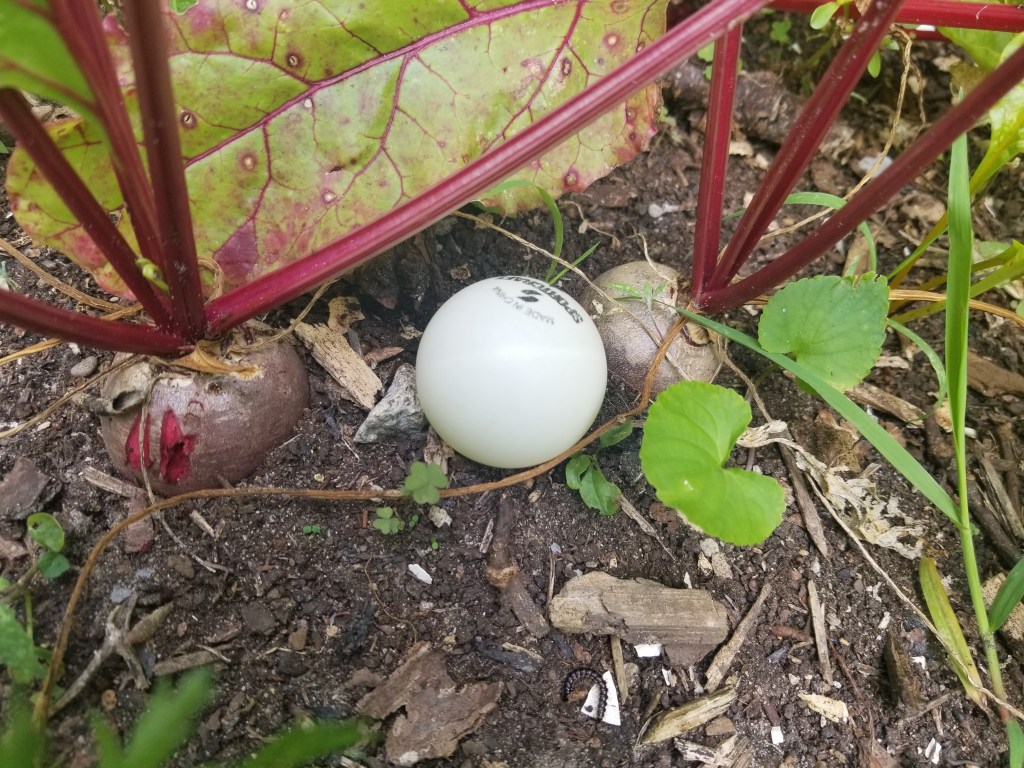
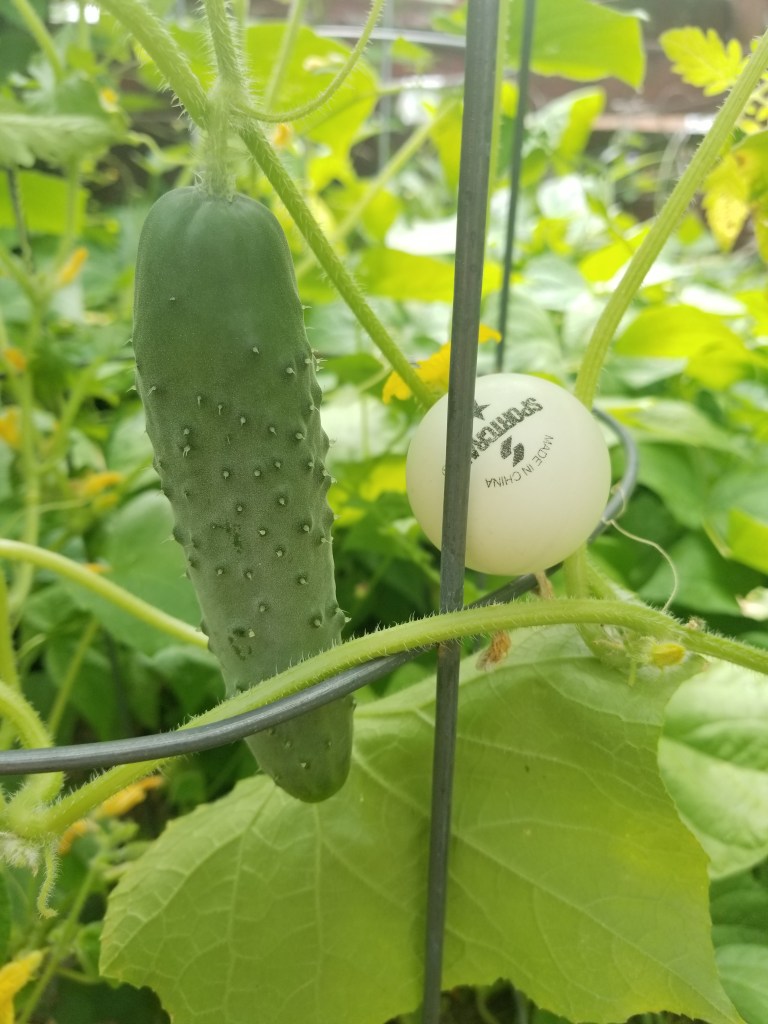
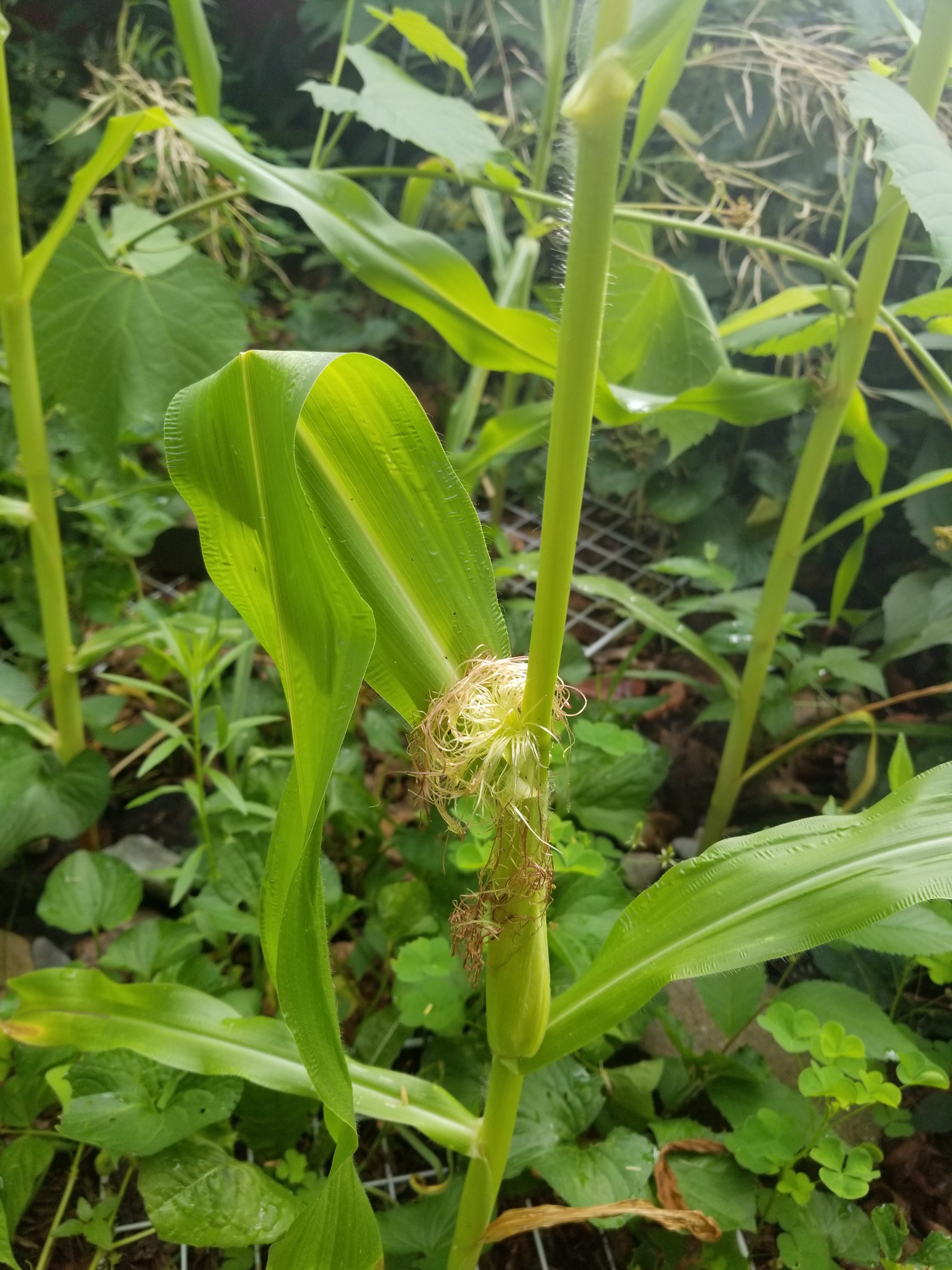
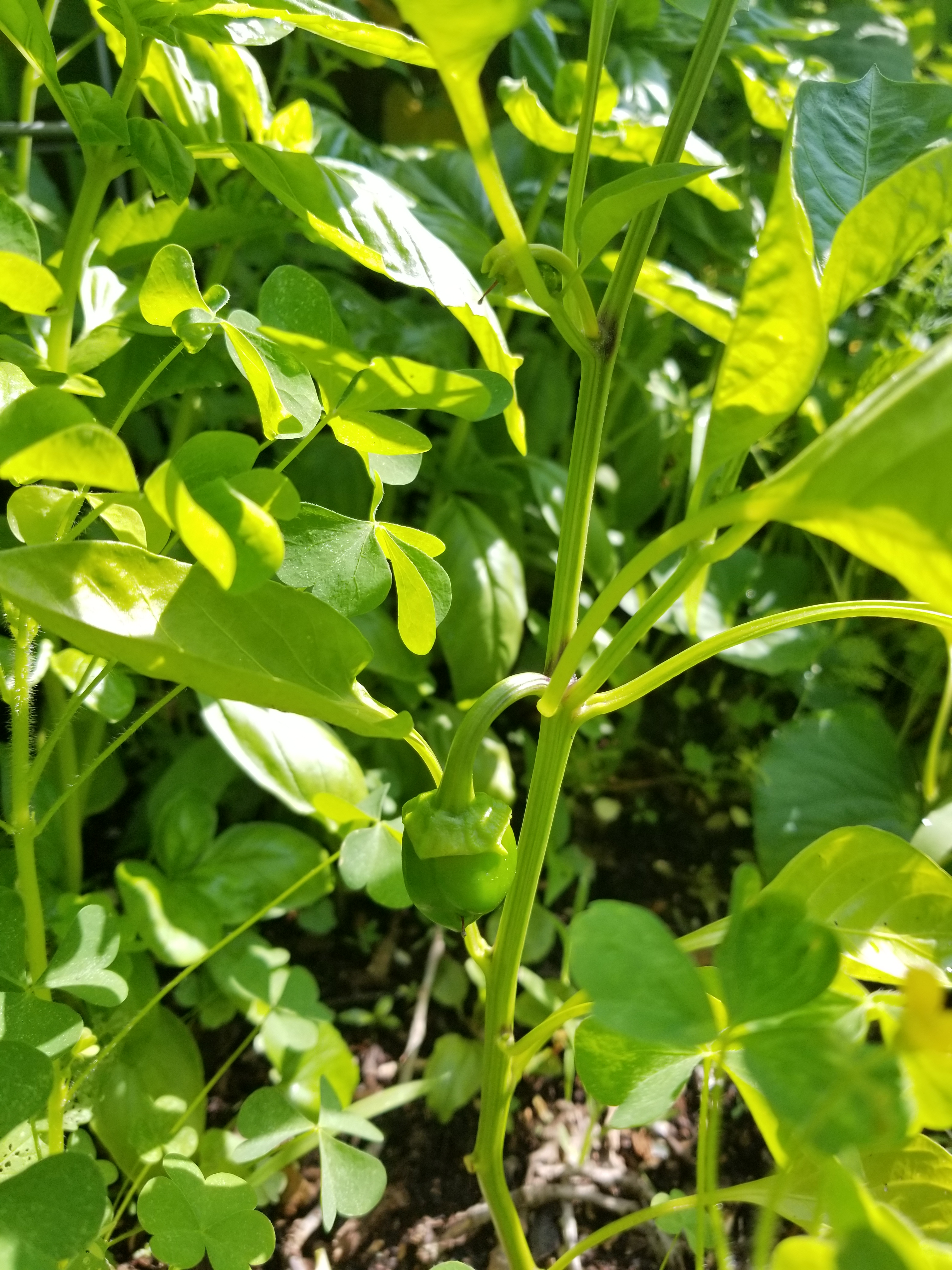
So how are the vegetables doing with ample nutrients and water and partial sun? To cultivate that joy, I used a ping pong ball to showcase growth.

And this is just a sample. This doesn’t include the fifty or so productive green and wax bean plants, the thriving basil, mint, thyme, chives, and oregano. It doesn’t show that there are at least ten other highly productive cherry tomato plants of five different varieties all waiting to ripen. Nor does it show the zucchini that is hesitant to set fruit, or the slicing tomatoes being choked out by vining beans. Or the swiss chard that has been shared freely due to overplanting and production. It’s all a balance and I am so lucky to be able to explore the changes and growth that each day brings.

Soon I will be pulling bunches of carrots and in their place planting chinese cabbage, red cabbage, brussels sprouts and leaf lettuce. Perhaps I will have a fall harvest for the first time this year. If nothing else, I will enjoy some time outside.

Pizza Crust, Improved

As I explained in my last post, I have been working to suss out moments of “cutting the ends off the meatloaf.” I love pizza and will be the first to admit I have been using the same reliably subpar pizza crust recipe for the better part of a decade.

It always turned out the same. Easy to work with and shape. Somewhat grainy texture and almost nonexistent taste. But it was always the same! Half whole wheat? Completely whole wheat? Add ground flax seeds? Forget to bloom the yeast? It reliably produced the exact same result no matter the stresses I put it under. But eventually, reliably mediocre is not enough.

The first new recipe I attempted was from Alton Brown. I wanted to trust this recipe for multiple reasons:

  • the ingredients are by weight, which is imperative in baking
  • percent hydration is discussed, as well as multiple comments including seasonal textural alterations
  • rave reviews
  • it’s Alton Brown!

The major setback with this new pizza crust recipe is that is makes THREE 12″ crusts. Now, I read through more comments on this recipe than I have on anything (combined) in the last year and no one in the comments seems to have a problem with this; there was only one off hand mention of potentially freezing the dough. Additionally, it should be noted that the dough must be started the day *before* you want pizza, due to an 18-24 hour rest in the fridge.

The crust was a pain to work with. In the next iteration, I will trust myself to play with the hydration percentage a little bit–the summer has the house extra humid and I am certain this impacted the product. It was however, much more flavorful, with a slightly chewy crumb. Much more like pizza crust than my old standby recipe!

Another setback here is our lack of a pizza paddle. This meant cooking the pizza in two ways: from a cold pizza stone and on a heated sheet pan. We now are the fortunate owners of a baker’s dozen of aluminum pizza pans which I will work with in the future.

As for the recipe as written, we are two people. Three 12″ pizzas is too much for us at once. As such, I instigated a freezing regime.

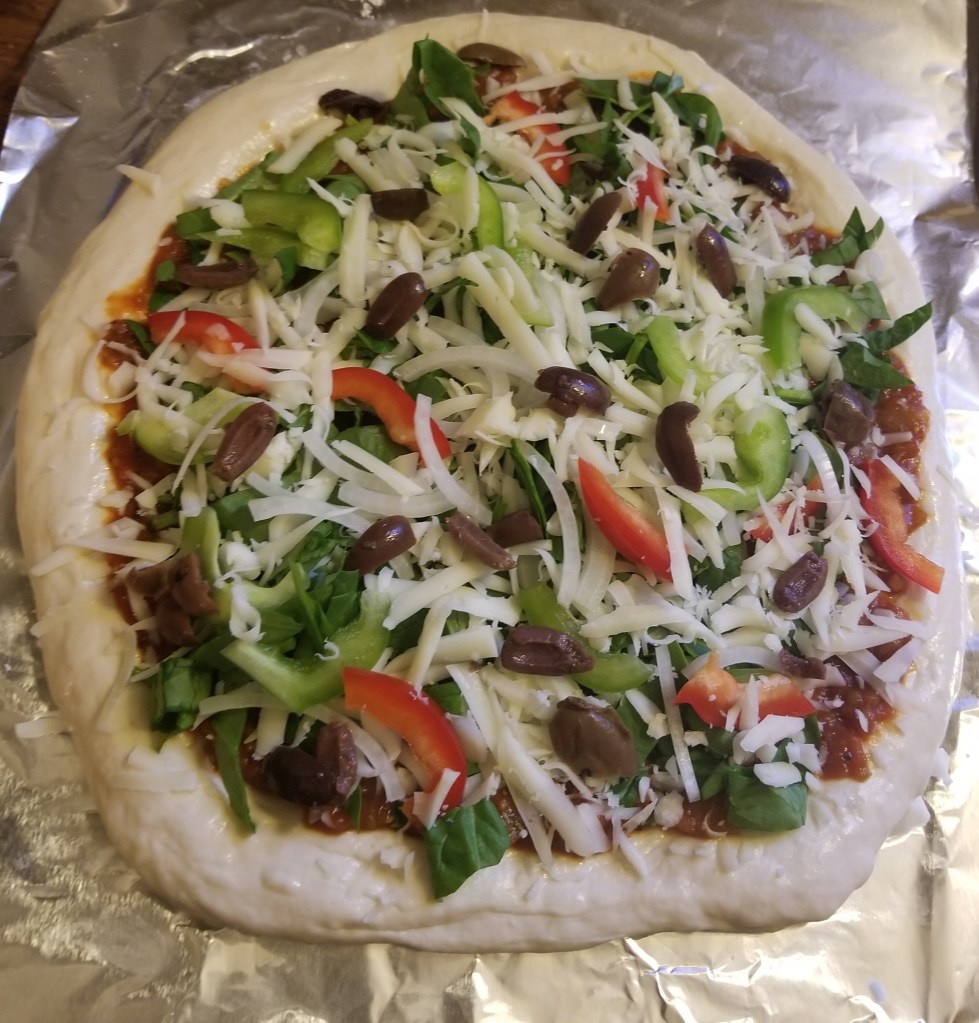
Stretched and topped, I allowed the pizza to freeze open for a few hours before wrapping tightly in aluminum foil.

There are no photos of this pizza baked, likely because the product was more than underwhelming. A requirement of Alton’s recipe it allowing the dough to come fully to room temperature before baking. Attempting to cook this crust from frozen was very disappointing. Not only did it hardly rise, but it never browned. The next time, I will try freezing a dough ball and allowing it to thaw before topping and baking.

Overall, this is a recipe I will attempt again, troubleshooting with the hindsight I now have.

Please allow me to introduce sourdough starter #2. She is doing much better than her predecessor. But as we can only eat so many english muffins, it was her turn to take part in the pizza escapades. I chose this recipe from Alexandra’s kitchen based on many of the same criteria as before. It has excellent reviews, measures ingredients, discusses hydration percentage, and even has a video highlighting the crucial steps of the recipe. What could go wrong?!

If I thought Alton’s crust was a goopy, miserable mess… this was so, so much worse. When working with it after the initial rise, I thought about giving up baking forever. I even decreased the hydration percentage as I could tell from the pictures that my starter, at a 1:1 ratio, is much wetter than hers. Strands of gluten never formed for me. Instead of nice bubbles in the dough that bake into a chewy, light crumb… I had webs. The dough fell apart while I attempted to shape it. It was thin, and barely rose during baking.
There are many places this recipe may have gone wrong for me. A huge impediment is my oven. The recipe calls for 550°F, whereas mine barely makes it to 500°F. Clearly I needed to bulk up the dough with much more flour than the recipe called for. Another fault, I left the dough to rise too long. It more than tripled in volume, which likely caused the final product to be so flat.

Though she was ugly and much more “flatbread” like than pizza, we still devoured the whole thing. While not the “pizza” I was hoping for, it did taste good!

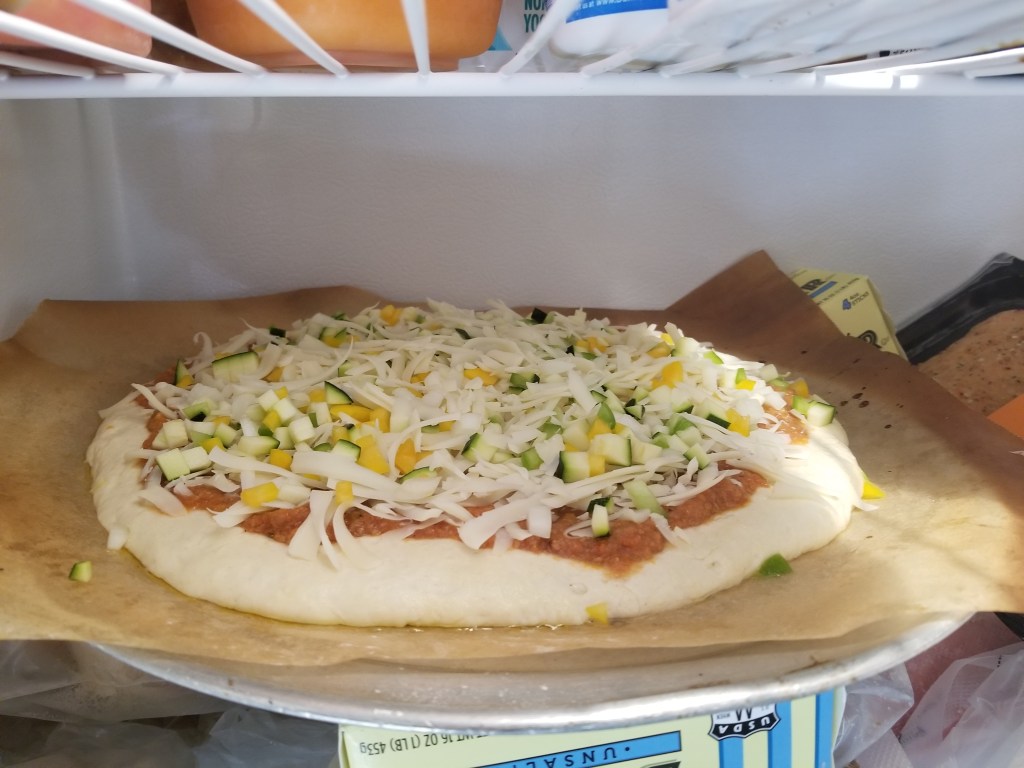
This recipe does not specify how much pizza it makes, but calls for dividing the dough into 4 portions. I only had 3 containers of the correct size, so I made three dough balls. Pictured above is one, roughly a 10″ pizza. At this exact moment, I have combined the other two and am allowing them to come to room temperature while I decide whether I am going to bake or freeze it.
All in all, both recipes produced a better product than what I’ve been eating for the last decade and I am excited moving forward to play with both of them a little bit.
Fast forward 20 minutes… I chose to freeze it.
Have you tried either of these recipes? Do you have a go-to pizza crust recipe that you want to share so I don’t drive us all crazy trying to perfect these?

Media Influence

An old parable begins with a family recipe. In our home, it is grandma’s meatloaf. The final step of the recipe includes cutting the ends of the meatloaf. This is done, unquestionably, by all the generations that follow. Until one day, a new cook asks grandmother, “Why do we cut the ends off the meatloaf?” to which she replies, “Otherwise it will not fit in my pan!” It is just as important knowing that something works as to knowing why. Improvements and changes do not invalidate the past or traditions.

Animal, Vegetable, Miracle by Barbara Kingsolver is where I still pull culinary and gardening references from. I have used her pizza dough recipe for over a decade. It worked halved. It was easily adjusted to whole wheat or additions of ground flax seed. It always produced the exact same results: good enough.

That book is the reason I purchased, and continue to purchase, seeds from Seed Savers Exchange. It’s the reason I grow Red Russian Kale every year, saving my own seeds. It is where I learned that “heirloom” simply means you can save the seeds and grow the same plant the next year; that growing these plants improves biodiversity; that you want improved biodiversity for the health of your soil; that you want healthy soil to grow health plants; that it is okay to experiment, play, fail. That these are the ingredients for growth.

My bolognese sauce recipe hails from the novel The School of Essential Ingredients by Erica Bauermeister. This book, and another like it that I’m unable to recollect the title of, convinced me that with no food allergies it was my obligation and privilege to try any and every food presented to me. This was while I lived in Chicago and I joyfully spent hundreds at Taste of Chicago to fulfill this “duty”. This belief has been integral to every country I’ve visited: when someone offered me food or drink, I’ve always graciously accepted–never first questioning what it is, but giving thanks.

Even my personal mantra of sustainability, “Waste not one grain of rice” is from an early 2000s food documentary. I’ve spent hours searching, but have been unable to locate the film’s title. All I recall is a gentleman in a white robe teaching cooking classes in a temple/monastery and such is his call to his students both while they are creating and enjoying different dishes. If you’re able to find it, please let me know!

I hope you’ve enjoyed this throwback read of old items that continue to influence how I live. But, as Eric likes to remind me, it is important to question why you are cutting the ends off the meatloaf. In this vein, I have been experimenting with “new” recipes to improve beyond those that create identical, subpar results. The most recent iteration was a 36 hour pizza crust that I will review and detail in my next post.

Upcoming is an update to the substandard bagel recipe that is only slightly older than the pizza crust one, but produces unreliable results.

Unrelated to food: Since roughly 2006, I’ve wanted a wooden sign for my bathroom that reads, “In this land of fun and sun, we don’t flush for number one.” Emblazoned with palm trees and a sunset. This can be traced back to (likely) the TV show “Trading Spaces”.

The header image is a pile of books I am currently reading. I hope you’ve enjoyed this throwback read of old items that continue to influence how I live and that it’s given you pause to question what meatloaf ends you’ve been cutting off.

Dolmas, or the best food I’ve made this year

Dolmas – stuffed grape leaves – are surprisingly uncomplicated to make at home. Outside of “traditional” seasonings, the ingredients are straightforward and you likely have at least some of them at home. The critical ingredient, of course, is the grape leaves.

Sometimes the seasons and my food cravings line up perfectly. The best time of year here to harvest grape leaves is late spring to early summer.

If you are foraging for grape leaves, the most important thing to note is that there are inedible, dangerous look-alikes. True grape vines have two distinct features that you can use to correctly identify them: 1. they make grapes and/or 2. the have soft, green tendrils. If you have any doubts, check with a local foraging expert.

When picking leaves, you want to search for those near the end of vines as they are younger and will be more tender. For ease of stuffing and rolling, you want leaves that are roughly the size of your opened hand, 5-6″ in diameter. Smaller leaves are fine, know that they will be more difficult to work with and make smaller rolls. Use scissors or your thumb nail and forefinger to pinch off the leaf right at its base. You do not want any stem remaining.*

I used this foraging site as a guide for picking, blanching, and marinating with only a few slight changes. As recommended, I picked 32 leaves. A few more would fit in the marinade (see below), but I recommend doubling the whole lot.

Directions:

  1. Rinse leaves to remove and debris and blanch in a large pot of water (roughly 8 cups), with a 1/4 cup white vinegar and 2 tbsp kosher salt. Blanch, stirring frequently for 5-10 minutes. Stirring will seem scary. Surely these leaves must be delicate, they feel delicate! Hint: they are not so delicate.
  2. Once tender, drain the leaves. Once cooled slightly, I squeezed each leaf to remove the excess water.
  3. To marinate: combine 1 c white vinegar with 1/2 c canola oil, 1/2 c olive oil, and 1.5 tsp kosher or sea salt. Marinate for 20 minutes up to two weeks in the fridge. Do NOT use an airtight container. I used a wide mouth mason jar with the lid loosely on. All leaves should be covered, I used a chopstick to poke them down and remove any air bubbles. Again, they are not as delicate as they seem.

I am a bit of a glutton for punishment and like to physically make as much of a recipe as I can. To this end, I sought out a recipe for Bahārāt seasoning to use when cooking the lamb for my filling.

In a mortar and pestle or spice mill/coffee grinder, working in batches, combine:

  • 2 tbsp black peppercorns
  • 2 tbsp coriander seeds
  • 1 tbsp allspice berries
  • 1 tsp cardamom seeds (from about 1.5 tbsp pods)
  • 1/2 tsp cloves

Once pulverized to a mostly fine powder (some larger chunks are acceptable, especially if crushing by hand), add:

  • 2 tbsp ground sweet paprika
  • 1.5 tbsp ground cumin
  • 1 tbsp ground cinnamon
  • 1/2 tsp ground mace (substitute nutmeg if needed)

Granted, my seasonings are old, but for 1/2 lb of meat, I used roughly half of this seasoning. It was worth it. Currently, my town is all but out of lamb and I thought that would be the end of it for this recipe. No ground lamb (except frozen, from Meijer, from Australia) and everything was ruined. But I really, really wanted to eat stuffed grape leaves. They were picked. And blanched. And marinated. And I had made the Bahārāt. And cooked the rice. And added dried currants. And caramelized the onions. I chose to use ground beef instead and while it wasn’t perfect, they were so good they brought tears to my eyes.

I can be weird about vinegar and there is a lot in the marinade. I tried both squeezing the marinade off the leaves and rinsing them. Both were delicious, so I went with the easier, though greasier squeezing method; wringing out each leaf before laying out to fill.

Look at how beautiful! You plop a heaping tablespoon of filling near the stem, fold in both sides and roll from stem to tip. Repeat, repeat, repeat and try not to eat the whole batch in one go. My only regret is that I did not make enough filling and had about 10 leaves leftover. That also means I had to run out to the backyard after the rain this morning and pick more grape leaves! No sense in making less than a full batch next time.

While this escapade may have taken multiple hours over many days, it was absolutely worth it. And the next time, when I make more, I am going to wrap them tightly and freeze them for another rainy day.

*On my first go, I took this to mean **absolutely no stem** and used my sharpest paring knife to slim down (like with cabbage for rolls) and nip off the inner most part of the stem. This was a mistake. My leaves all tore at this point and it was unnecessarily cumbersome.

Garden Affairs

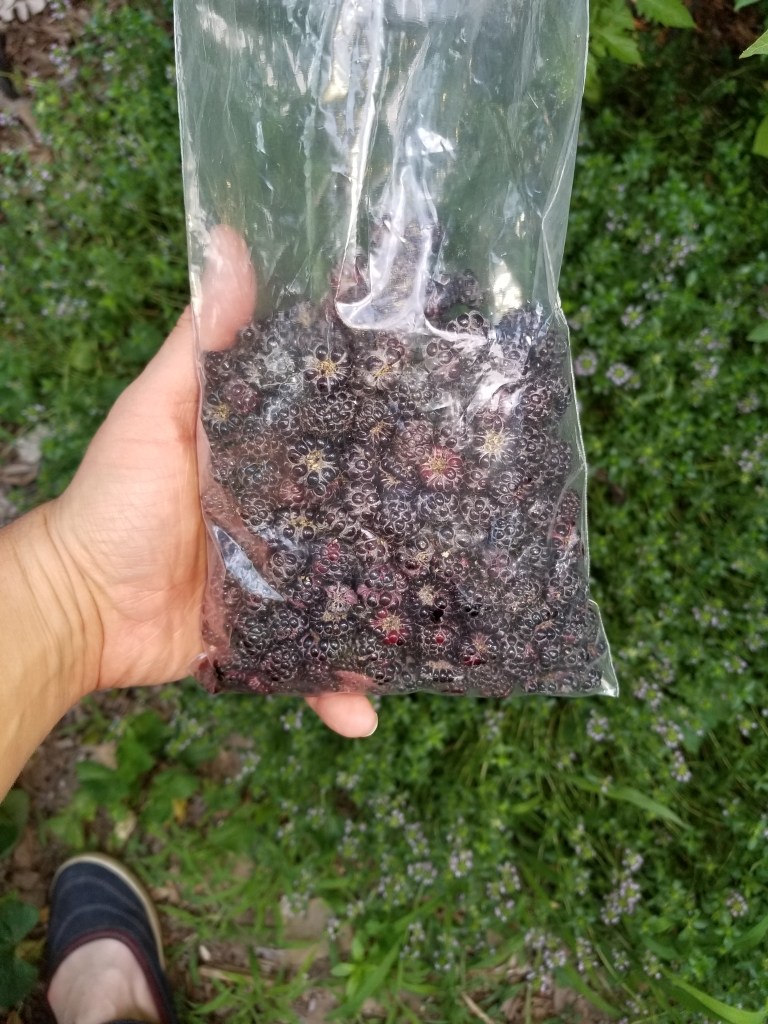
This is a spectacular time of year for my little patch of land. The black raspberries I inherited with this house are producing more than ever. The first year I lived here, I wrangled about eight away from the birds. This year? I’ve picked at least a pint each of the last five days!

I’m trying my best to weigh and record all the produce I produce, using current market prices to see what my work is “earning”.

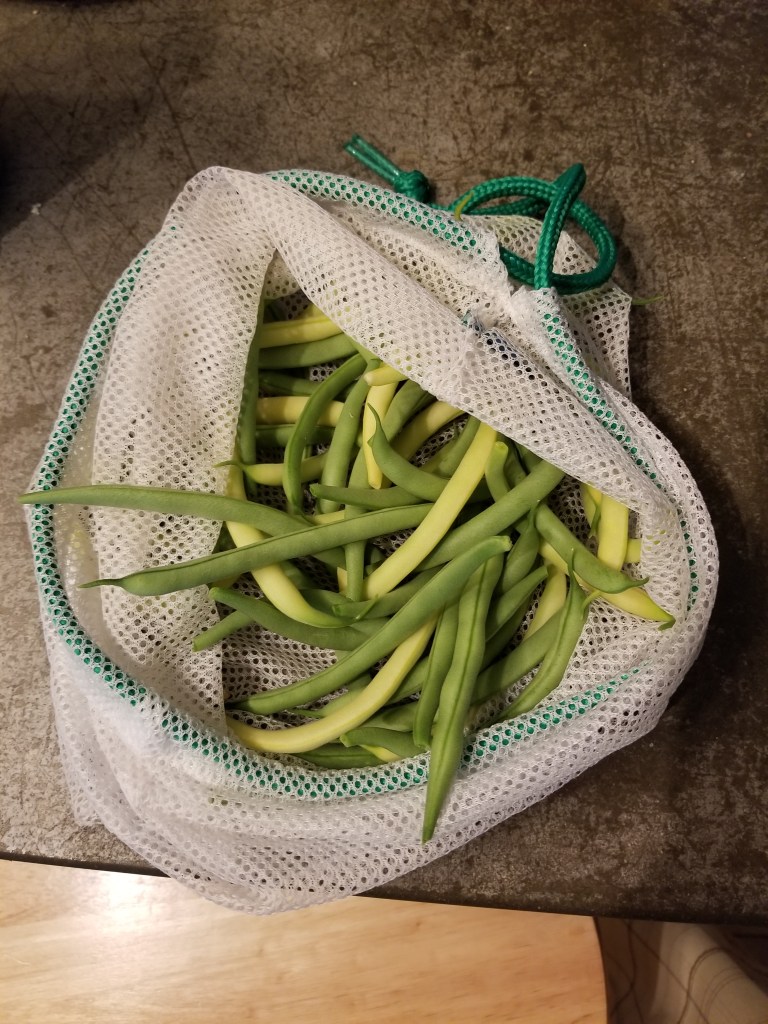
In addition to berries, the bush beans are thriving this year. I skipped planting them two or three years in a row due to poor germination and production. This year, I found a plastic bag of dried beans in the garage marked “bush beans” and figured it wouldn’t hurt to give it a try again. I remember that this bag was either mislabeled and actually vining beans, or I had mixed the two kinds together. So far there has only been one strange surprise: wax beans! I don’t remember ever having grown them, but here we are. As of now, I have picked a quart of beans each of the last three days. They need to be checked/picked every day once they start fruiting. Much like zucchini they will slow or stop production if one fruit is allowed to reach maturity. Also much like zucchini (and all squash), the plants are equipped with minuscule “hairs” that leave me with an unpleasant itchy skin rash. Thanks, nature!

I froze my first batch today, which reminds me I need to order more food saver bags. When freezing vegetables, it is imperative to blanch them first. Blanching, otherwise known as quick immersion in boiling water for 30 seconds to a few minutes followed by an immediate transfer to an ice water bath, inactivates the enzymes in the vegetable. Skipping this step can lead to undesirable colors or textures, such as browning or mealiness. I learned this the hard way with the oodles of sweet peas I froze last years, but mistakes are meant to be learned from.

In addition to putting up beans, I spent the early morning outdoors. We had our first rain in a few weeks yesterday, which brought slightly cooler temperatures and loose soil, prime for overdue weeding.

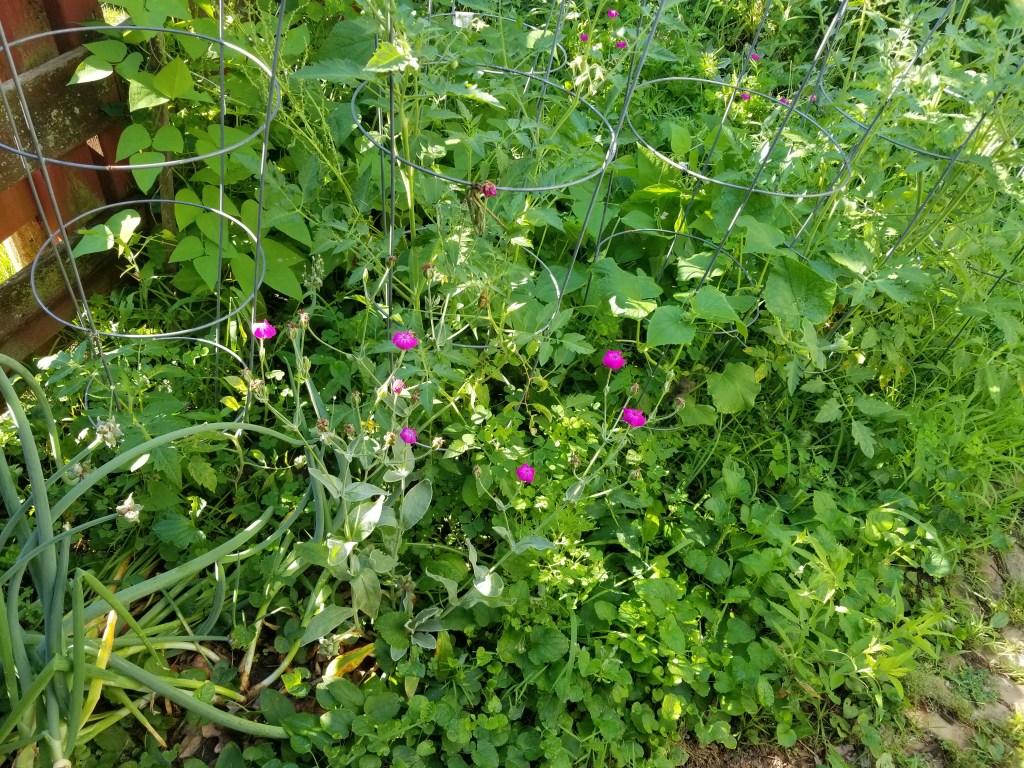
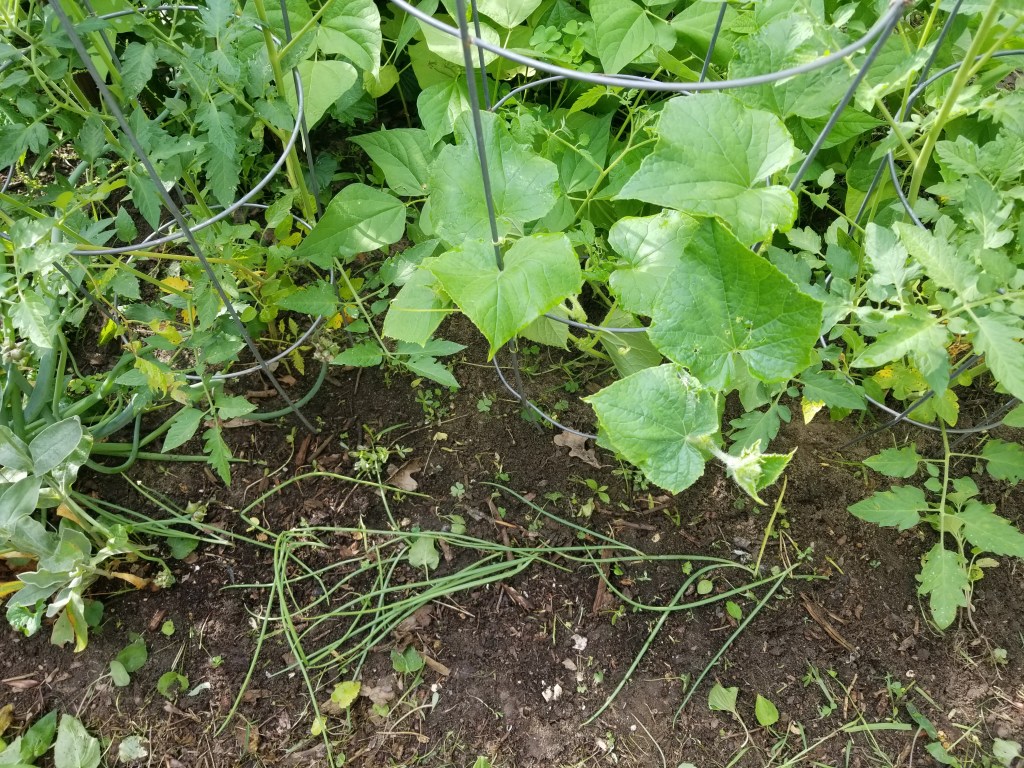
Oy, what a mess, right?! There are edibles intentionally planted there, I swear…

Edibles such as egyptian walking onions, red onions, leeks, celery, bush beans, lima beans, cherry tomatoes, and purslane (my favorite edible weed that I encourage to self seed each year).

The goal is improvement, not perfection.

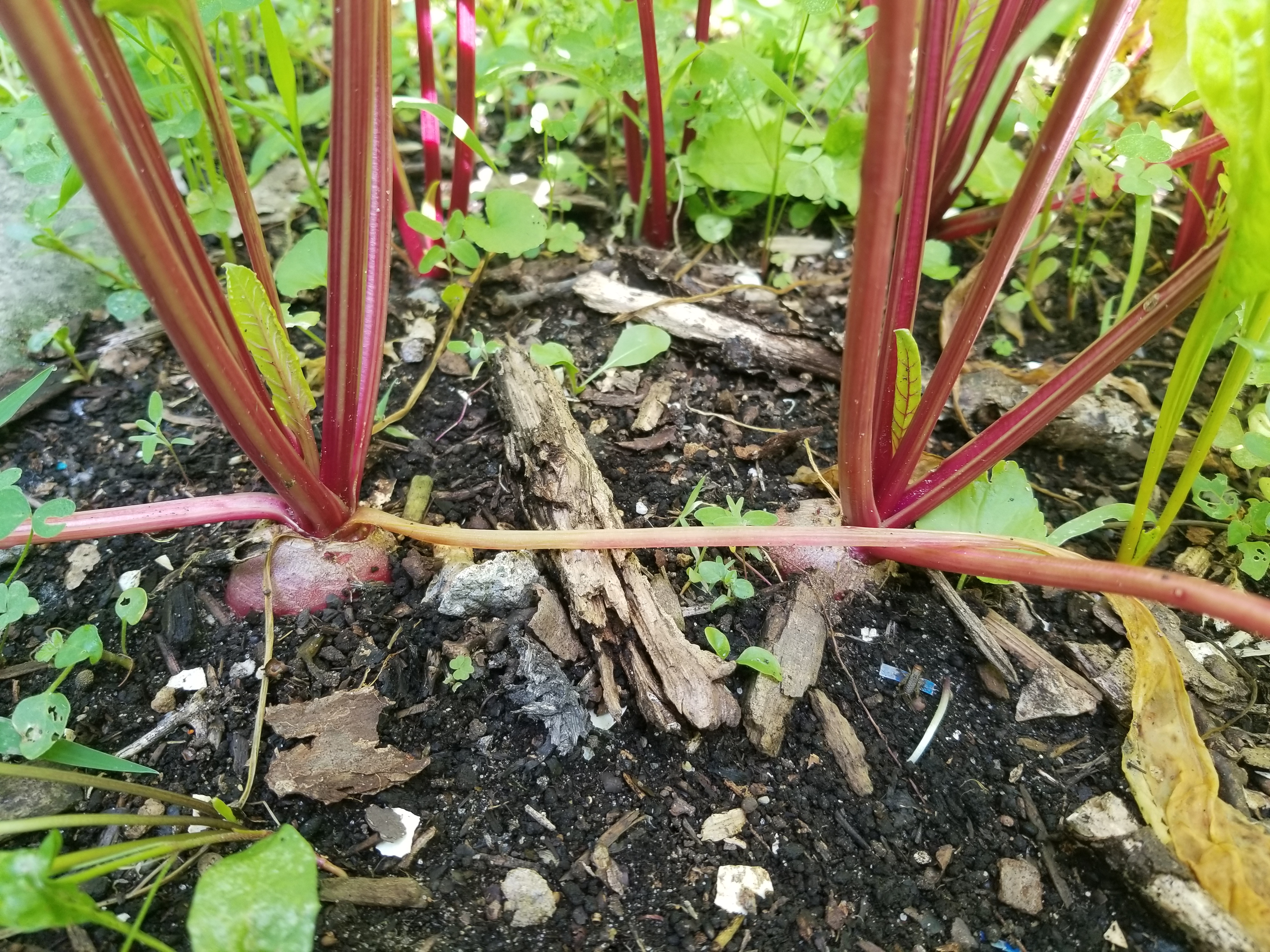
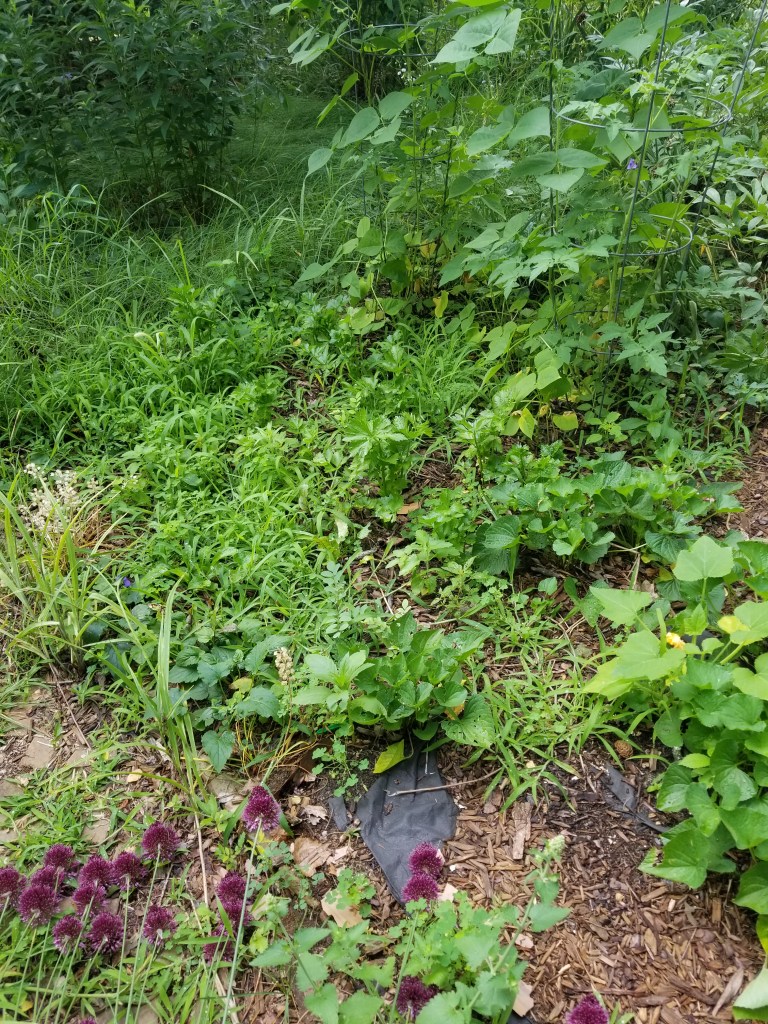
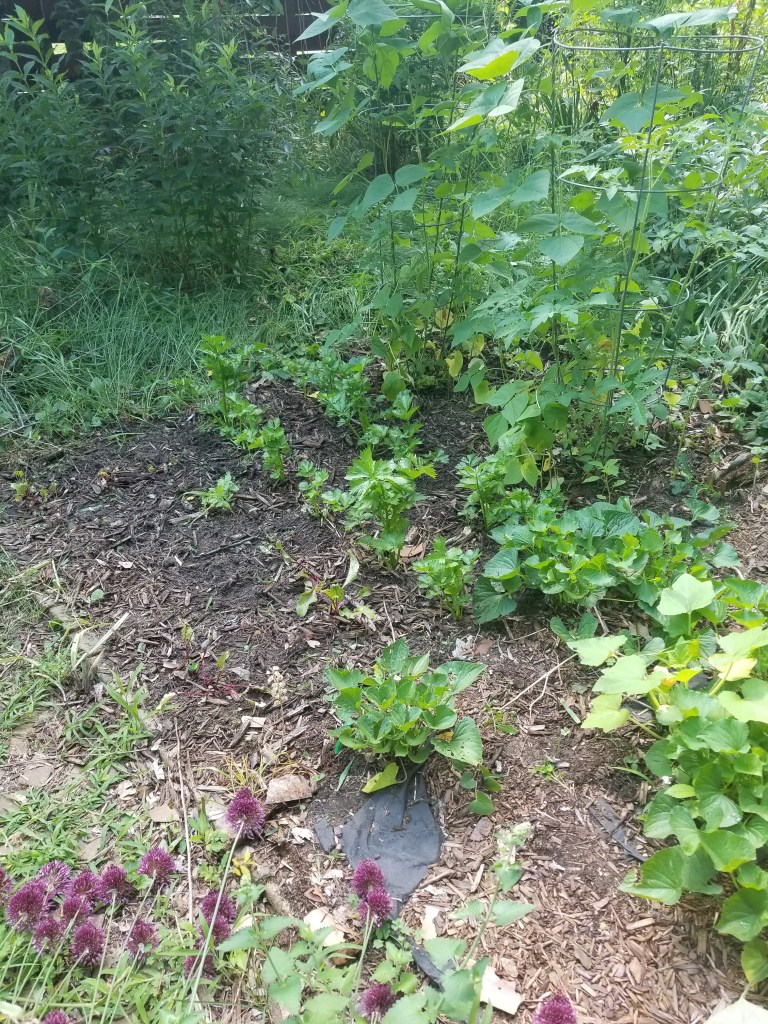
The second area I worked on is one of the last patches of garden converted from ornamental to production.

Beets, vine beans, cherry tomatoes, celery, and volunteer tomatillos. An honorable mention for the yellow crookneck squash and flowering wild onions.

By that time, it was already approaching 90 outside, so I took a few more detailed photos before turning inside for the afternoon.

The world may be in chaos, but the garden provides predictable stability. I might not have enough beets for a standard victory garden, but I’m hoping to continue to supplement our weekly shopping and can salsa in a few months.

Are you growing anything delicious?

Growing

While every day is a celebration, passing the Registration Examination for Dietitians was a cause for cake.

Quinoa carrot cake with currants and maple cream cheese frosting, to be exact. Surely studying for four hours a day for over a month deserves it’s own reward.

This is the second time I’ve made this cake and it was easily devoured by the two of us in a week. I’ve had the quinoa flour on hand for well over five years (please don’t keep flour as long as I do) and am so impressed with how well this turned out. I chose this recipe based solely on the fact that I had every single ingredient on hand and I’ve been enjoying using up the weird ingredients I’ve accumulated over the years.

Lightly adapted from Quinoa Cuisine by Jessica Harlan & Kelley Sparwasser:

  • 2 c quinoa flour
  • 1 c packed dark brown sugar
  • 2 tsp baking powder
  • 1/4 tsp iodized salt
  • 3 large eggs
  • 1 c unsweetened applesauce
  • 1/4 c canola oil
  • 1 tbsp vanilla extract
  • 3 c grated carrots
  • 3/4 c dried currants

Preheat oven to 350°F and grease your cake pan (two 8″ rounds if you have them, I used a metal 9″ x 13″). Mix dry ingredients together and set aside. In a stand mixer or with hand beaters, beat the eggs on medium for two minutes. Turn the mixer to low and add the applesauce, canola oil, and vanilla extract until combined, then add the carrots. Incrementally add the dry ingredients until just combined. Turn off the mixer and fold in the currants by hand.

Fill your prepared pan(s) and bang it on the counter ~5 times to settle the batter and remove any air bubbles. Bake 20-25 minutes. Check for doneness by pressing a finger to the center of the cake. It should have a light give and the indent should bounce back. Cool in the pan for twenty minutes, then turn onto a wire rack. Allow to cool completely before frosting. This is the worst part because you will want to eat it right away. For the frosting:

  • 8 oz cream cheese
  • 1 stick unsalted butter, softened
  • 3 c confectioners sugar
  • 2 tbsp maple syrup

While the cake is baking, whisk together the cream cheese and softened butter. To speed up this process, let the cream cheese sit at room temperature while you are combining the ingredients for the cake. Once well combined, add the maple syrup, then the confectioners sugar one cup at time. I recommend tasting after each addition to determine your sweetness preference. Try not to eat it all before the cake cools.

I used applesauce that I canned this winter from a mix of “seconds” from Kapnick Orchards. Dark brown sugar is a personal preference. With more people cooking and baking from scratch, I recommend using iodized salt to prevent iodine deficiency and it’s negative health consequences (goiter). Canola oil contains more omega-3 fatty acids than vegetable oil and will not change the flavor. Though the original recipe calls for it, I don’t peel my carrots–I think it is a waste of time especially in this type of application where you won’t see the carrots.

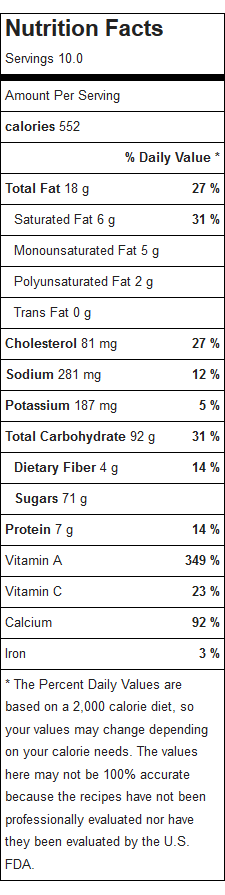
This cake is a decadent indulgence, but you deserve it. I’ll leave the nutrition facts at the very end so you only have to see them if you want to.

In short news, the garden is strong in growth and I’ll give another tour soon.

I finally graduated to cloth covers for my booch brewing made from fabric my mom bought for me in 2007 that has moved from Chicago to Georgia to Michigan before finally being used 13 years later.

And finally, to round things out: a failure. Not only have I managed to suffocate, then revive my sourdough starter, but now I have killed it with mold. Time to start starting anew.

Growth doesn’t usually take the path we think it should and forward doesn’t look the same from day to day. Sometimes it is best to just choose cake.

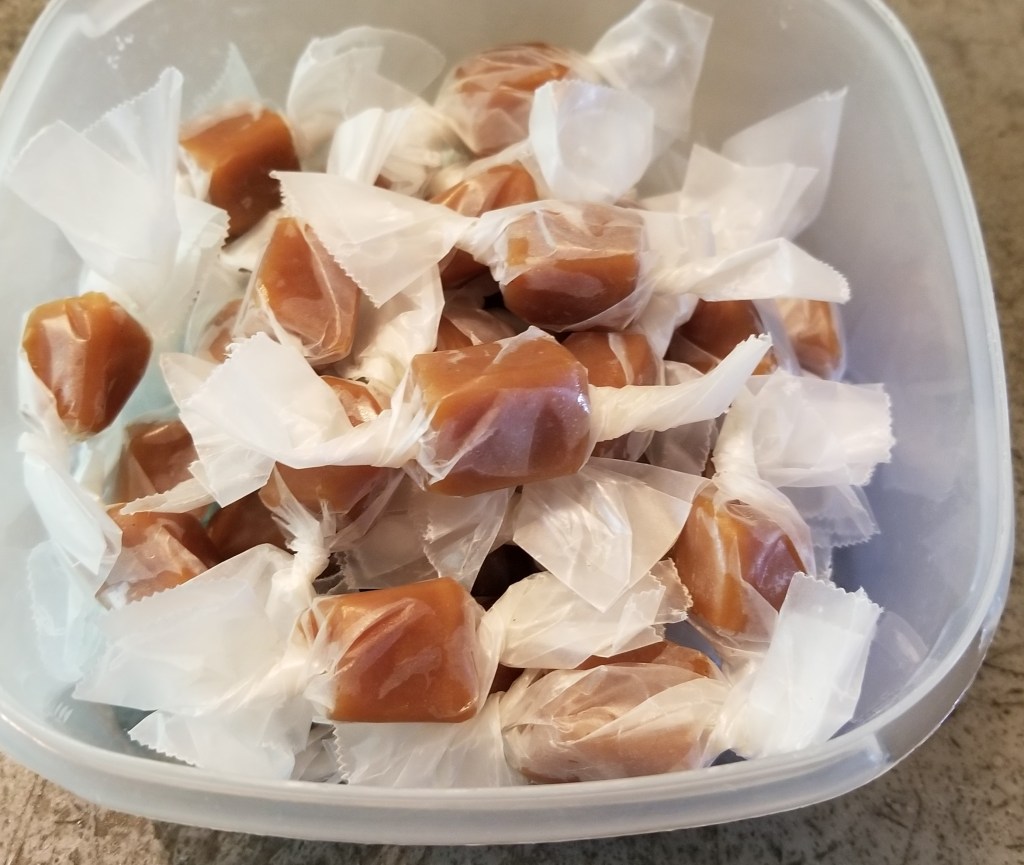
Lavender Caramels

This was another long-awaited cooking bucket list item. I’ve wanted to make lavender caramels since 2012. I have a huge bag of dried lavender that I bought off eBay (of all places) to make peach lavender jam last year. The jam has become an annual canning staple, but that is a post for warmer days.

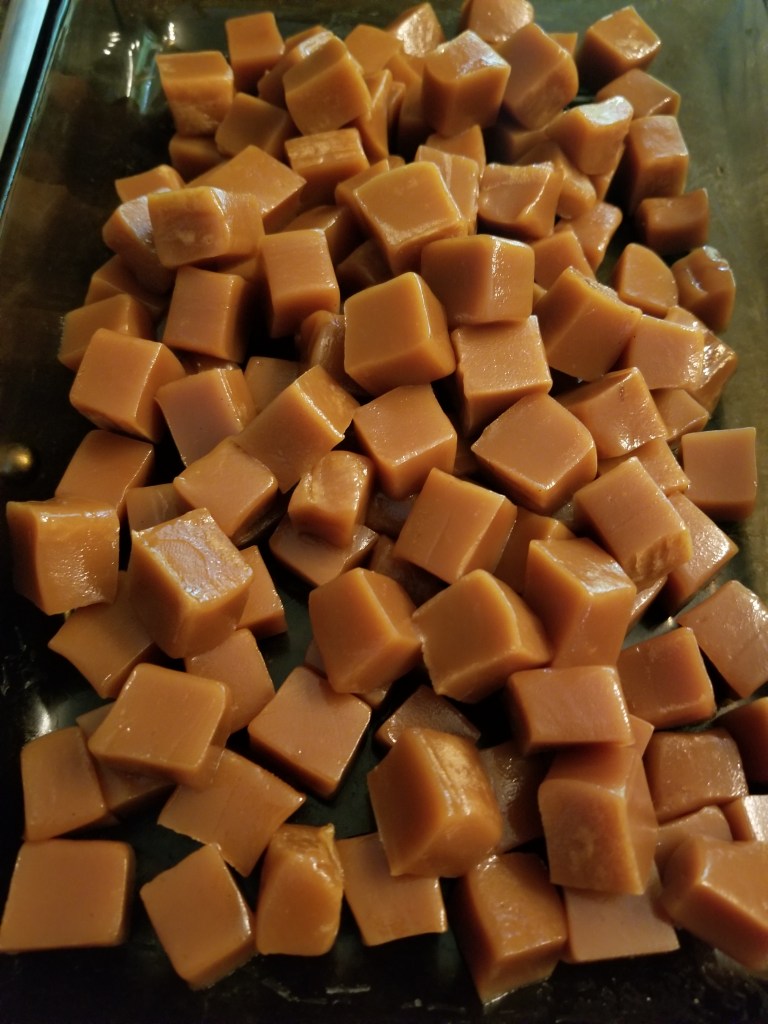
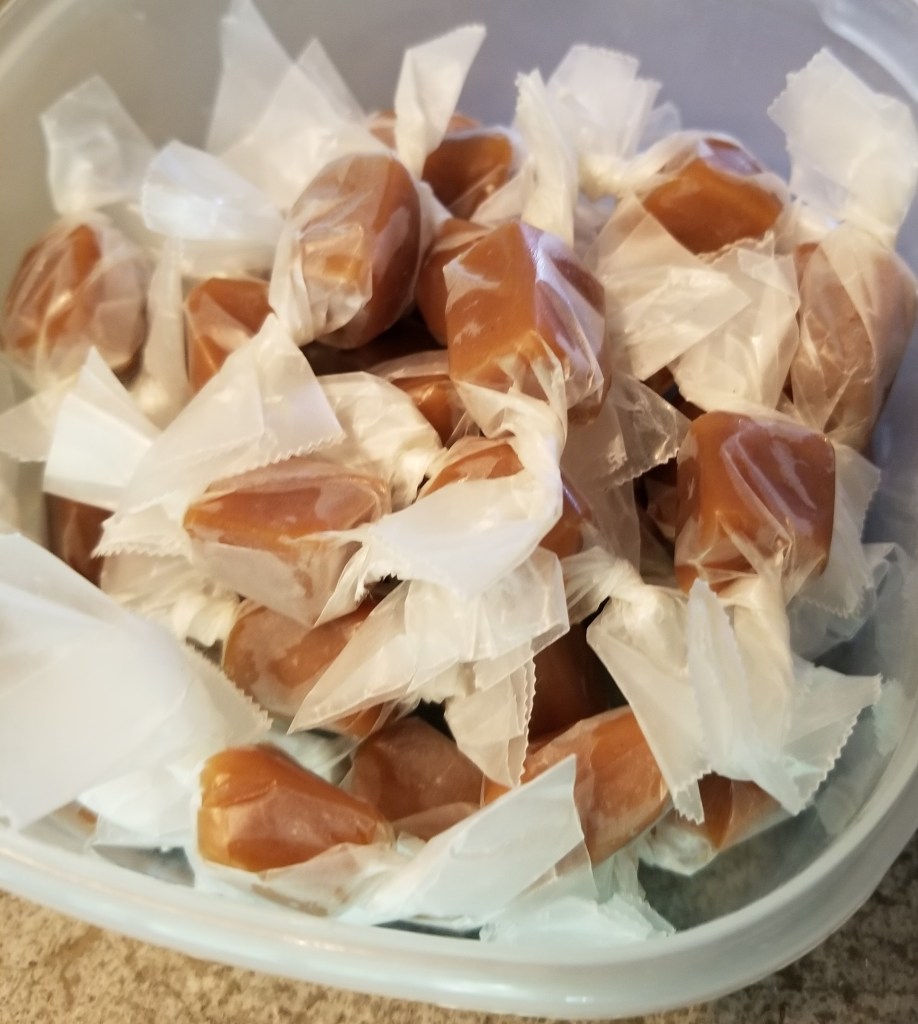
I anticipated a few hours from start to finish, but my expectations were far exceeded. From gathering ingredients to what you see above took over four (active) hours–this is not including the hour I let the caramel cool in the fridge. While the escapade was an eventual success, it is one I will be unlikely to repeat.

I followed this recipe, as suggested in the original article. It does not specify the type of milk, but we are making candy so I assumed whole would be the choice. We only have 2% in the house, but I bulked up the fat content by replacing some of the called for “milk” with extra heavy cream.

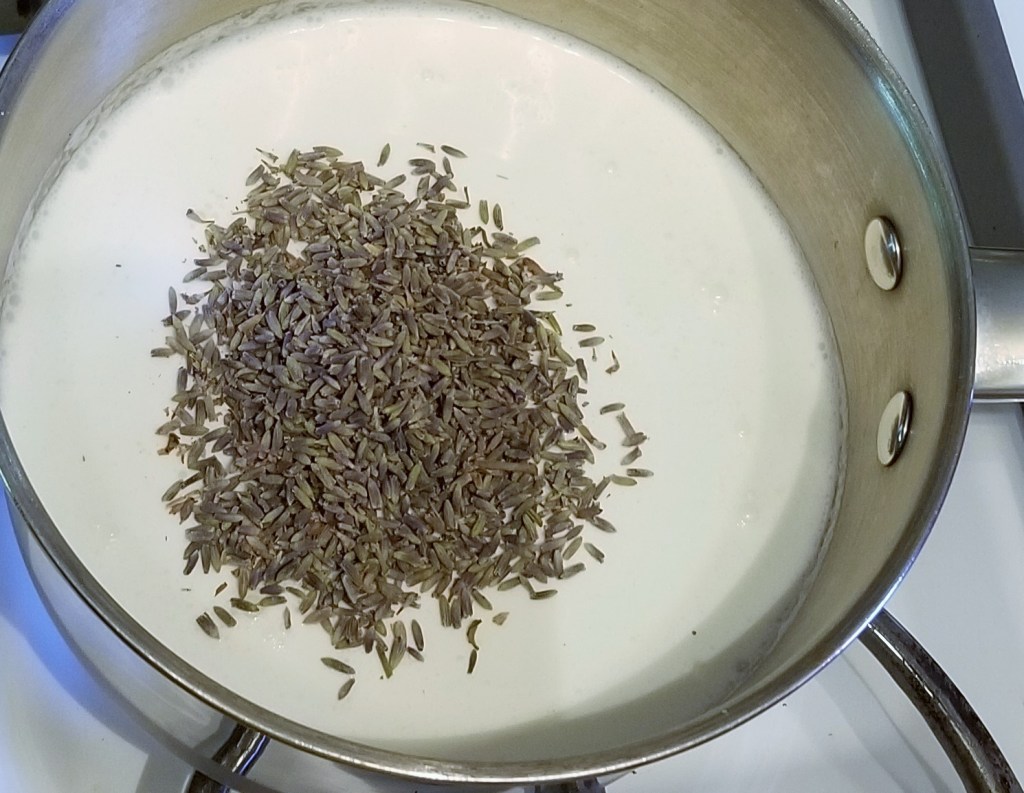
I used twice the lavender because I have so much and I did not want to risk losing the flavor due to the age of the dried lavender. I ended up swapping some of the honey for sugar; not by choice, I did not have enough on hand. Were I to ever choose to make caramels again, I would use even less. The final product tastes more like honey caramels than lavender caramels. Not terrible, but defeating in the face of the effort.

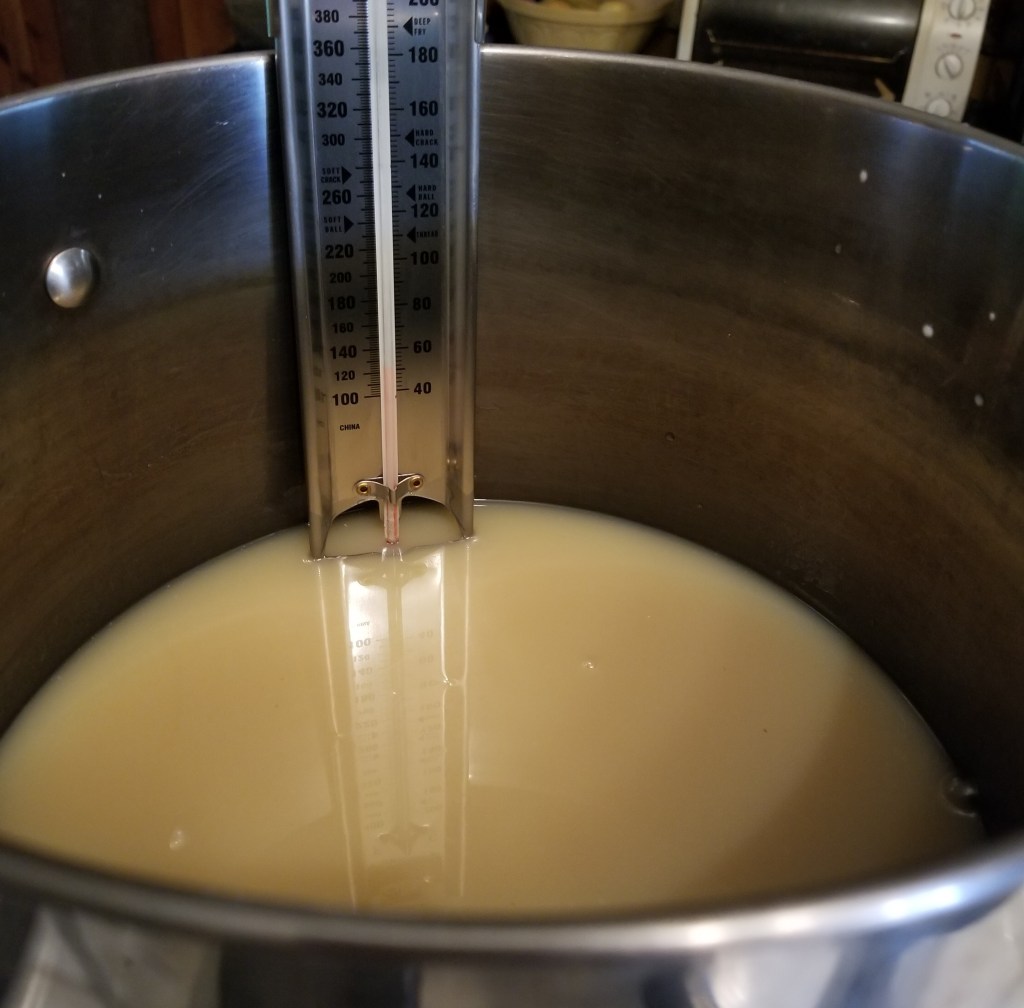
As this was my first foray into candy making with my fancy new thermometer, I was fascinated by the process and transformation of the ingredients.

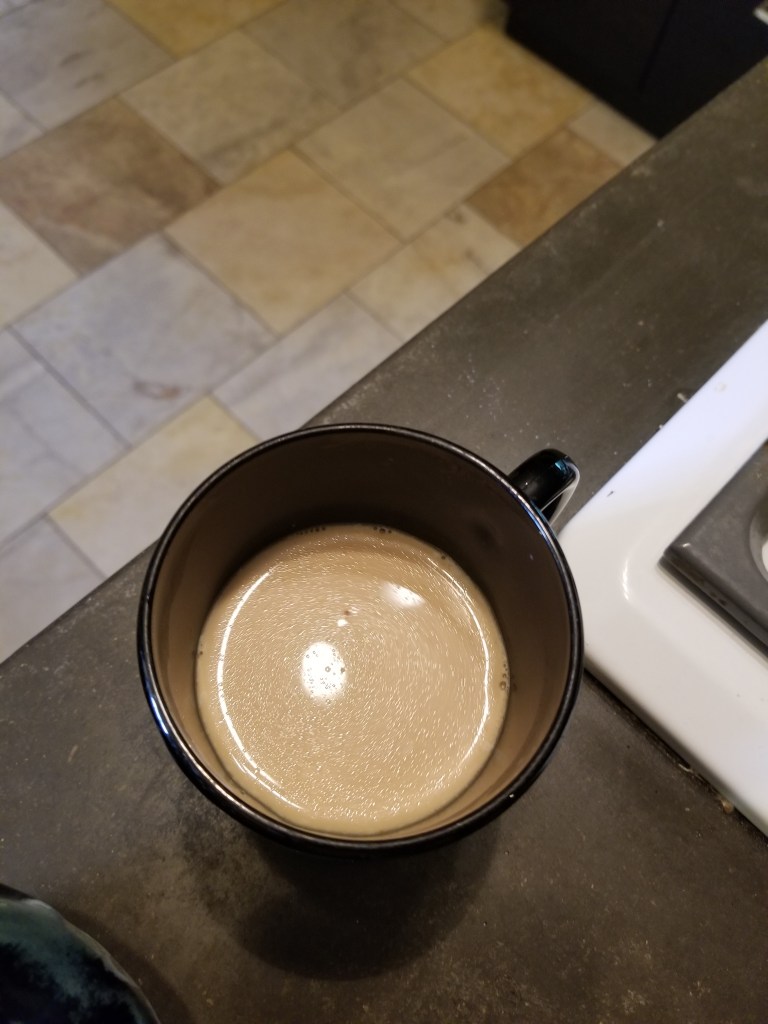
At the onset, the honey is the predominant colorant. I had more lavender milk than I was supposed to begin with, so I spoiled myself with a mini honey-lavender cafe au lait.

Watch what happens as we turn up the heat!

(not really, the caramel is cooked over a relatively low heat for an excruciatingly long time)

While this was the longest part of the process, it was the easiest.

The process above took the most effort. The caramel was completely adhered to the paper and each piece had to been individually pared or peeled. Wrapping was a misery due to the excessive fat content–these adorable cubes were greasy. Very greasy.

But they taste good! And I’ve wanted to make them for eight years. This also afforded me the opportunity to shower my friends with gifts. I danced around the kitchen warbling, “Share what you’ve got!” which has become my new summer anthem.

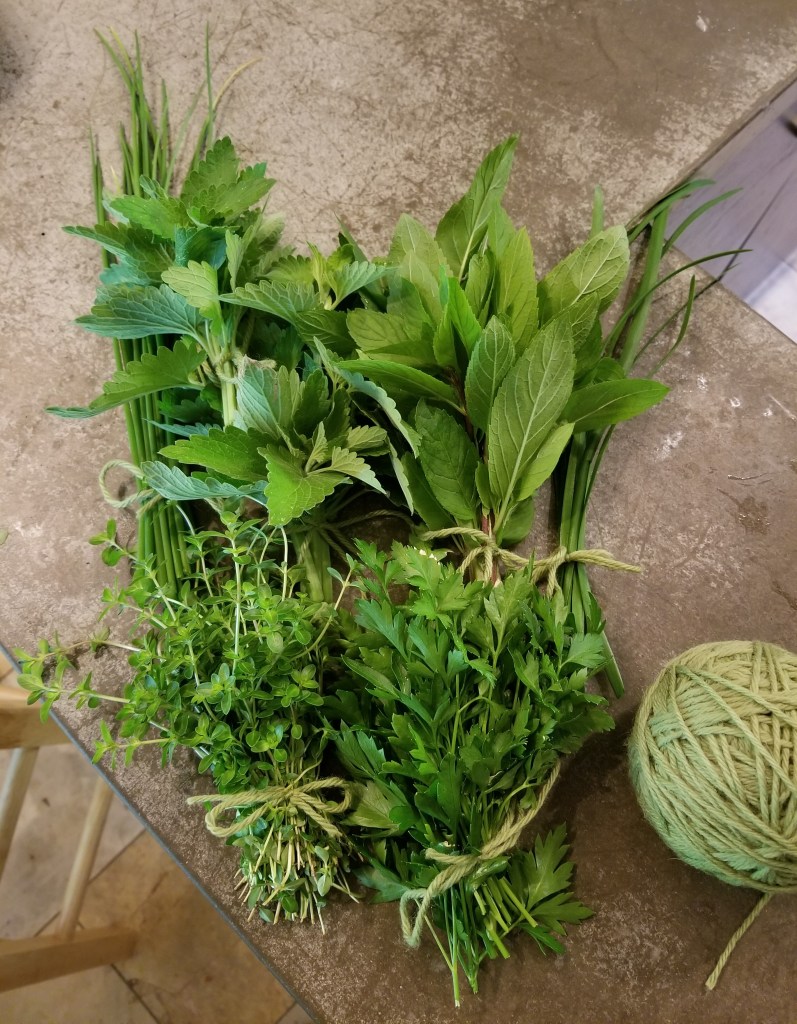
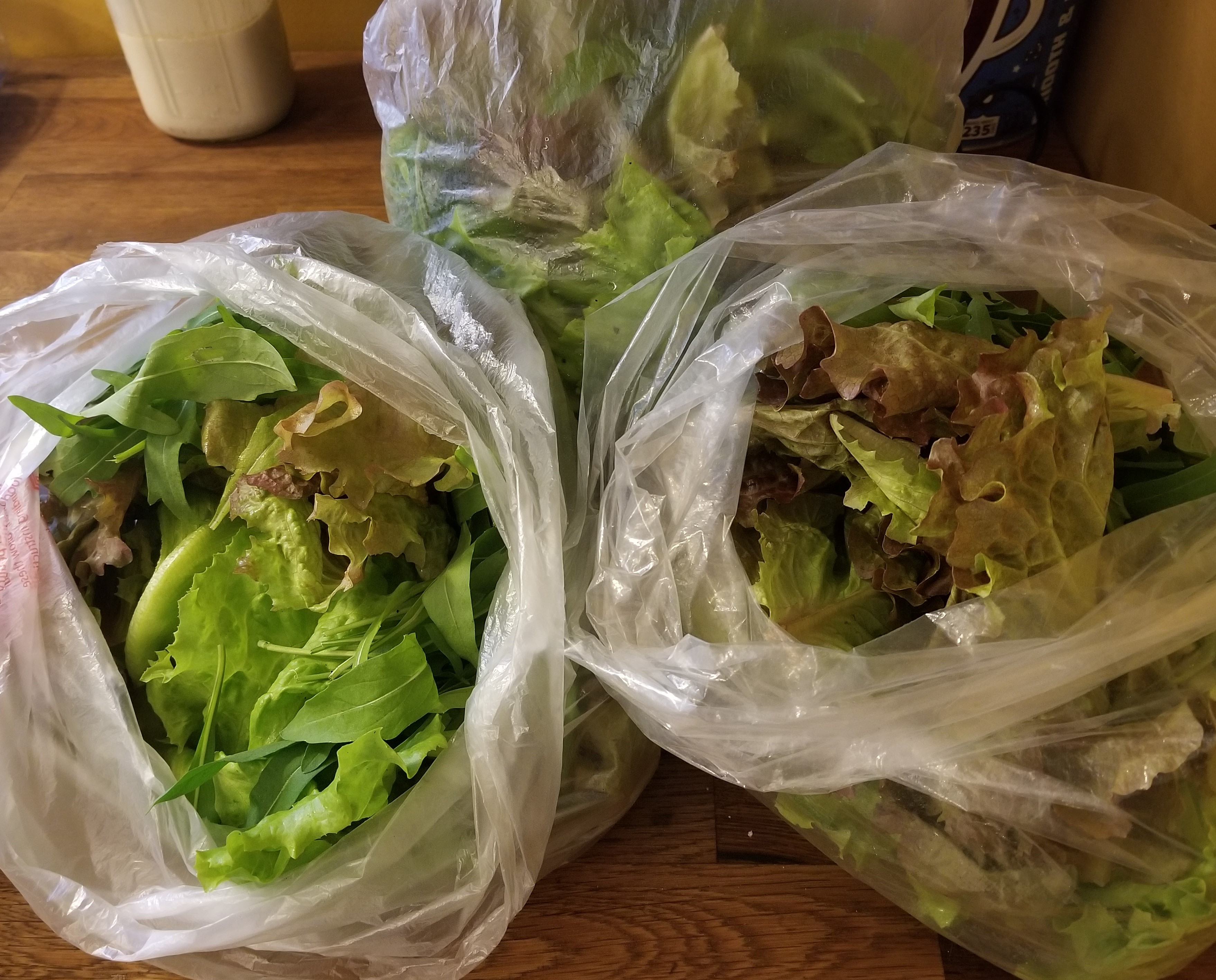
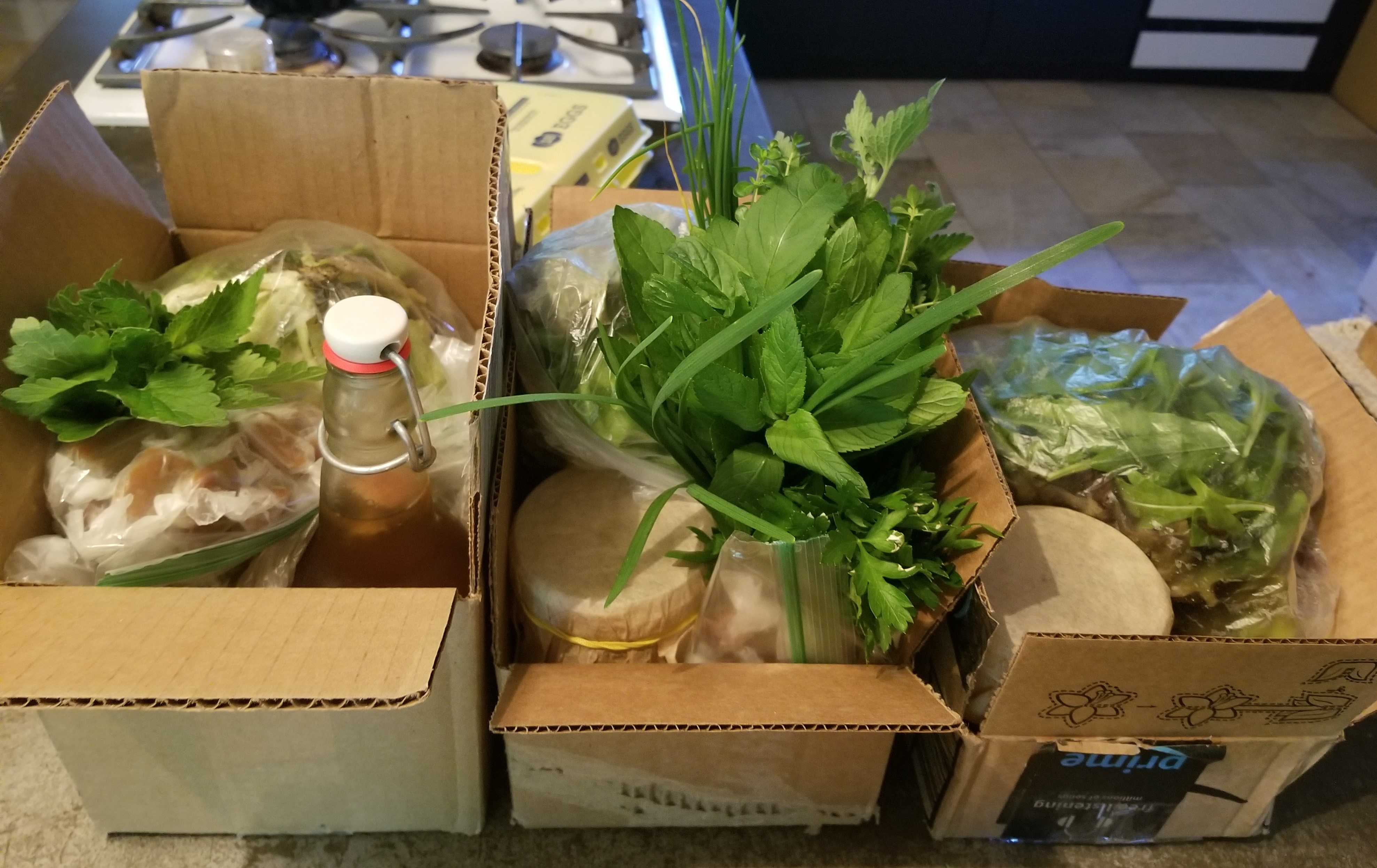
Four care packages were delivered with various salad greens, herbs (chives, chinese flowering leeks, mint, thyme, parsley, catnip), a bottle of strawberry booch, caramels, and two adopted SCOBYs.

Not only did I get to (socially distanced, masked), visit my neighbor + 3 friends, I came home with:

  • homemade chocolate ice cream
  • sage (for eating and hopefully rooting!)
  • purple basil (for eating and growing!)
  • a pilea peppermide plant

It is important to find success and joy, and remember to share what you’ve got!

Kombucha

For the most part, we drink coffee and water in our household. Maybe a soda or juice every other month or so. Kombucha was included in this “treat” list, an occasional extravagance. That is until a fellow dietetic intern gifted me with a SCOBY. Now I ferment my own “booch” every other week.

SCOBY means “symbiotic culture of bacteria and yeast,” which is formed through the conversion of carbohydrates by of lactic acid bacteria, acetic acid bacteria, and yeast to form acids + alcohol; the magical process known as fermentation.

It’s slimy, a bit lumpy and squishy. Each new batch of booch grows a fully functional colony that can be used to ferment subsequent batches. The new layer forms on top, attached lightly to the one(s) below. My SCOBYs are really large at this point–though only one is need to make more kombucha, it seems almost cruel to toss one away. I brought this living thing into being and now it is my responsibility, or something like that. I’ve tried gifting them, but kombucha is a polarizing, acquired taste.

The process is simple. Brew some sweet tea, add previously brewed booch + SCOBY

  • 1 cup sugar to ~ 1 gallon water (14 cups), 8 black tea bags (roughly 3 tbsp loose leaf tea)
  • Bring water to a boil in a stainless steel pot
  • Remove from heat, add sugar and tea, and allow to cool to room temperature
  • Fill half gallon jars with ~7 cups of sweet tea, add previously brewed booch (adds bacteria cultures, yeast, and lowers the pH), add SCOBY right side up, cover with breathable material and set in a cool, dark place.
  • Smell your booch after 3 days, it should have a sour, vinegar like scent.
  • After 5-7 days, begin taste testing.
  • When you are pleased with the tart-sweet ratio, it’s time to bottle!

Some notes: minimize contact with metal, it can alter the taste and hurt the SCOBY. It was a game changer for me when I realized I could label the glass bottles with permanent marker instead of tape: it scrubs right off! Sometimes I add fruit, or fruit juices such as the strawberry I was gifted in exchange for greens. I cover my booch with two coffee filters and a rubber band, though I want to switch to a washable cotton system.

A book I highly recommend if you are interested in fermentation, from the history to recipes using your own fermented foods is Mary Karlin’s Mastering Fermentation. She provides really excellent, detailed information especially as it relates to food safety and sanitation.

While a lot of research has been and continues to be conducting into the benefits of fermented foods for the gut microbiome, it is important to note a few things:

  • Start slow! If you don’t already consume a lot of fermented foods/beverages, it can be a lot for your bowels to handle at once. Yogurt is usually a good place to start. Even if you are lactose intolerant–the bacteria ferment the lactose into lactic acid, essentially digesting it so you don’t have to.
  • Fermented foods contain live bacteria, I would not recommended home fermented foods for those with compromised immune systems.
  • If it smells or tastes “off”, it likely is. I have let batches ferment too long, or used too much tea, and discarded all but a cup to start the next batch.

I learned a few things the hard way, such as only use tea you actually like to drink! I bought some Irish Breakfast tea from the bulk foods store because it was cheap. I did this even knowing I don’t care for Irish Breakfast tea. What happened? My booch tasted like Irish Breakfast. I’m still using it, though in a much lower ratio.

Bacteria need five things to thrive, represented by the acronym FATTOM: food, acidity, time, temperature, oxygen, and moisture. The food is the added sugar, acidity from the cup of previous booch, time + temperature usually 7-10 days though in the summer in my hot house it can be as quick as 3-5, oxygen – orientation is important: the yeast loving bacteria live on the bottom of the SCOBY while the oxygen loving are on top, and I think moisture is pretty self-evident in this case.

If you made it all the way through this quick overview, here is some additional reading should you be ready to take the plunge to brew your own kombucha or want to learn more about fermented foods and the gut microbiome:

Detailed Kombucha directions

Fermented foods and fiber + microbiome

Callaloo

Many moons ago, my sister got married in Jamaica. This trip was full of a lot of firsts for me – maid of honor, international travel, all-inclusive resort (did you know that when you choose liquor for your “mini bar”, it comes in 750 mL bottles?!), and the first time I ever enjoyed cooked greens.

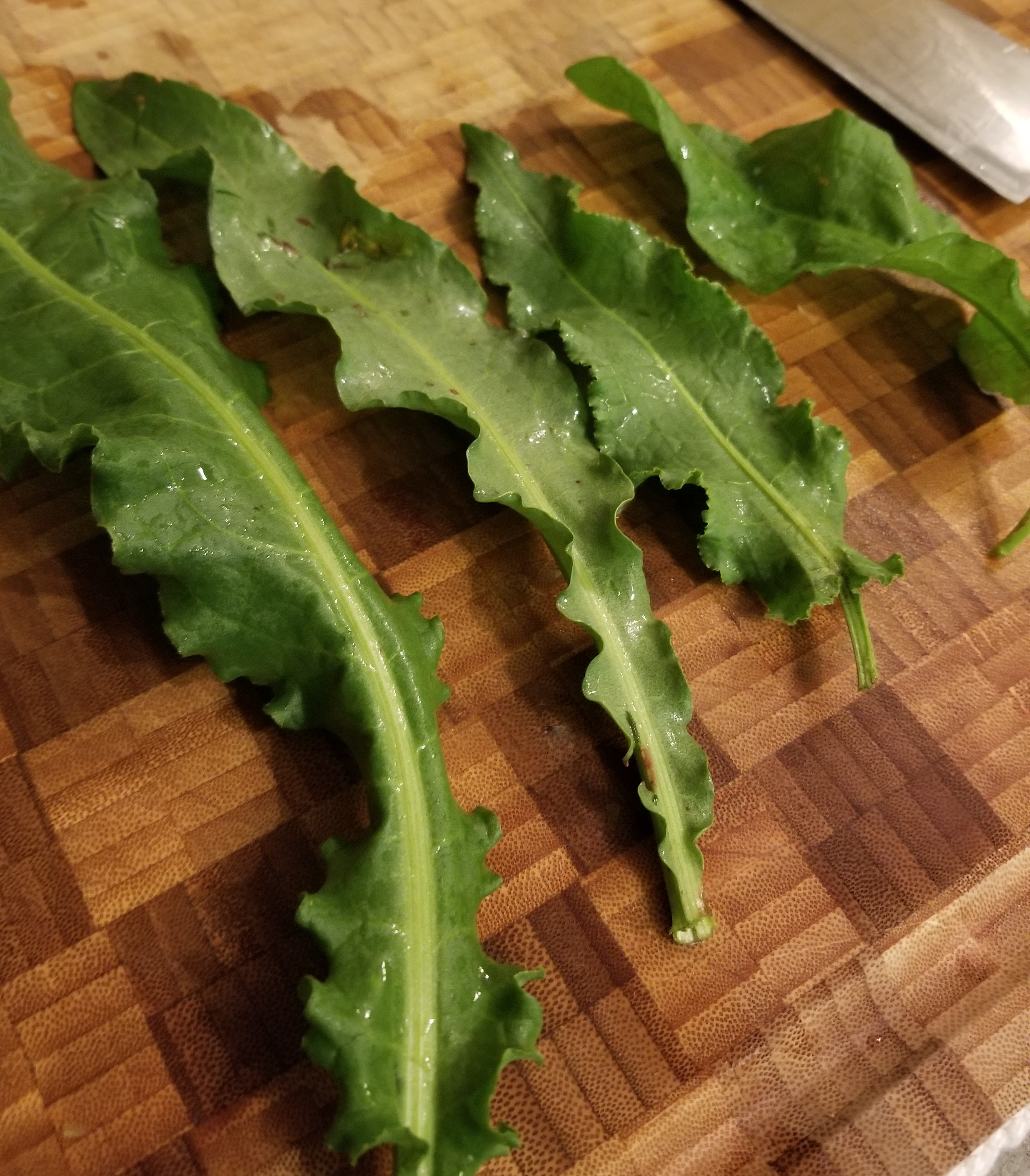
This is the type of amaranth that came with my home. It’s a common “weed” here in Michigan, and also the main ingredient in callaloo, a vegetarian Caribbean dish with as many variations as there are stars in the sky. Each year, I allow a handful of plants to flower and set seed. I have tried saving the seeds, spreading them around the yard, and planting some–though this has not worked as well as forgetting about it and letting the dogs trample them as they see fit.

There are many types of amaranth, some are stunning edible ornamentals. As a bonus, the seeds are an edible grain as well. If you are interested in intentionally growing amaranth from seed, this article from the Spruce is a good place to start.

To this day, I still cannot find a recipe that mimics what I ate, so to the best of my recreation:

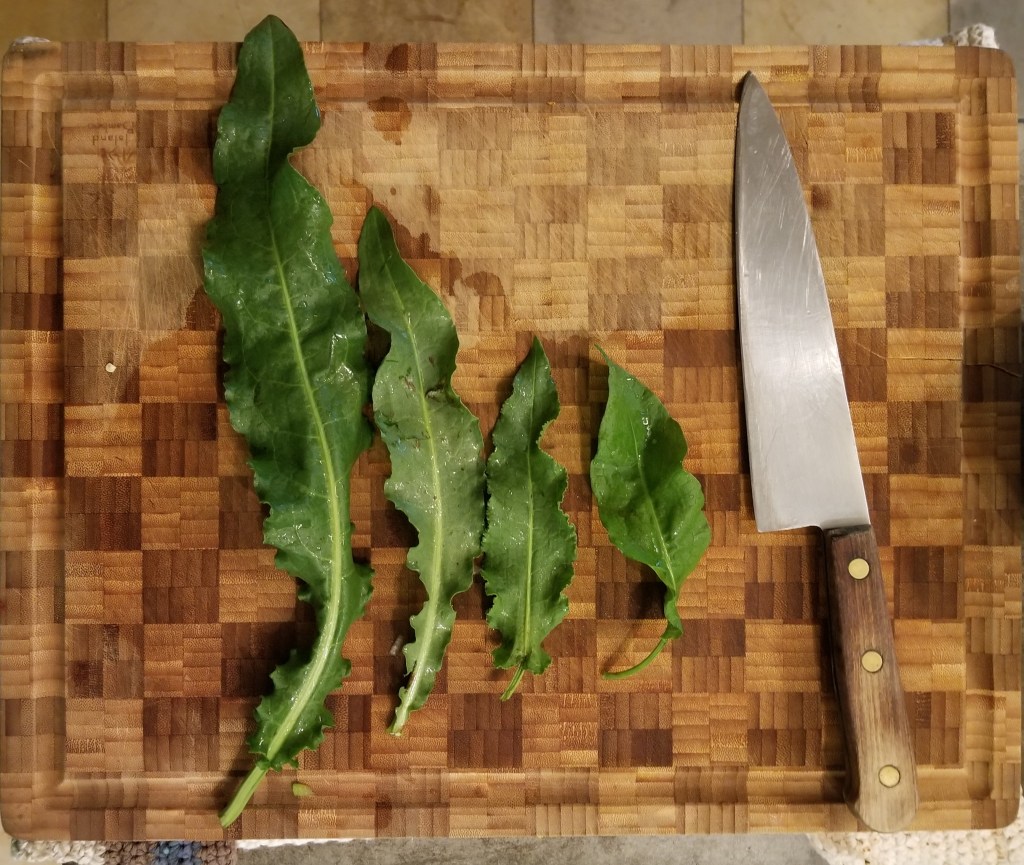
The ingredients: amaranth, stem removed and leaves chopped. You’ll need roughly 16 oz fresh, much more than the four leaves shown for leaf size variation. Substitute the dark, leafy green of your choice as needed. If you have less, scale back the other ingredients accordingly. I had roughly 9 oz of amaranth and ended up using only one carrot, one celery stalk, half of each bell pepper and the onion. I’m currently out of fresh garlic for the year until August when the current crop is ready to be harvested, otherwise I would have used 3-4 cloves.

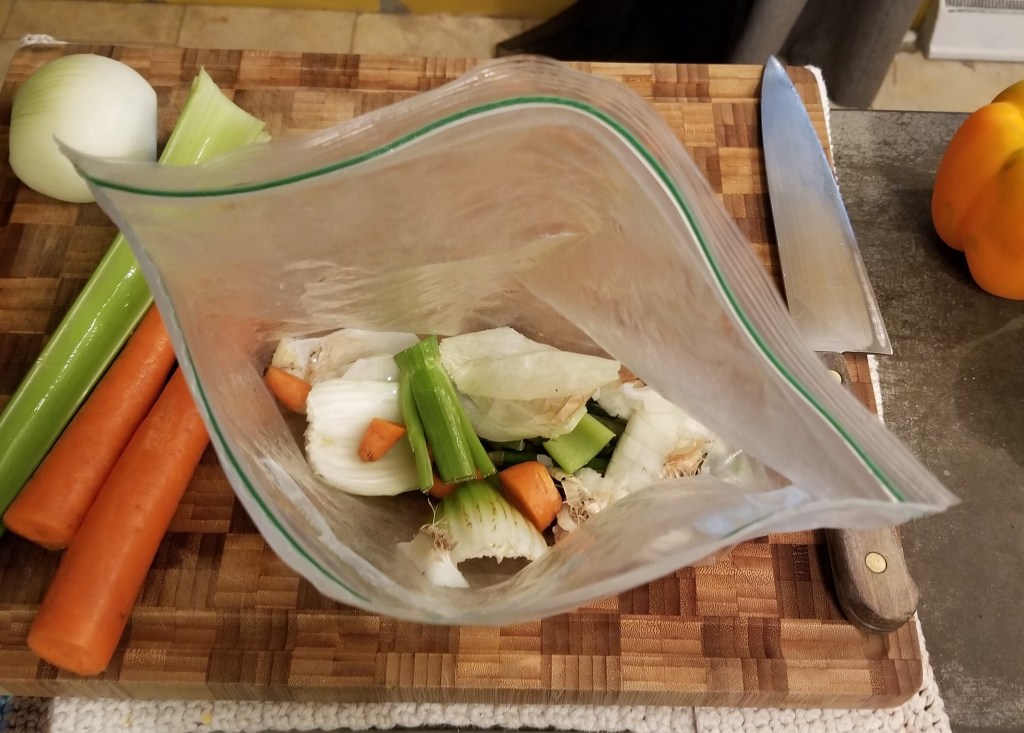
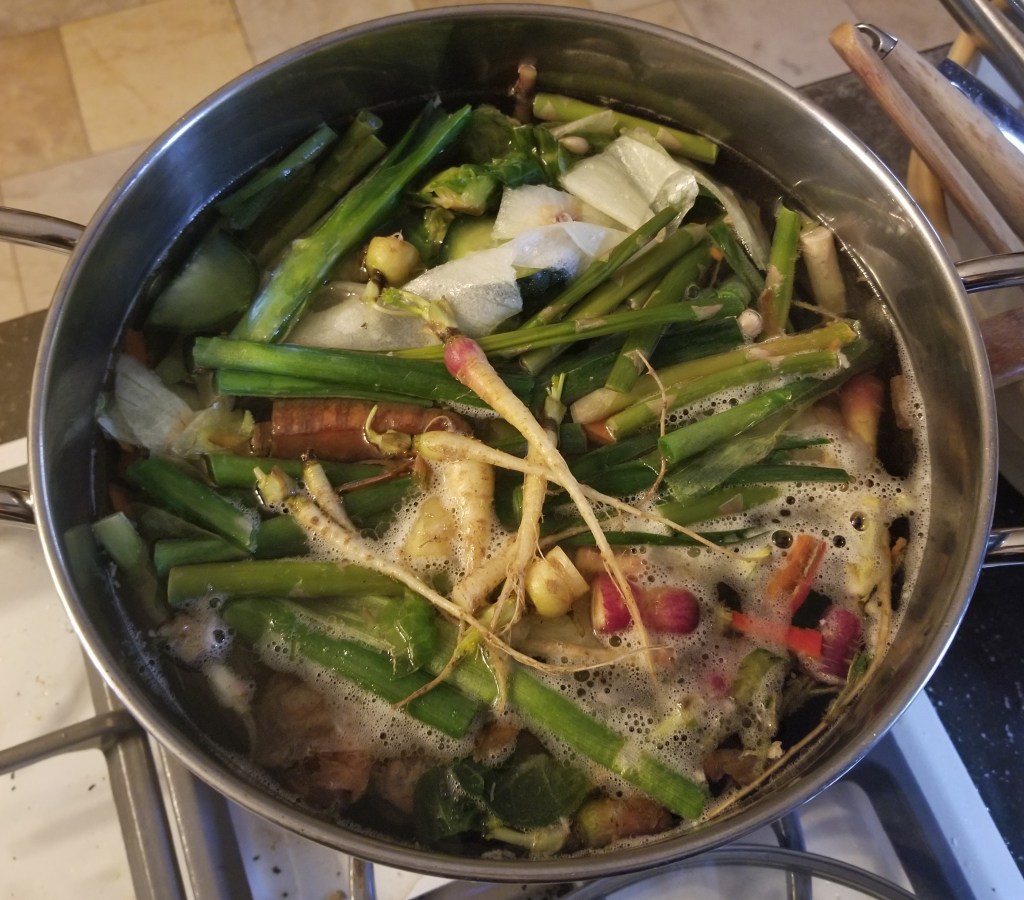
Don’t forget to save those ends for stock! I keep a gallon zip top bag in the freezer (the same one for years). Once it is full, I dump it in a big pot, cover with water, maybe throw in a bay leaf or two if I have them and let it simmer all day long. In the summer, I use the slow cooker instead of the stove and set it in the mud room to keep the house cool(er). I keep a separate bag for chicken bones + scraps, and quart sized bags for various other meats.

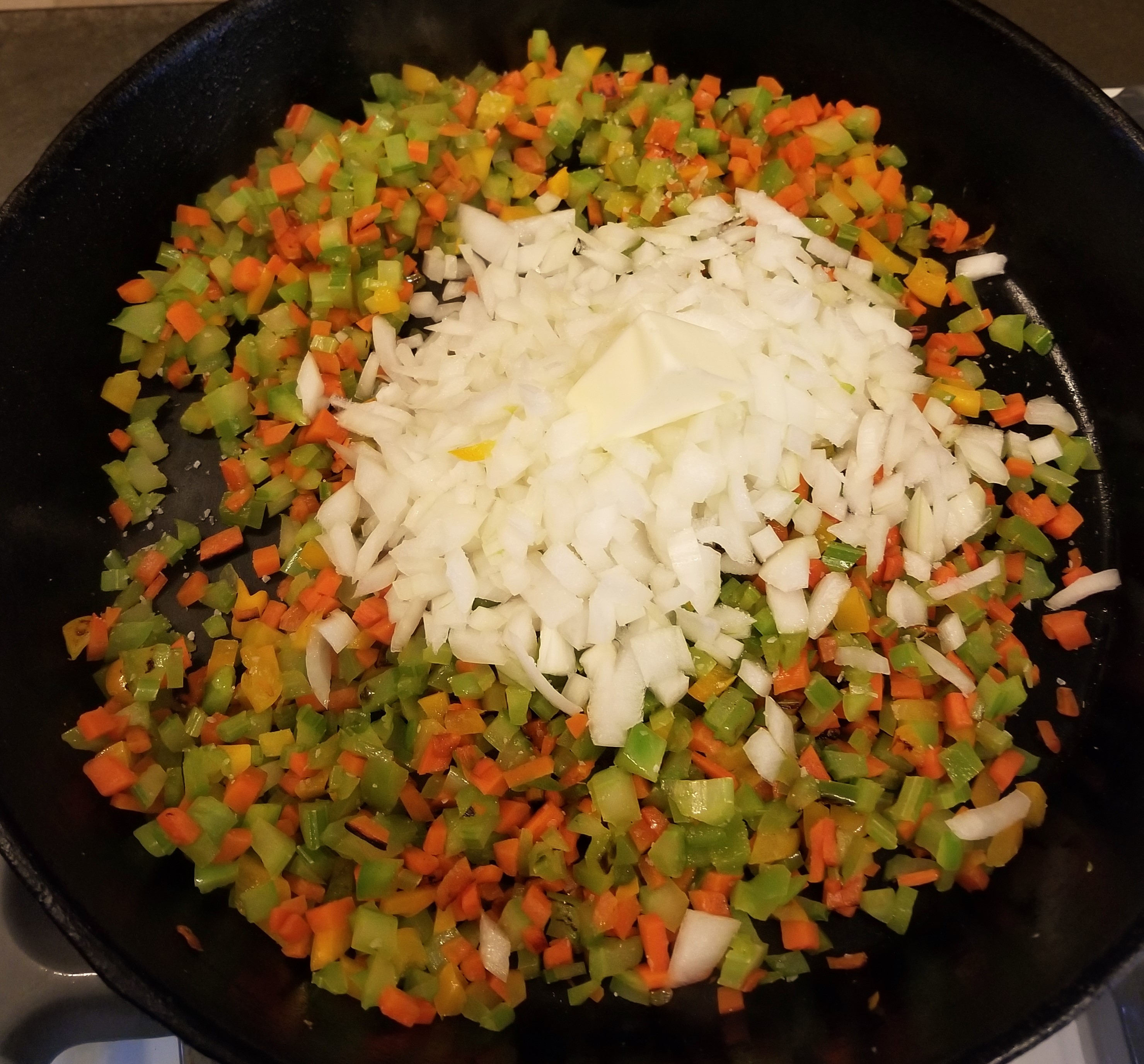
I used a 12″ cast iron skillet based on the quantity I was cooking. Carrots, celery, and peppers are cooked first in a tablespoon of unsalted butter.

Once they have softened (15-20 minutes or so), add onions, and fresh garlic if using, with another dab of butter.

After 5 minutes, turn up the heat so you can get some nice toasty bits. Cook another 10 minutes, stirring periodically.

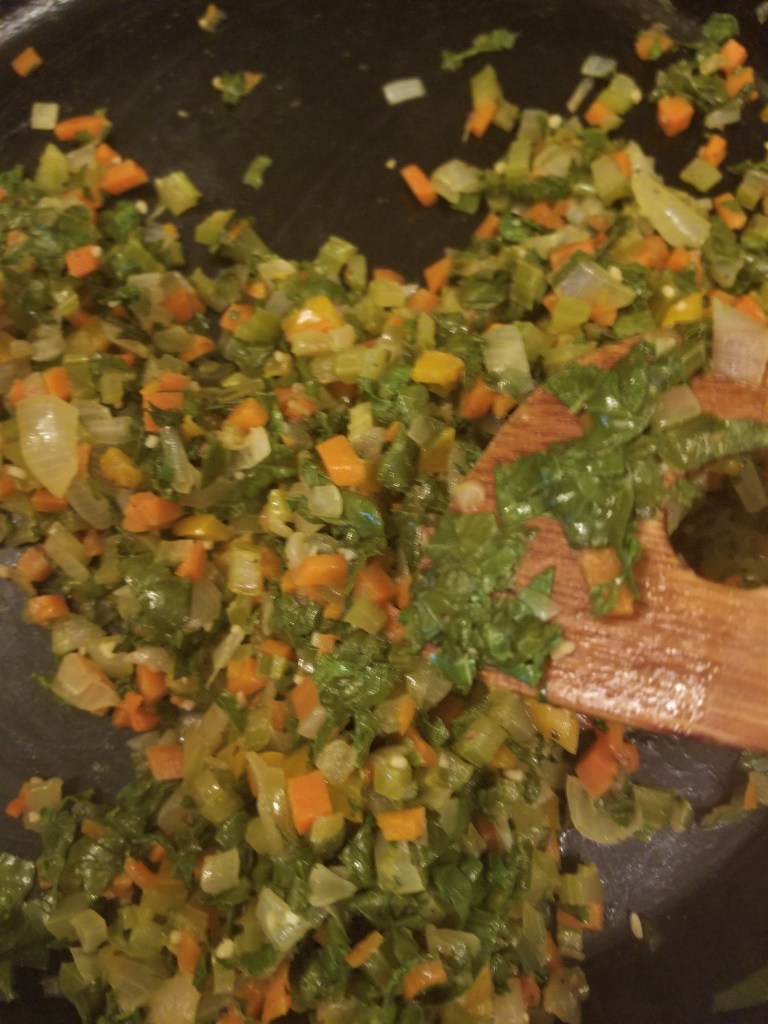
Finally, add the chopped greens and freshly ground coriander seed (+ garlic powder if using), stirring very often until wilted, approximately 3 minutes. Season with salt and pepper to taste.

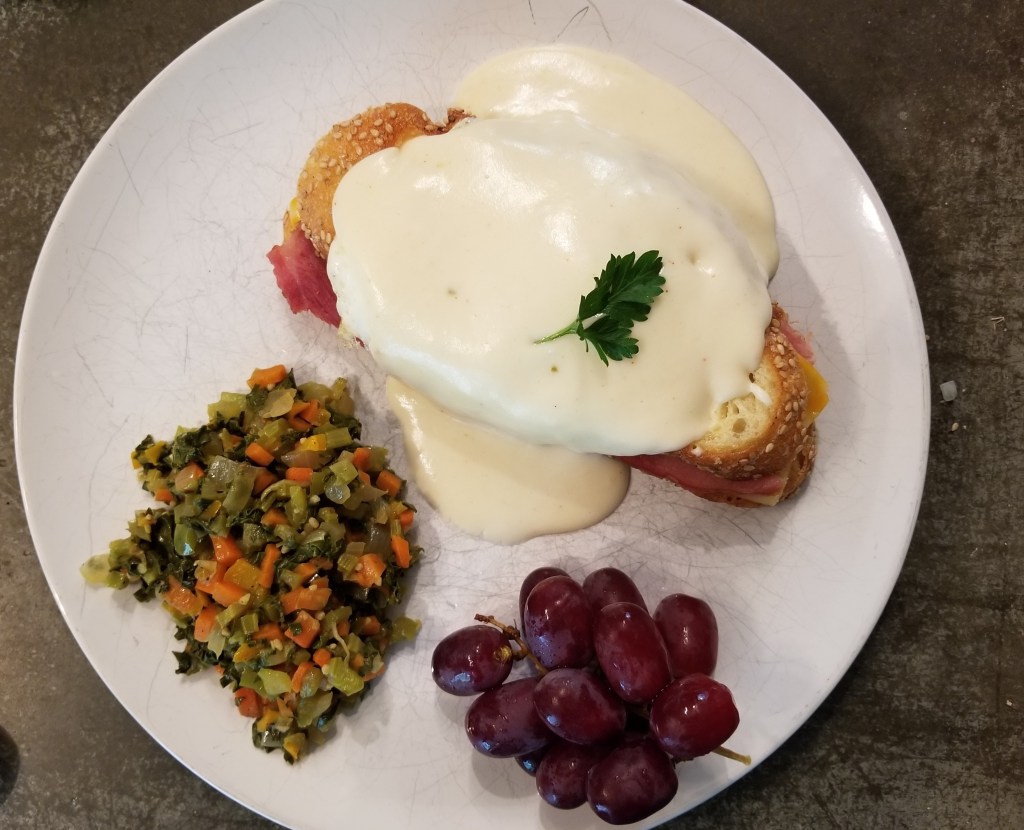
My favorite way to enjoy this is as a breakfast side or topped with an over medium or soft-boiled egg (see my previous post for my favorite cooking method). When I made this batch, we enjoyed it for brunch with croque madames to use up some leftover béchamel.

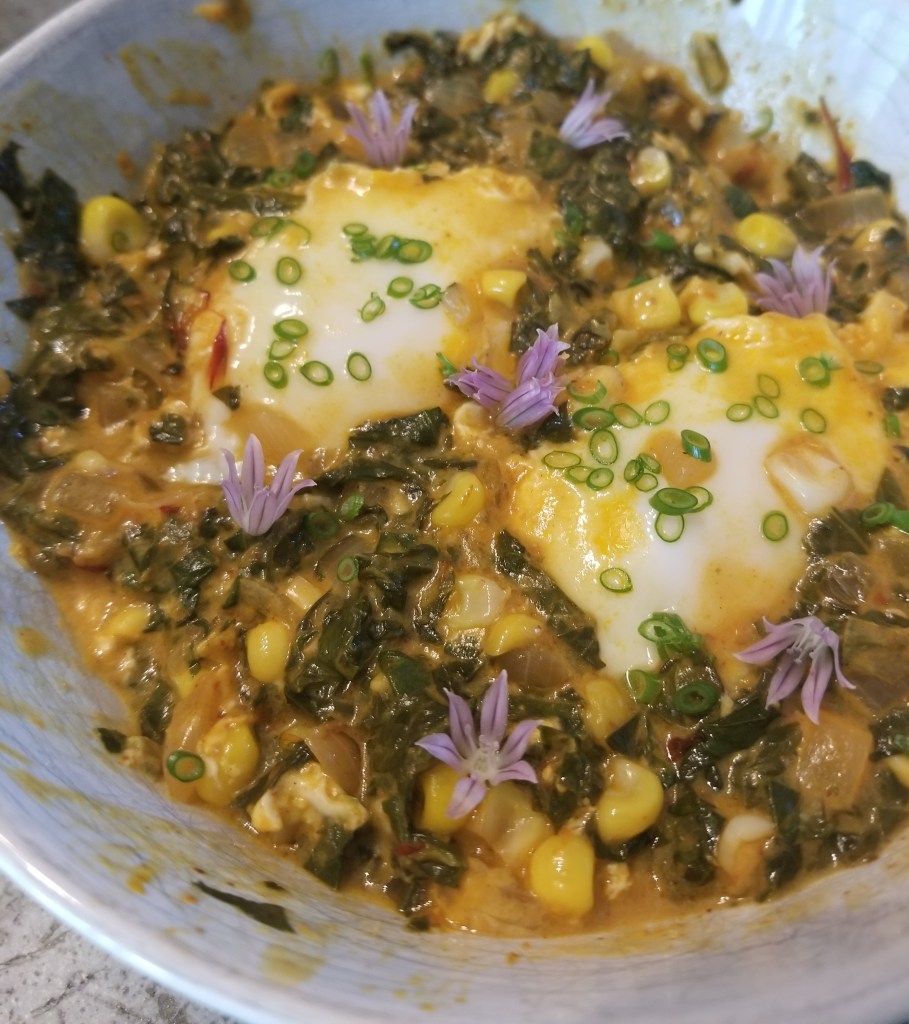
This morning, I foraged and harvested 9 oz of braising greens including amaranth, chinese cabbage, swiss chard, red russian and blue curled vates kale. I wanted to try making something new and settled on a green shakshuka. I combined a few different recipes with what I had on hand at home (romesco + chili-garlic paste for harissa, for example). It turned out delicious!

Beyond learning to enjoy cooked leafy greens, that trip to Jamaica taught me I’m not much for resorts, that I’d rather be down and dirty with the locals which is how I have traveled since. If you have a favorite food from traveling, I’d love to hear about it and possibly try to recreate it!